 ultimate-guide
Why Spa Bathrooms Are Trending in 2026
Table of Contents
- The Rise of Spa Bathrooms in 2026
- Why Homeowners Are Investing in Spa-Like Bathroom Features
- Creating a Wellness-Focused Bathroom: Core Design Elements
- Small Spa Bathroom Ideas for Compact Spaces
- Bathroom Tile Trends 2026: Texture and Sensory Design
- Spa Bathroom Lighting Ideas for Ambiance and Function
- Luxury Amenities: Steam Showers, Soaking Tubs, and Beyond
- Budget, Maintenance, and Practical Trade-Offs
- Frequently Asked Questions
Last Updated: October 13, 2026
The Rise of Spa Bathrooms in 2026
The trend toward spa bathrooms in 2026 reflects a fundamental shift in how homeowners view their personal spaces. No longer are bathrooms purely functional rooms tucked away from view. They've become sanctuaries, places where people invest in wellness, comfort, and design with the same care they once reserved for living rooms.
This transformation isn't accidental. Homeowners increasingly recognize that their bathrooms deserve the same attention to detail, quality materials, and thoughtful design that defines luxury living spaces. At Dimensions Luxury Builders, we've watched this evolution accelerate, with affluent homeowners prioritizing spa-inspired features as core elements of their renovation projects rather than optional upgrades.
The shift reflects broader trends in how people spend discretionary income: less on travel and experiences disrupted by uncertainty, more on permanent improvements to their homes that deliver daily wellness benefits. A spa-like bathroom isn't a luxury indulgence, it's an investment in mental health, physical relaxation, and property value.
Why Homeowners Are Investing in Spa-Like Bathroom Features
Homeowners invest in spa-like bathroom features for one clear reason: daily wellness matters more than ever. The bathroom has become a refuge where people can decompress, reset, and prioritize self-care without leaving home.
This shift stems from practical reality. Wellness experiences that once required trips to spas, steam sessions, soaking, controlled lighting, sensory design, can now be integrated into primary bathrooms. A homeowner who spends 20 minutes in a properly designed spa bathroom gains genuine physiological and psychological benefits: lower stress, better sleep quality, improved circulation from heat and water therapy.
Beyond wellness, spa bathrooms solve a design problem that affluent homeowners care deeply about: they elevate the entire home's perceived luxury. A primary bathroom with high-end fixtures, natural materials, and thoughtful lighting signals quality throughout the residence. For homeowners considering future resale, spa-inspired design has become a competitive advantage in high-value markets.
The investment also reflects changing priorities about time. Rather than spending evenings outside the home, many households now value extended time in personal wellness spaces. A luxury shower system, soaking tub, or steam shower transforms a utilitarian 15-minute routine into a 30-45 minute wellness ritual that feels like a daily treat.
Creating a Wellness-Focused Bathroom: Core Design Elements
A wellness-focused bathroom requires more than luxury fixtures scattered throughout the space. It demands intentional design that engages multiple senses and creates a cohesive sensory experience.
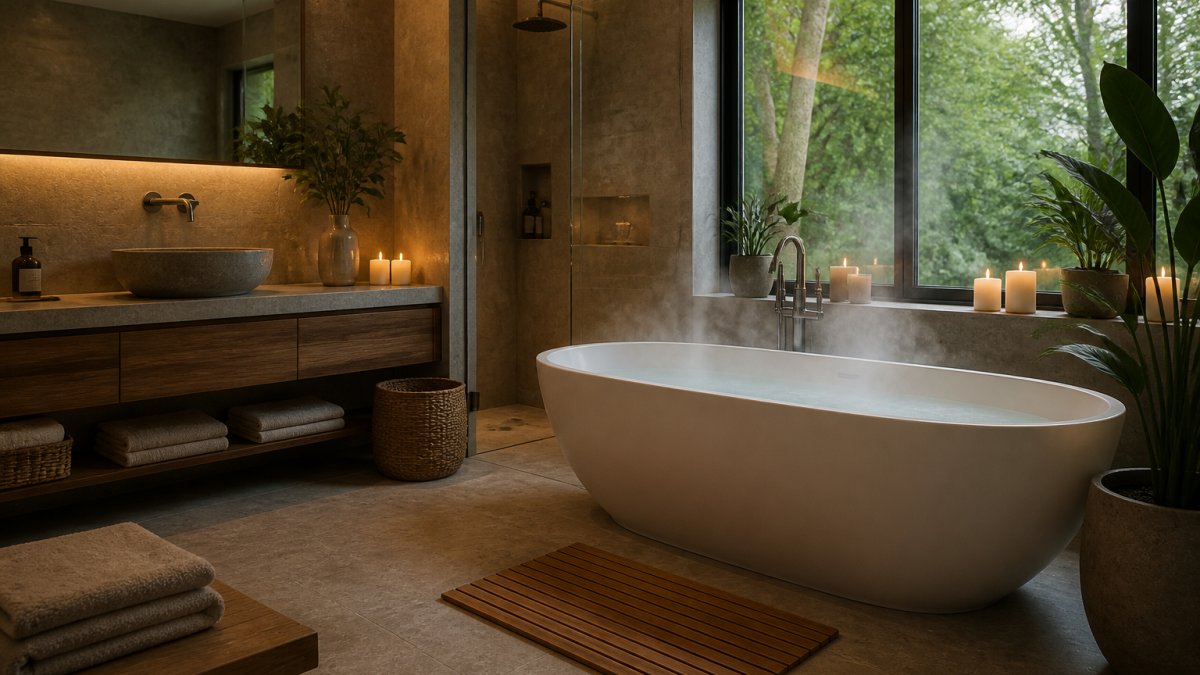
The foundation is spatial flow.
Lighting transforms mood more than any other design element. Spa bathrooms use layered lighting: dimmable overhead fixtures for task lighting, recessed warm accent lights around the tub or shower, and often integrated lighting in vanity mirrors.
Water systems deserve equal investment. A luxury rainfall showerhead with multiple spray patterns, body jets, and adjustable water pressure creates a sensory experience that justifies the cost. Soaking tubs, freestanding or built-in, shift from decorative to functional, with deep dimensions that allow full body submersion and proper temperature retention.
Calming Color Palettes and Natural Materials
Spa bathrooms rely on neutral, earth-toned color palettes that create calm rather than stimulation. Soft grays, warm whites, pale greens, and muted blues dominate, colors that recede visually and support relaxation.
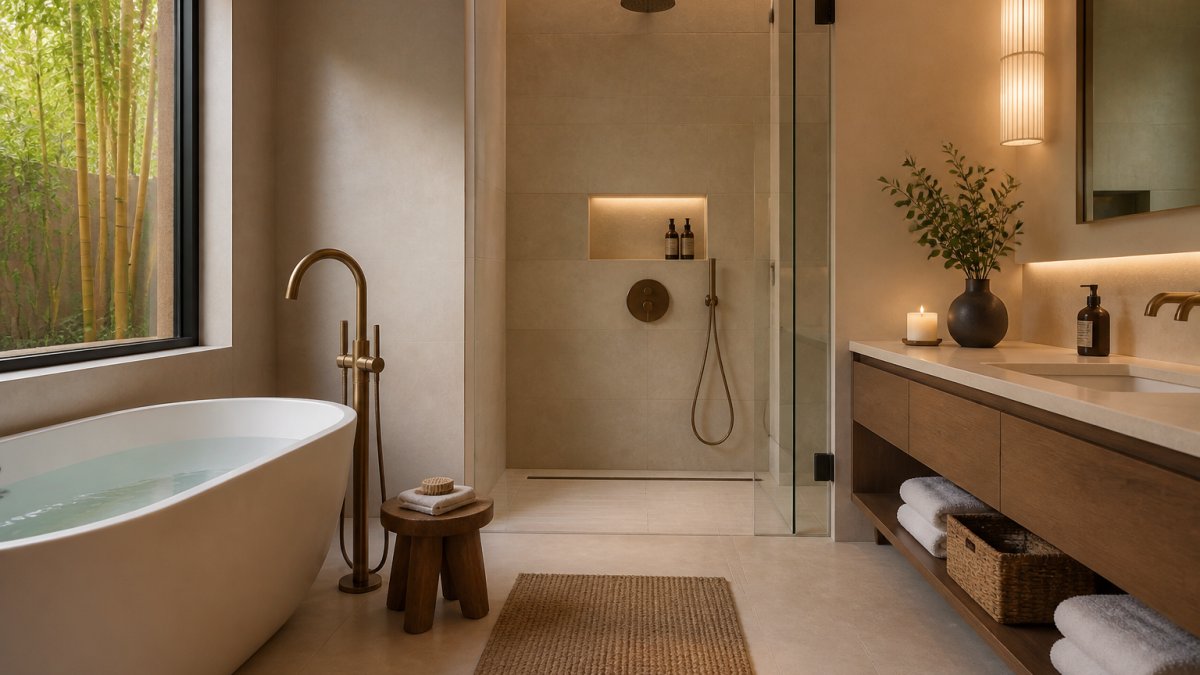
Natural materials amplify this effect. Stone tile (marble, limestone, or slate), wood accents, and organic finishes replace plastic and chrome. These materials not only look refined but also feel different underfoot and to the touch, creating a multisensory experience that signals luxury and wellness.
Texture matters as much as color. Rough stone contrasts with smooth wood, matte finishes balance glossy surfaces, and varied tile patterns create visual interest without jarring the senses. A spa bathroom should feel tactilely rich, something you notice and appreciate through touch as much as sight.
Showers as Personal Wellness Zones
The shower has evolved from a functional necessity into a wellness pod. Modern spa bathrooms position the shower as a focal point, often occupying significant wall space and featuring a walk-in design without a traditional door or enclosure.
A wellness-focused shower system includes multiple water delivery points: an overhead rainfall head, body jets at varying heights, and a handheld wand for flexibility. Water pressure control matters, the ability to adjust from a gentle cascade to a strong massage spray addresses different wellness needs throughout the week.
Steam capability transforms a shower into a true wellness experience. A simple steam generator creates humidity that opens pores, eases muscle tension, and creates the sensory environment of a professional spa. For homeowners serious about daily wellness, a dedicated steam shower or steam system within the shower enclosure justifies the investment.
The wet zone itself requires thoughtful design. Proper drainage prevents water from pooling outside the shower area. Slip-resistant flooring keeps the space safe while maintaining aesthetic appeal. Ventilation removes excess humidity without creating cold drafts that disrupt the relaxation experience.
Small Spa Bathroom Ideas for Compact Spaces
Not every homeowner has a sprawling primary bathroom. Spa-inspired design works in smaller spaces through strategic prioritization and clever use of vertical elements.
A small spa bathroom succeeds by choosing one focal point rather than attempting luxury everywhere. This might be an exceptional soaking tub in a compact footprint, a luxury shower system with premium fixtures, or a statement vanity with integrated lighting and storage. The remaining elements support this anchor feature without competing for attention.
Vertical design maximizes perceived space. Wall-mounted vanities create floor visibility, tall narrow shelving stores essentials without consuming square footage, and floor-to-ceiling tile or paneling draws the eye upward. Mirrors multiply perceived space and reflect light, making compact bathrooms feel more open.
Storage solves the practical constraint that small bathrooms often lack room for amenities. Built-in niches within shower walls hold toiletries without shelves. Vanity drawers organize items out of sight. Floating cabinets above the toilet use otherwise wasted space.
Lighting becomes more critical in compact spaces. Proper illumination around the vanity prevents shadows, while accent lighting around a small tub or shower creates the spa atmosphere that larger bathrooms achieve through scale. A single dimmable overhead fixture with warm-toned bulbs works harder in a small space than multiple competing light sources.
Bathroom Tile Trends 2026: Texture and Sensory Design
Bathroom tile trends for 2026 emphasize texture and sensory engagement over purely visual appeal. The era of flat, glossy ceramic tile is fading in favor of materials that reward touch and create visual depth.
Natural stone dominates, marble with visible veining, slate with its organic surface variation, and limestone with subtle color gradation. These materials cost more than manufactured tile but deliver the sensory richness that defines spa design. Each tile is unique, preventing the monotonous repetition that characterizes standard bathrooms.
Textured finishes replace smooth glazes. Matte surfaces reduce glare and feel warmer underfoot. Honed stone (polished but not glossy) offers sophistication without the slippery quality of high-gloss finishes. Textured surfaces also hide water spots and soap residue better than polished alternatives, reducing maintenance burden.
Large-format tiles create visual continuity and reduce grout lines that can feel visually busy. A 12-by-24-inch tile or larger creates clean, flowing surfaces that feel more refined than traditional 4-by-4 or 6-by-6 formats.
Color trends shift toward warm naturals: soft beiges, warm grays, pale greens, and muted terracotta. These colors complement natural materials and support the calming aesthetic central to spa design. Bold accent tiles work when used sparingly, perhaps a single feature wall, rather than covering entire surfaces.
Spa Bathroom Lighting Ideas for Ambiance and Function
Lighting in a spa bathroom must accomplish two competing goals: provide adequate task lighting for grooming and safety while creating ambiance that supports relaxation. The solution is layered, dimmable lighting that adapts to different times of day and moods.
Vanity lighting requires specific attention. Lights positioned on either side of the mirror (rather than above) eliminate shadows on the face and provide flattering illumination for grooming tasks. Warm color temperature (2700K) feels more inviting than cool, clinical white light (4000K+).
Accent lighting around the tub or shower creates focal-point drama. Recessed lights in the ceiling above a soaking tub, or integrated lighting in a shower niche, draw attention to these premium features and create visual interest.
Ambient background lighting prevents the bathroom from feeling like a clinical space. A single dimmable overhead fixture with frosted diffuser, or cove lighting along the ceiling perimeter, provides gentle overall illumination that supports relaxation. This background layer should feel subtle, noticeable when off, unobtrusive when on.
Consider the color of light itself. Warm white (2700K) supports relaxation and feels more luxurious than cool white. Some homeowners add color-changing LED systems that shift from warm white during evening wind-down to slightly cooler tones in the morning.
Luxury Amenities: Steam Showers, Soaking Tubs, and Beyond
Luxury spa bathrooms incorporate amenities that transform routine into ritual. These aren't decorative, they deliver measurable wellness benefits that justify their cost.
A steam shower combines water therapy with heat exposure, creating conditions that ease muscle tension, open pores, and promote circulation. A dedicated steam generator heats water to create steady steam without requiring a sauna-style sealed room.
Soaking tubs represent the ultimate indulgence in bathroom design. Unlike standard bathtubs, spa-quality soaking tubs feature deeper dimensions (often 24+ inches), ergonomic interior contours, and materials that retain heat.
Luxury showerheads go beyond basic water delivery. Multi-function heads offer rainfall patterns, massage jets, and adjustable spray intensity. Some integrate chromotherapy (color-changing lights) or aromatherapy diffusers. These features appeal to homeowners seeking a complete sensory experience.
Heated floors in the wet zone add comfort and safety. Radiant heating prevents the shock of stepping onto cold tile and creates a luxury feel that persists through daily use.
Smart bathroom technology integrates seamlessly into spa design. Programmable shower systems remember individual preferences, water temperature, spray patterns, duration. Heated mirrors prevent fogging. Ventilation systems activate automatically based on humidity levels. These systems operate invisibly, supporting the spa experience without visible technology.
Budget, Maintenance, and Practical Trade-Offs
A spa bathroom requires investment, and understanding where to allocate budget prevents overspending on features that don't deliver proportional value.
The shower system and soaking tub should receive the largest allocation, these are the elements used daily and noticed constantly. A luxury rainfall showerhead, body jets, and quality plumbing justify significant investment.
Natural stone materials cost more than manufactured alternatives but deliver durability and aesthetic value that justifies the premium.
Lighting and ventilation deserve adequate budget allocation. Proper ventilation prevents moisture damage that undermines long-term durability. Quality lighting transforms the daily experience and supports the relaxation goal central to spa design.
Maintenance requirements vary by material. Natural stone requires periodic sealing to prevent staining and water damage. Grout requires regular cleaning to prevent mold. Ventilation systems need filter replacement. Steam generators require descaling.
Water usage deserves consideration. A soaking tub consumes significantly more water than a shower. A steam shower uses less water than a traditional shower but requires electricity for the generator.
Dimensions Luxury Builders helps clients navigate these decisions through detailed consultation and transparent project planning.
Creating a spa-like bathroom transforms how you experience your home every single day.
Frequently Asked Questions
Why are spa bathrooms becoming so popular in 2026?
Homeowners increasingly view bathrooms as personal wellness retreats rather than purely functional spaces. Rising stress levels, increased focus on at-home wellness, and improved access to affordable luxury finishes have made spa-like bathrooms achievable for more households. The trend reflects a broader shift toward prioritizing mental health and self-care within the home environment.
What are the most important spa-like bathroom features to prioritize?
Start with calming color palettes (soft neutrals, warm earth tones), natural materials like stone and wood, and upgraded lighting that supports relaxation. A quality shower system with adjustable water pressure and a soaking tub are high-impact amenities. Even small changes like adding plants, improving ventilation, and incorporating soft textures can transform the sensory experience without major renovation costs.
How can I create a spa bathroom in a small space?
Focus on vertical storage to reduce clutter, use light colors and mirrors to expand the visual space, and choose a corner soaking tub or walk-in shower over a separate bathtub. Incorporate natural materials sparingly through tile accents and wooden shelving. Lighting and texture matter more than size, layered lighting and tactile finishes create the spa ambiance regardless of square footage.
Are spa bathroom renovations worth the investment?
Spa bathroom upgrades deliver both quality-of-life and resale value. Homeowners report improved relaxation and stress relief from daily use. However, costs vary significantly based on scope. Consult a local contractor for a detailed assessment of your specific space and budget.