 listicle
Luxury Bathroom Design Trends 2026: What's In
Table of Contents
- The 2026 Shift: From Trend-Chasing to Timeless Luxury
- Earthy Neutrals and Stone Textures Replace Cool Grays
- Wet Rooms and Spa-Level Shower Systems Take Center Stage
- High-End Bathroom Vanity Trends 2026: Floating Designs and Warm Wood
- Smart Bathroom Technology Integration for Wellness and Convenience
- Layered Lighting and Sculptural Fixtures Set the Mood
- Planning Your Bathroom Remodeling Project Timeline for 2026
- Designing for Resale: ROI and Universal Access
- Frequently Asked Questions
Luxury bathroom design trends 2026 move away from stark minimalism toward warm, organic, deeply personal spaces. The all-gray, chrome-heavy bathroom is ending, replaced by natural materials, spa-level wellness, and sculptural fixtures. At Dimensions Luxury Builders, we see this shift in every Broward County consultation; this guide breaks down the eight directions shaping high-end remodels this year.
The throughline for 2026 is timeless materials and layouts prioritizing daily well-being and long-term value over fleeting fads. Below, we translate these trends into a cohesive plan, from earthy stone textures to your remodeling timeline. Most trend guides get this wrong: they focus on aesthetics alone, ignoring durability, maintenance, and accessibility decisions that determine whether a luxury bathroom functions beautifully for decades.
The 2026 Shift: From Trend-Chasing to Timeless Luxury
The most significant shift in 2026 is philosophical: homeowners reject quick-renovation disposability for sustainable luxury, choosing materials and layouts designed to last twenty years or more. This prioritizes construction quality, like wet-room waterproofing, over decorative features that date quickly.
This aligns with industry guidance emphasizing that a successful remodel balances beauty with long-term performance. The result is a primary suite that feels current and classic, where a terracotta accent or brushed bronze fixture won't look outdated in a few seasons. We call this "quiet luxury": investment goes into the bones, stone, cabinetry, shower system, rather than trend-driven accessories.
Earthy Neutrals and Stone Textures Replace Cool Grays
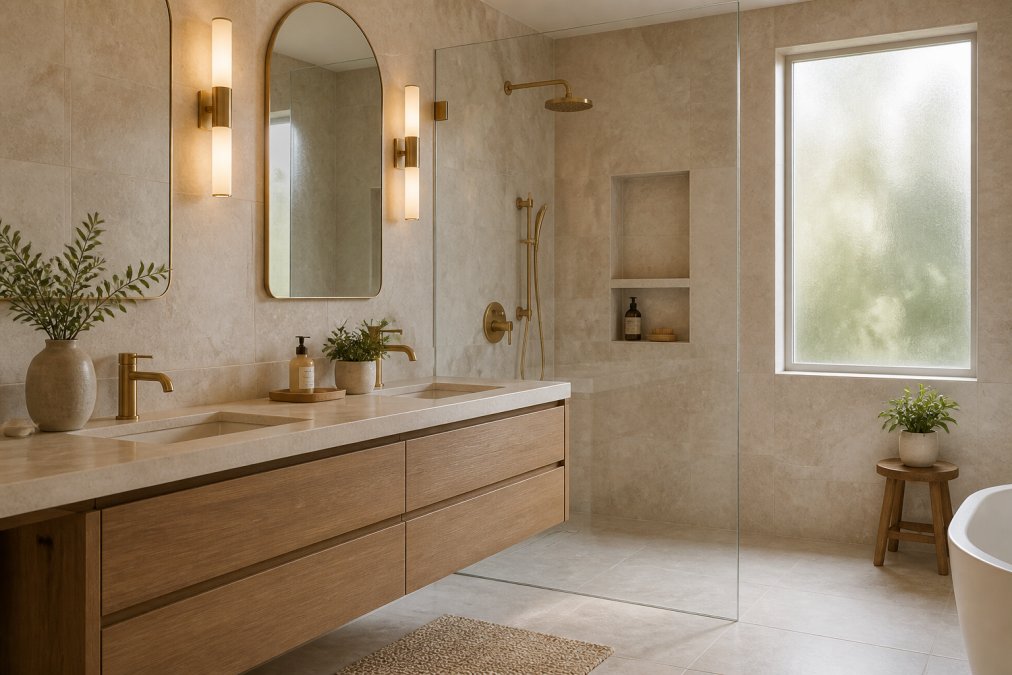
Cool grays and glossy white subway tiles have fallen out of favor in high-end circles. The 2026 color story is rooted in earthy neutrals, warm taupe, sand, greige, rich terracotta, creating a serene, biophilic connection to nature, making the bathroom feel like a retreat rather than a clinical utility space.
Texture is the defining element of this trend. Large-format slabs from manufacturers like Porcelanosa offer a seamless, grout-free aesthetic that mimics the veining of natural stone, from soft travertine to dramatic quartzite. The minimal grout lines not only enhance the sophisticated visual impact but also make the surface easier to clean and more resistant to moisture. Pairing these stone textures with matte finishes, rather than high-gloss, further amplifies the organic, grounded feel.
The Maintenance Reality of Natural Stone vs. Porcelain
Natural stone's aesthetic appeal is undeniable, but its maintenance profile differs dramatically from porcelain or ceramic. This is where many luxury remodels either succeed or create a lifetime of frustration.
Natural stone (marble, travertine, limestone): These porous materials require annual sealing with a penetrating sealer in wet environments. Acidic cleaners, vinegar, lemon-based products, many commercial sprays, will permanently etch marble and limestone; fabricators recommend pH-neutral cleaners only. Travertine's natural pits may require pre-filled grout or epoxy resin for a smoother, wipeable surface.
Porcelain large-format slabs: Non-porous and requiring no sealing, they resist staining from hair dye, cosmetics, and hard water. With rectified edges and tight 1/16-inch grout joints, the maintenance surface is nearly seamless. Through-body porcelain that mimics stone hides chips and scratches better than glazed surfaces.
The practical trade-off: Natural stone offers unmatched depth and authenticity but demands a quarterly cleaning ritual and immediate spill response. Porcelain offers near-zero maintenance and superior moisture resistance. For a daily-use primary bathroom, most design-build firms report porcelain clients are consistently happier with long-term upkeep than those who insist on natural marble.
Hard Water and Your Stone Investment
Water chemistry is rarely mentioned in trend articles. Hard water from a well or high-mineral municipal supply leaves calcium deposits on stone that are difficult to remove without harsh acids. A whole-house softener or point-of-use reverse osmosis system, typically $800 to $2,500 installed, protects a stone investment that may cost $15,000 or more. Discuss water hardness test results with your contractor before finalizing stone selections.
The Warmth of Matte Finishes: A Practical Consideration
Matte and honed finishes are central to the 2026 aesthetic but interact with maintenance differently than polished surfaces. Honed marble shows water spots more readily than polished because it is less reflective and does not hide mineral residue. Conversely, matte porcelain hides fingerprints and water spots better than high-gloss. If you love honed natural stone, plan a daily post-shower squeegee routine to prevent a cloudy film.
Wet Rooms and Spa-Level Shower Systems Take Center Stage
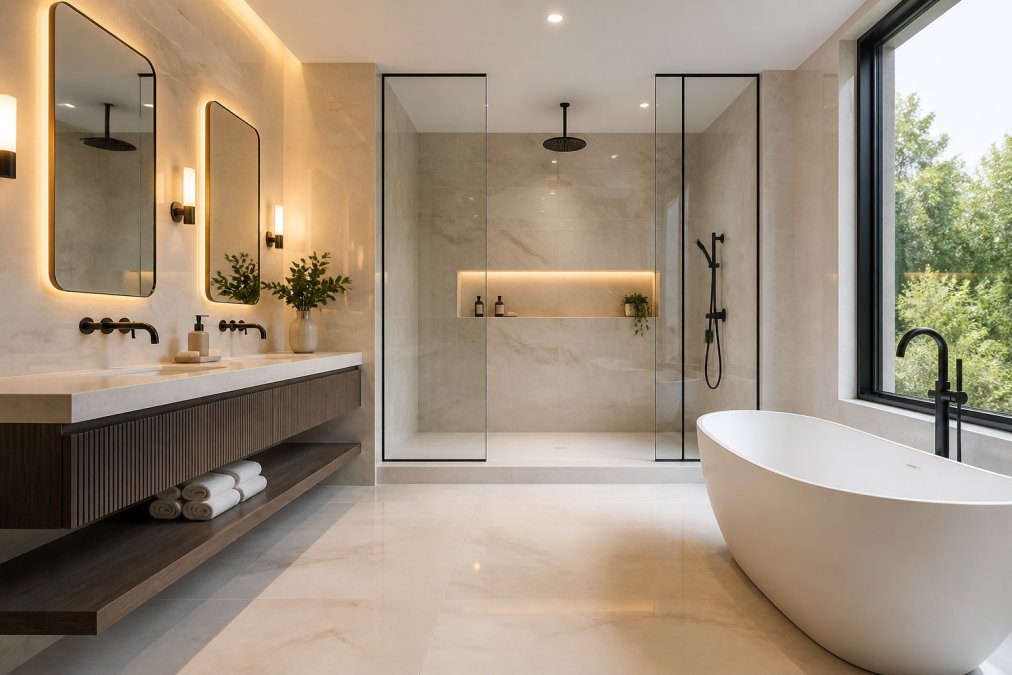
The freestanding tub is no longer the automatic centerpiece. In 2026, the spotlight shifts to the shower, specifically the open-concept wet room. This design eliminates the traditional glass enclosure, creating a seamless transition from vanity to shower using a subtle floor slope and linear drain, resulting in a more spacious, ergonomic layout even in a modest footprint.
A true wet room demands meticulous waterproofing, making it a project for experienced professionals. Beyond layout, fixtures define the experience: spa-level systems now include multiple showerheads, overhead rain panels and handheld wands, often controlled by digital interfaces that preset temperature and flow. This smart wellness focus turns the daily shower into a ritual and drives wellness-focused design in the primary suite.
High-End Bathroom Vanity Trends 2026: Floating Designs and Warm Wood
The vanity is the bathroom's workhorse, and high-end vanity trends 2026 prioritize form and function. Floating vanities remain dominant, opening floor space and simplifying cleaning. The key evolution is material: custom cabinetry moves from painted whites toward warm wood tones and rich, textured finishes.
Warm wood, particularly oak and walnut, offers an organic counterpoint to cool stone and tile. Paired with a stone countertop and vessel sink, it creates a grounded focal point. Warm metal finishes become critical here: brushed brass, unlacquered bronze, and champagne gold hardware and faucets replace polished chrome, adding vintage-inspired, curated aesthetics. Focus on custom cabinetry and clutter-free storage keeps the visual field calm.
Smart Bathroom Technology Integration for Wellness and Convenience
Smart bathroom technology has moved from novelty to expectation in luxury renovations. The 2026 homeowner seeks seamless smart home integration that enhances daily comfort, beyond Bluetooth speakers to heated floors with programmable schedules, smart mirrors with anti-fog and circadian lighting, and toilets with bidet functions and automatic lids.
The most compelling applications focus on wellness and convenience: digital shower controls start water at your preferred temperature before you step in; backlit mirrors provide optimal grooming light; voice-activated controls adjust lighting, play audio, or check weather hands-free. These features create an atmospheric design that anticipates needs and simplifies routines, a hallmark of modern luxury.
Layered Lighting and Sculptural Fixtures Set the Mood
Lighting is the unsung hero of luxury interior design, and 2026 trends treat it with due importance. The single, harsh overhead fixture is long gone. The current approach is layered lighting, ambient, task, and accent, creating depth and flexibility, allowing the room to transition from bright and invigorating in the morning to soft and relaxing in the evening.
Implementation involves recessed ceiling lights for general illumination, wall sconces flanking the mirror for shadow-free task lighting, and LED strips under vanities or behind mirrors for a gentle glow. Sculptural fixtures come into play here: a statement pendant or artistic sconces serve as the room's jewelry, complementing stone and wood. The goal is a functional, atmospheric space adjustable at the touch of a dimmer.
Planning Your Bathroom Remodeling Project Timeline for 2026
A successful luxury remodel is as much about logistics as design. A common mistake is underestimating the planning phase. A realistic timeline for a full luxury renovation is typically 8 to 12 weeks, not including design and material selection, which can take an additional 4 to 6 weeks.
The timeline breaks into phases: design consultation and material selection; demolition and rough-in, where plumbing and electrical are moved; waterproofing, tile, and cabinetry installation; and finishing touches of fixtures, lighting, and hardware. Delays often stem from backordered tiles or custom cabinetry, so finalize selections early. Working with a single point of contact, like the end-to-end project management offered by Dimensions Luxury Builders, ensures coordination and timeline protection.
| Project Phase | Typical Duration | Key Considerations |
|---|---|---|
| Design & Material Selection | 4-6 weeks | Finalize tile, stone, cabinetry, and fixtures to avoid delays |
| Demolition & Rough-In | 1-2 weeks | Move plumbing/electrical; requires licensed trades |
| Waterproofing & Tile Installation | 2-3 weeks | Critical for wet rooms; must be flawless |
| Cabinetry & Countertop Installation | 1-2 weeks | Custom pieces require lead time |
| Fixtures, Lighting & Final Finish | 1-2 weeks | Includes hardware, mirrors, and trim details |
Designing for Resale: ROI and Universal Access
While personal enjoyment is the primary driver, smart homeowners also consider long-term property value. Designing for resale means making choices with broad appeal, avoiding overly personalized aesthetics that could alienate future buyers. Investments in high-quality, timeless materials like stone and warm wood are generally safe bets that enhance perceived value.
A forward-thinking approach also incorporates universal design principles, which improve accessibility without sacrificing style. This includes features like curbless shower entries, which are both a hallmark of the modern wet room aesthetic and a practical accessibility feature, as well as strategically placed grab bars that can be finished to match the decor. These elements, often recommended by resources on universal design and aging-in-place, ensure the bathroom remains functional and beautiful for all stages of life. This intersection of luxury and accessibility is a differentiator that adds real, long-term value to a home, a consideration that design publications focused on ROI highlight as a growing priority for discerning homeowners.
The Resale Math: What Actually Moves the Needle
Real estate professionals consistently report the primary bathroom is one of the top three spaces influencing a buyer's decision. But not all luxury upgrades return equal value. The National Association of Realtors' Remodeling Impact Report shows bathroom renovations recoup 60-70% of cost at resale for mid-range projects; upscale projects recoup less, sometimes 50-60%, because personalization increases with budget. The most financially prudent luxury bathroom balances indulgence with broad market appeal.
What adds value:
- Curbless showers: These are now expected in the luxury segment. They appeal to aging buyers, buyers with mobility concerns, and anyone who dislikes cleaning glass tracks. A curbless entry with a linear drain is a feature that appraisers recognize as a premium upgrade.
- Warm wood vanities: Oak and walnut read as timeless and high-end. They photograph well and appeal to both traditional and modern tastes.
- Dual vanities with generous counter space: This is a non-negotiable for many buyers in the luxury tier.
- Heated floors: In cooler climates, this is a strong differentiator. Even in warmer regions, it signals a higher level of finish.
What can hurt value:
- Oversized freestanding tubs that dominate the room and reduce shower space.
- Ultra-specific color palettes like deep burgundy or black bathrooms that require a full redo for the next owner.
- Overly complex smart technology that requires a learning curve or proprietary apps that may become obsolete.
Universal Design as a Luxury Feature, Not an Afterthought
The aging-in-place demographic is the fastest-growing segment of the luxury home market. Buyers over 55 control a disproportionate share of home equity, and they are looking for homes that will accommodate them for the next 20-30 years. This is where universal design becomes a genuine selling point.
Key features that blend luxury and accessibility:
- Curbless entries: Already covered, but worth emphasizing, this is the single most requested accessibility feature in modern luxury remodels.
- Wider doorways (32-36 inches): This is a structural change that is far easier to execute during a full remodel than as a retrofit. It also makes the space feel more open and grand.
- Blocking in walls for future grab bars: Installing 2x6 blocking behind the tile now costs almost nothing. Retrofitting it later requires demolition. A discreet grab bar finished in brushed brass or matte black can look like a deliberate design element, not a medical device.
- Comfort-height toilets (17-19 inches): These are now standard in most luxury lines and are easier for everyone to use.
- Handheld shower wands: Already a staple of spa-style systems, they serve dual purposes for cleaning and accessibility.
- Non-slip flooring: Large-format porcelain with a matte finish or textured stone provides traction without the institutional look of safety flooring.
The Appraisal and Buyer Perception Gap
One nuance many homeowners miss: appraisers do not typically add value for "luxury" brand names or high-end fixtures. They add value for square footage, quality of materials, and functional layout. A Kohler or Brizo faucet will not appraise higher than a Delta, but a well-executed curbless shower with quality tile will. When planning your remodel, prioritize structural and layout changes that improve function over decorative upgrades that only you will appreciate.
Frequently Asked Questions
What bathroom colors are going out of style in 2026?
The all-gray bathroom is firmly on its way out. Cool gray walls, gray porcelain tile, and gray veined quartz are being replaced by warmer, earthy neutrals. Think creamy off-whites, soft greiges with a beige undertone, and rich terracotta. If your current bathroom relies on cool gray tones for its entire palette, a refresh toward warmer stone textures and earthy neutrals will bring it in line with current luxury bathroom design trends.
What is the in-color for luxury bathrooms in 2026?
Earthy, warm neutrals are the defining colors for luxury bathrooms in 2026. This includes shades like warm taupe, creamy alabaster, and soft sand, often paired with deeper accents of terracotta or olive. These tones create a calming, organic backdrop that complements natural materials like wood and stone, moving away from the sterile look of pure white and gray toward a more welcoming, spa-inspired atmosphere.
How do I incorporate spa-like features into a luxury bathroom remodel?
Start by prioritizing a wet room layout with a spa-level shower system, which often includes multiple showerheads and body sprays. Add heated flooring for comfort and a freestanding soaking tub as a focal point. Layered lighting is key: mix ambient ceiling lights with task lighting at the vanity and dimmable accent lights. Finally, integrate smart bathroom technology, like a digital shower control or a backlit anti-fog mirror, to elevate daily routines.
How long does a luxury bathroom remodel take?
A full luxury bathroom remodel typically takes between 8 and 12 weeks, but the timeline depends on the project's complexity. A simple update of fixtures and finishes might take less time, while a complete overhaul involving a new wet room layout, custom cabinetry, and large-format slab installation can take longer. The permitting process, product lead times for high-end fixtures, and any unexpected structural issues can extend your bathroom remodeling project timeline, so planning for a buffer is wise.
This article was written using GrandRanker