 comparison
Freestanding vs Built-In Tubs for Spa Bathrooms
Table of Contents
- Freestanding Tubs: Sculptural Luxury and Design Freedom
- Built-In Tubs: Space Efficiency and Practical Comfort
- Freestanding Tub Plumbing Requirements and Installation Complexity
- Built-In Tub Deck Design Ideas and Bathroom Footprint
- Best Bathtub Materials for Heat Retention and Durability
- Cost Comparison and Long-Term Value
- Which Option Suits Your Spa Bathroom Vision
- Frequently Asked Questions
Last Updated: September 23, 2026
Freestanding Tubs: Sculptural Luxury and Design Freedom
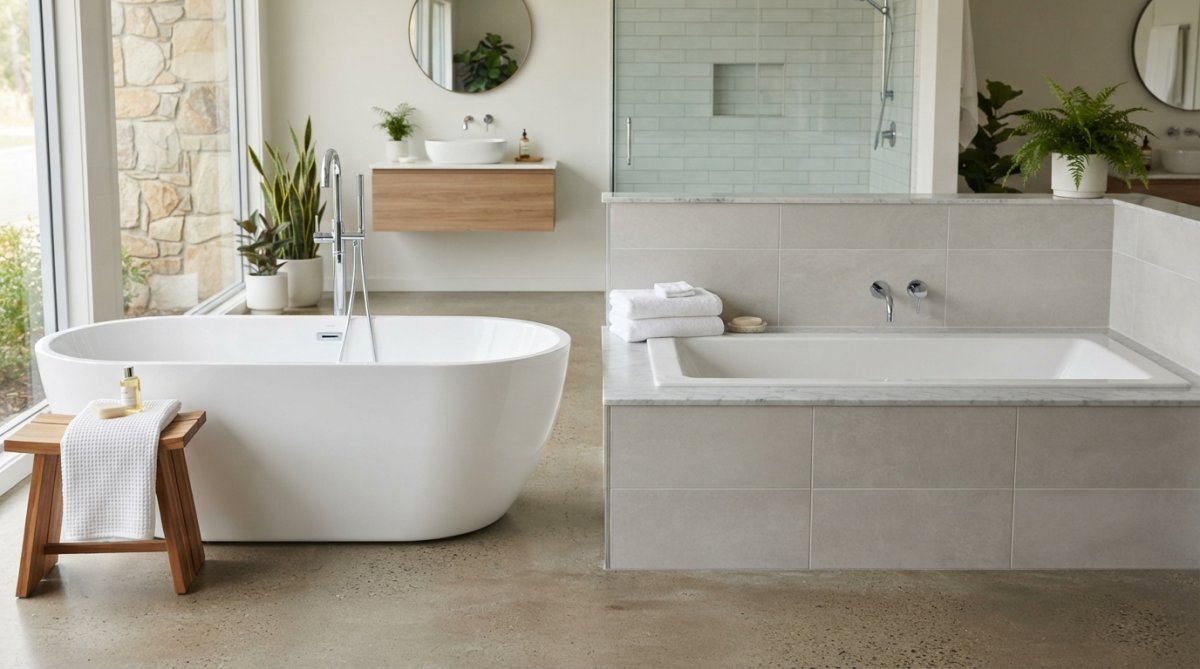
A freestanding tub vs built-in tub decision fundamentally shapes your spa bathroom's visual impact and functional flow. Freestanding tubs serve as architectural focal points, floating in the room to create luxury and openness that transforms an ordinary bathroom into a personal retreat.
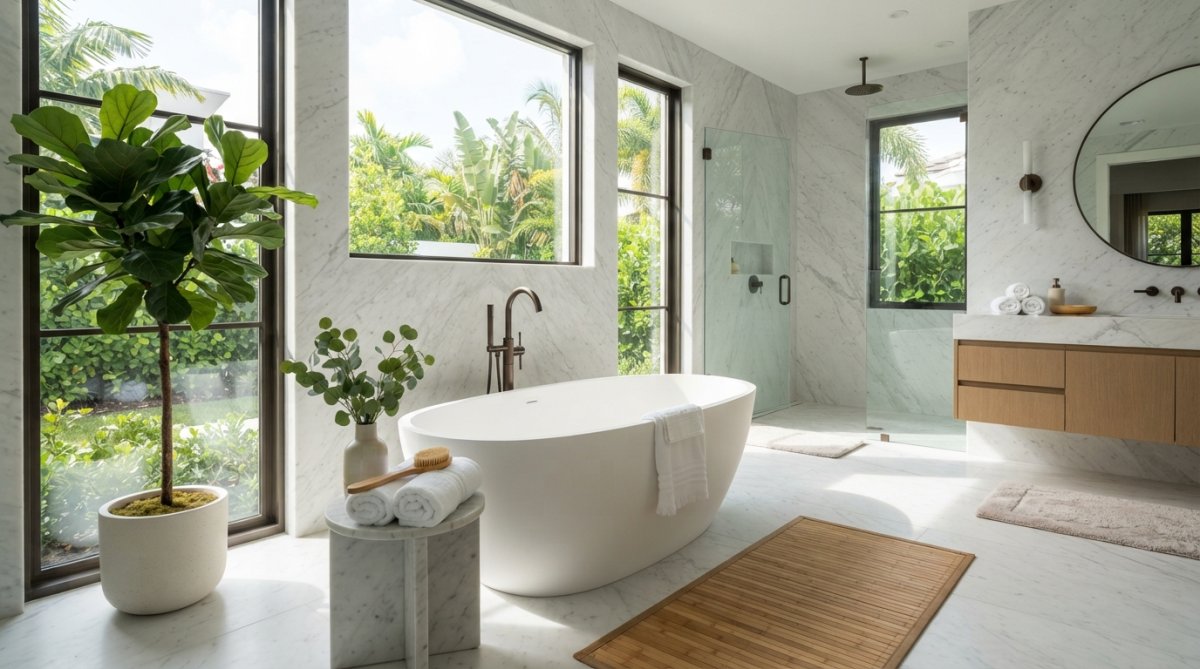
Freestanding tubs offer substantial design freedom, position them anywhere your plumbing allows, orient toward views, or center them for dramatic effect. Stone composite materials offer superior heat retention; acrylic provides a lighter-weight alternative without structural load concerns.
The Hidden Maintenance Challenge: Cleaning the Gap
A critical consideration is the gap between the tub and surrounding floor. Freestanding tubs create a 1- to 3-inch gap around their perimeter where dust, hair, soap residue, and moisture accumulate, difficult to access and clean, especially behind the tub.
Water and humidity migrate into the gap during bathing. If not sealed or regularly cleaned, mold and mildew develop on the subfloor, creating aesthetic and structural concerns that often surface months after installation.
To manage this challenge effectively, consider these strategies during design and installation:
-
Seal the gap with marine-grade silicone caulk after installation to prevent water migration and ease cleaning. Silicone remains flexible with temperature changes; re-caulk every 2-3 years as it degrades.
-
Install a continuous base trim or skirt around the tub's perimeter. Premium tubs often include integrated trim that sits above the finished floor, creating an easier-to-clean edge. Custom wood or stone bases can cover the gap if not included.
-
Choose finished flooring carefully around the tub. Porous materials like natural stone are susceptible to mold and water damage. Polished marble, sealed granite, or large-format porcelain tile are more forgiving. Run tile to the tub's edge with a single caulk line rather than multiple grout joints.
-
Use a thin, flexible cleaning tool designed for tight spaces, a grout brush, specialized gap-cleaning tool, or cloth-wrapped putty knife. Establish a monthly cleaning routine to prevent buildup.
At Dimensions Luxury Builders, we discuss maintenance realities upfront so clients can choose materials and sealing strategies that fit their lifestyle.
Pros of freestanding tubs:
- Creates a striking focal point that elevates the entire bathroom aesthetic
- Allows flexible positioning and bathroom layout options
- Superior heat retention with stone composite materials
- Easier cleaning of the tub exterior itself since no surround walls trap dust on the tub surface
- Works well in open-concept primary suites
- Can be positioned to take advantage of natural light or views
Cons of freestanding tubs:
- Requires floor-mounted or deck-mounted faucet installation, adding plumbing complexity
- Higher price point compared to standard built-in models
- Demands more floor space and careful bathroom footprint planning
- Structural load considerations for heavier materials like cast iron
- Requires finished flooring underneath and around the tub
- Creates a gap around the perimeter that accumulates dust, hair, and moisture, requiring regular maintenance and sealing
- More vulnerable to water damage if the gap is not properly sealed and maintained
Built-In Tubs: Space Efficiency and Practical Comfort
Built-in tubs maximize bathroom functionality within limited square footage. These alcove installations fit snugly into three-wall enclosures, ideal for smaller bathrooms where space constraints exist.
A built-in tub vs freestanding tub comparison reveals the practical advantage: they require minimal floor space and integrate seamlessly with shower combinations, solving the shower-tub debate in one compact footprint. The tiled surround offers custom spa aesthetics through materials, colors, and patterns.
Installation is more straightforward with built-in tubs. Standard plumbing rough-in and predictable alcove design reduce complexity and labor costs compared to freestanding alternatives.
Pros of built-in tubs:
- Space-efficient design maximizes usable bathroom footprint
- Lower installation costs with standard plumbing requirements
- Seamless shower-tub combination options
- Customizable tiled surrounds for personalized spa aesthetics
- Integrated safety features like textured bottoms and grab bar compatibility
- Works well in smaller bathrooms and tight layouts
Cons of built-in tubs:
- Less visual impact as a focal point, blends into the wall rather than standing out
- Requires tiled surround construction, which adds labor costs
- More difficult to clean corners and edges where tile meets tub
- Limited to alcove positioning, less design flexibility
- Grout lines in surrounding tile require ongoing maintenance
Freestanding Tub Plumbing Requirements and Installation Complexity
Freestanding tub plumbing demands more planning than built-in installations because water supply and drainage must reach the tub's location. This flexibility requires careful planning of water supply and drainage positioning.
Floor-Mounted Faucet Installation
Floor-mounted faucets emerge from the subfloor, requiring supply and waste lines roughed in before finished flooring. This works well during new construction but becomes expensive retrofitting into existing bathrooms. Supply lines must slope upward to prevent air pockets; waste lines require 1/4-inch-per-foot slope. Second-floor installations may require opening ceilings or routing through walls. Precise coordination with finished flooring is essential.
Deck-Mounted Faucet Installation
Deck-mounted faucets sit on a finished surface around the tub's rim, easier to retrofit into existing bathrooms. Supply lines run through walls, reducing subfloor work. However, building a structural platform adds framing and waterproofing labor. The deck must slope toward the tub and be sealed with marine-grade silicone. This offers flexibility for existing homes.
Structural Load and Subfloor Reinforcement
Structural load is critical when choosing freestanding materials. Cast iron tubs weigh 300+ pounds empty and 500+ pounds filled; stone composite may exceed 400 pounds empty and 600+ pounds filled. Standard joists (2×10 or 2×12 at 16 inches on center) usually support freestanding tubs, but older homes with 2×8 joists may need reinforcement. A structural engineer can recommend sistering or additional support beams. Skipping this risks floor deflection, tub shifting, and drainage problems.
Overflow and Drain System Coordination
The overflow drain system must integrate into the tub's design with sufficient slope for proper drainage. Freestanding tubs have internal overflow mechanisms preventing spillover if the main drain blocks. The main drain line should be 1.5 to 2 inches in diameter, sloping 1/4 inch per foot toward the main stack.
Built-In Tub Deck Design Ideas and Bathroom Footprint
Built-in tub deck design transforms the surround into a design opportunity. The deck becomes an extension of your spa bathroom aesthetic, with materials ranging from marble and natural stone to porcelain tile and engineered quartz.
Best Bathtub Materials for Heat Retention and Durability
Material selection impacts heat retention, durability, and maintenance. Stone composite retains heat exceptionally well; acrylic offers good heat retention at a lower price point but doesn't match stone composite performance.
| Material | Heat Retention | Durability | Weight | Maintenance | Best For |
|---|---|---|---|---|---|
| Stone Composite | Excellent | 20+ years | Heavy (400+ lbs) | Minimal | Premium freestanding tubs |
| Cast Iron | Excellent | 30+ years | Very Heavy (300+ lbs) | Moderate | Traditional/transitional designs |
| Acrylic | Good | 15-20 years | Light (50-100 lbs) | Minimal | Most built-in and many freestanding models |
| Fiberglass | Fair | 10-15 years | Light (40-80 lbs) | Minimal | Budget-conscious installations |
Cost Comparison and Long-Term Value
The cost comparison between freestanding tub vs built-in tub installations extends beyond the tub itself. Freestanding tubs typically cost more upfront, but total project cost depends on plumbing complexity, material selection, and labor.
Which Option Suits Your Spa Bathroom Vision
Your choice between a freestanding tub vs built-in tub depends on available space, design priorities, and budget.
Choose a freestanding tub if:
- Your primary bathroom has adequate square footage (ideally 100+ sq ft) to accommodate the tub plus walk-around space
- You want the tub to serve as a visual focal point and design statement
- You're willing to invest in premium materials and potentially require structural reinforcement
- Your bathroom layout allows flexible plumbing rough-in positioning
- Heat retention during extended soaks is a priority
Choose a built-in tub if:
- Your bathroom footprint is limited and space efficiency matters
- You want to combine shower and tub functionality in one compact area
- You're budget-conscious and prefer straightforward installation
- You value the customization opportunity that tiled surrounds provide
- Accessibility and low step-over height are important considerations
Frequently Asked Questions
Which bathtub type is best for a luxury spa aesthetic?
Freestanding tubs typically create a stronger spa focal point due to their sculptural presence and visual flow. However, built-in tubs can achieve a modern spa look when paired with high-quality tile surrounds, integrated lighting, and premium materials like stone resin. Your choice depends on whether you prioritize visual drama (freestanding) or a cohesive, integrated design (built-in).
What are the freestanding tub plumbing requirements compared to built-in tubs?
Freestanding tubs require floor-mounted or wall-mounted faucets and flexible drain lines that accommodate the tub's position away from walls. Built-in tubs use standard alcove plumbing with deck-mounted faucets. Freestanding installations demand more careful rough-in planning and may require additional structural support for the drain and supply lines, adding complexity and cost to the plumbing phase.
Are freestanding tubs harder to clean than built-in tubs?
Freestanding tubs offer better cleaning accessibility since you can reach all sides without obstacles. Built-in tubs require careful cleaning around tile seams and grout lines, which trap moisture and require regular maintenance. Stone composite and acrylic freestanding tubs have non-porous surfaces that resist mildew, while built-in tile surrounds demand consistent caulking and grout maintenance.
What materials provide the best heat retention for soaking?
Stone composite and cast iron retain heat longest, keeping bathwater warm for extended soaking sessions. Acrylic offers moderate heat retention at a lower weight and cost. Stone resin materials like those used in premium freestanding tubs offer superior heat retention, making them ideal for luxury spa experiences where prolonged soaking comfort matters.
Is a freestanding tub worth the extra plumbing cost?
Freestanding tubs command higher plumbing costs due to structural reinforcement, floor-mounted fixtures, and custom rough-in work. However, they serve as a lasting focal point that enhances property value and bathroom aesthetics. If spa-inspired design and visual impact are priorities, the investment typically justifies itself through improved home appeal and personal enjoyment. Built-in tubs suit budget-conscious renovations where functionality and space efficiency take precedence.