 ultimate-guide
How to Increase Home Value With Renovations in 2026
Table of Contents
- Best ROI Home Improvements That Actually Increase Home Value
- Cost vs Value of Home Remodeling: What You Get Back
- How to Finance Home Renovations Without Draining Savings
- The Over-Improvement Trap: When Renovations Hurt Resale Value
- Regional Market Variance and Sustainability in Home Renovation ROI
- How to Plan a Renovation Budget That Protects Your Home Equity
- Frequently Asked Questions
Last Updated: September 29, 2026
Best ROI Home Improvements That Actually Increase Home Value
The renovations that increase home value most reliably are the ones buyers can see, insure, and use from day one: a mid-range kitchen refresh, a minor bathroom update, entry door replacement, and impact-rated windows and doors in storm-prone markets. Not every project returns what it costs, and the gap between a smart upgrade and an expensive one usually comes down to scope, not style.
Understanding how to increase home value with renovations starts with separating curb appeal projects from structural repairs. Cosmetic upgrades like paint, fixtures, and flooring deliver broad appeal at lower cost. Structural work, including roof replacement and HVAC efficiency improvements, protects resale value but rarely returns more than it costs.
The five projects that consistently top ROI lists every year, according to Zonda's Cost vs. Value Report, include:
- Garage door replacement - a highly visible exterior upgrade with strong returns
- Entry door replacement - steel and fiberglass doors improve security and curb appeal
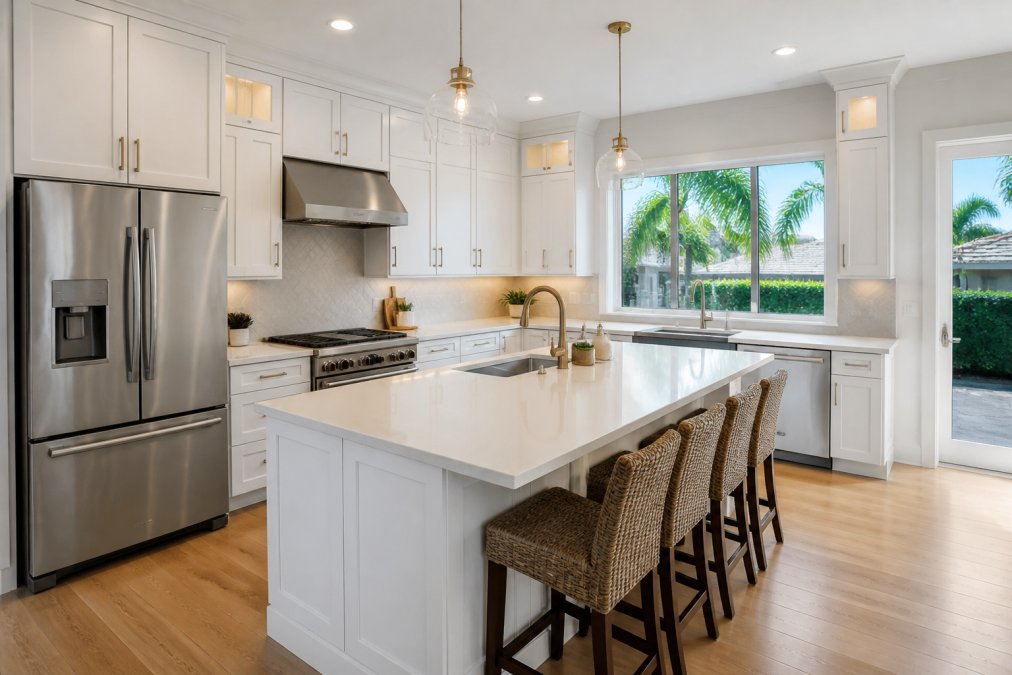
- Minor kitchen remodel - new cabinet fronts, counters, and appliances
- Bathroom vanity and fixture updates - smaller scope, visible payoff
- Siding and exterior facade updates - fiber-cement siding and manufactured stone veneer
Cost vs Value of Home Remodeling: What You Get Back
Cost versus value is the difference between what you spend on a project and what it adds to your appraised value at resale. The single most-cited benchmark is the annual Cost vs. Value Report, which pairs national average project costs with the percentage of that cost typically recouped at resale. The pattern it has shown for years is consistent: mid-range projects recoup a larger share than upscale ones, and exterior replacements beat interior remodels more often than not.
A useful way to read the report is by category, not by individual line item:
| Project Category | Typical Recoup Pattern | Why It Lands There |
|---|---|---|
| Exterior replacement (garage door, entry door, siding, windows) | Highest recoup tier | Visible from the street, insurable, low personalization |
| Mid-range kitchen and bath refresh | Middle-to-high tier | Broad buyer appeal, but finishes are subjective |
| Major kitchen or bath remodel | Lower recoup share | Cost scales faster than buyer willingness to pay |
| Roof, HVAC, structural repair | Low-to-moderate recoup | Buyers expect a functioning home; it protects value rather than adding it |
| Additions and square footage | Varies widely | Value depends almost entirely on local price-per-square-foot comps |
Three mechanisms explain almost all of the variance:
- Appraisal comps. Appraisers value your home against recently sold similar homes. If no comparable sale in your area has a renovated kitchen at your price point, the upgrade doesn't show up in the number.
- Buyer financing limits. A buyer can only pay what their lender's appraisal supports. Over-improving past the neighborhood ceiling strands the extra cost with you.
- Insurance and maintenance signals. New roof, new windows, and new HVAC reduce a buyer's future cost of ownership, which is why they hold value even when they don't 'wow' anyone.
A common mistake is treating cost versus value as a single national number. It isn't. The report itself publishes regional and metro-level figures because the same garage door replacement can recoup a very different share in a high-cost coastal metro than in a lower-cost inland market. Local inventory, buyer expectations, and how much of your neighborhood has already renovated all move the number.
How to Finance Home Renovations Without Draining Savings
Financing home renovations is where most homeowners make their first expensive error: they fund a major remodel from cash reserves and leave nothing for the surprises that always show up once walls open.
A common approach is to split the project into phases and match each phase to the right funding source:
- Cash for cosmetic upgrades and inspections
- Home equity line of credit for mid-size projects, keeping reserves intact
- Cash-out refinance when you're also chasing a lower rate
- Construction loan for additions that add usable square footage
Talk to a tax professional about how capital improvements affect your cost basis. The IRS guidance on home improvements and basis explains which projects adjust your basis when you sell.
The Over-Improvement Trap: When Renovations Hurt Resale Value
Over-improvement is when a renovation pushes your home's features and price beyond what the local market supports. A spa suite or commercial-grade kitchen in a neighborhood of modest homes can lower your market value rather than raise it, because buyers in that price band can't or won't pay the premium.
The rule is simple: match your renovation to the ceiling of your neighborhood, not to your personal taste.
Signs you're over-improving:
- Your renovation costs more than a meaningful fraction of your home's current value
- You're the most expensive house on the block before the project starts
- The upgrade is highly personal (a home gym conversion, an elaborate water feature)
- You're renovating for yourself and calling it an investment
Regional Market Variance and Sustainability in Home Renovation ROI
Regional variance, by climate and market type.
- Storm-prone coastal markets. Insurance carriers increasingly price wind and water risk into premiums. Impact-rated windows, impact-rated doors, and a documented roof replacement do double duty: they raise property value and they lower a buyer's insurance exposure. That second effect is often worth more to a buyer than the cosmetic upgrade itself.
- Cold-winter markets. Buyers scrutinize heating cost. Insulation upgrades, high-efficiency furnaces, and window replacements with low U-factors show up in utility bills, which buyers ask about before they ask about paint colors.
- Hot-dry markets. Roof reflectivity, shade structures, and high-SEER HVAC systems carry more weight than they do elsewhere because cooling load dominates the utility bill.
- Urban vs. rural. Urban buyers tend to pay for finishes and walkability-adjacent upgrades; rural buyers tend to pay for square footage, outbuildings, and self-sufficiency features like well and septic condition. The same $30,000 spent on a kitchen in one market and a shop building in the other produces very different appraisals.
Sustainability and eco-conscious resale.
- Energy ratings and disclosures. A home energy score or utility-bill history gives buyers a number instead of a claim.
- Certifications. ENERGY STAR certified homes and similar programs give appraisers and buyers a recognized label to point to.
- Durable, low-maintenance materials. Fiber-cement siding, metal roofing, and engineered flooring reduce future replacement cost, which buyers price in.
- Electrification readiness. Panel capacity for an EV charger or heat pump is increasingly a checklist item for buyers who plan to electrify later.
The over-improvement trap, applied regionally.
Signs you're over-improving:
- Your renovation cost is a large fraction of your home's current value
- You're already the most expensive house on the block before the project starts
- The upgrade is highly personal (a home gym conversion, an elaborate water feature)
- You're renovating for yourself and calling it an investment
How to Plan a Renovation Budget That Protects Your Home Equity
A renovation budget protects your home equity when it sets a hard ceiling before work begins and holds a reserve for the unknown. Home equity is the difference between your home's market value and what you owe, and every unplanned dollar spent eats into it.
Build your budget in four lines:
- Hard costs - materials, labor, permits, and inspections
- Soft costs - design, drawings, and project management
- Contingency - at least 10-15% for surprises behind the walls
- Holding costs - temporary housing, storage, or lost rental income
Frequently Asked Questions
What renovations increase property value the most?
Kitchen and bathroom remodels, garage door replacement, and entry door upgrades consistently deliver the highest returns. Fiber-cement siding and manufactured stone veneer also rank well for exterior projects. Minor kitchen updates, like new fixtures and refacing cabinets, often recoup more than major structural changes. Focus on cosmetic upgrades that improve curb appeal and energy efficiency to maximize home value without overspending.
How to increase home value by $50,000?
Target high-impact areas: a minor kitchen remodel, a bathroom vanity update, new flooring, and fresh paint can add significant value. Adding usable square footage through a small addition or finished attic also helps. Improving energy efficiency with insulation and HVAC upgrades appeals to buyers. Combine several mid-range projects rather than one large renovation to spread your return on investment across multiple appraisal categories.
Which home improvements offer the best return on investment?
Garage door replacement, entry door replacement, and minor kitchen and bathroom remodels typically recoup the most at resale. Siding and exterior facade updates, like fiber-cement or manufactured stone veneer, also perform well. Energy-efficient upgrades such as new windows and insulation reduce utility costs and attract buyers. Decluttering and deep cleaning before listing cost little but improve perceived value during home inspection.
How do I finance home renovations without draining my savings?
Explore home equity loans, HELOCs, or cash-out refinancing to use your home equity. FHA 203(k) loans and Fannie Mae HomeStyle loans let you roll renovation costs into your mortgage. Personal loans or contractor financing work for smaller projects. Compare interest rates and terms, and factor in tax implications. A licensed contractor can help you phase projects to match your renovation budget and cash flow.