 ultimate-guide
Choose Outdoor Kitchen Materials for Florida Climate
Table of Contents
- Understanding Florida's Environmental Stressors for Outdoor Kitchens
- Best Outdoor Kitchen Countertop Materials for Coastal Durability
- Selecting Cabinetry and Structural Materials
- Maintaining Stainless Steel in Coastal Climates
- Flooring and Non-Slip Surfaces for Wet Conditions
- Outdoor Kitchen Permit Requirements and Code Compliance
- DIY Outdoor Kitchen Island Frame Materials and Durability
- Material Lifecycle Cost Analysis and Sustainable Options
- Frequently Asked Questions
Last Updated: September 27, 2026
Understanding Florida's Environmental Stressors for Outdoor Kitchens
Florida's climate presents unique challenges that demand careful material selection for outdoor kitchens. Salt air corrosion, intense UV exposure, high humidity, and thermal expansion from temperature swings create an environment where ordinary materials fail quickly. The combination of these stressors, particularly the salt spray from proximity to coastal zones, accelerates degradation in ways that homeowners in other regions rarely encounter.
This guide breaks down how to choose outdoor kitchen materials Florida offers with precision, identifying which outdoor kitchen materials Florida homeowners should select for durability and which disappoint after a season or two.
Temperature swings exceeding 40 degrees between seasons stress joints and fasteners. Salt air infiltrates seals and corrodes hidden areas. UV radiation fades finishes and weakens polymers. High humidity breeds mold and mildew. Materials adequate in Arizona or California fail in Florida within 18 months.
Choosing wrong materials means expensive repairs and rebuilds; choosing right means your outdoor kitchen remains functional for a decade or more with reasonable maintenance.
Best Outdoor Kitchen Countertop Materials for Coastal Durability
Countertop selection defines both the functionality and the longevity of your outdoor kitchen. The surface endures direct sun, spilled liquids, temperature swings, and salt spray, all simultaneously. Not every countertop material handles this punishment equally.
Ultra-Compact Surfaces and Engineered Stone
Ultra-compact surfaces (engineered quartz) compress natural stone particles with resin binders to create a non-porous surface optimized for outdoor use.
Ultra-compact surfaces reject moisture entirely, preventing salt spray penetration. UV stabilizers prevent yellowing and fading. Minimal thermal expansion results from homogeneous composition.
Installation requires professional care, proper substrate preparation, and epoxy sealing. Maintenance is straightforward: regular cleaning with mild soap and water, annual seam resealing in coastal areas, and immediate cleanup of acidic spills.
Ultra-compact surfaces command premium pricing, but last 15-20 years with minimal degradation, justifying the investment.
Porcelain Tile and Stamped Concrete
Porcelain tile offers a middle-ground option; select porcelain specifically rated for outdoor use.
Porcelain tile offers modularity, replace individual tiles rather than entire countertops. Installation is faster than ultra-compact surfaces. Honed finishes provide non-slip properties and resist salt air better than natural stone.
Grout lines are porous and absorb moisture, salt, and stains. Grout requires sealing every 12-18 months in Florida's humidity, and mold accumulates in grout lines faster than on tile surfaces.
Stamped concrete is budget-friendly but requires serious maintenance in Florida. It's porous, must be sealed every 1-2 years, and cracks from thermal expansion allow water infiltration. For permanent outdoor kitchens, it's a poor choice; for temporary areas, it's acceptable.
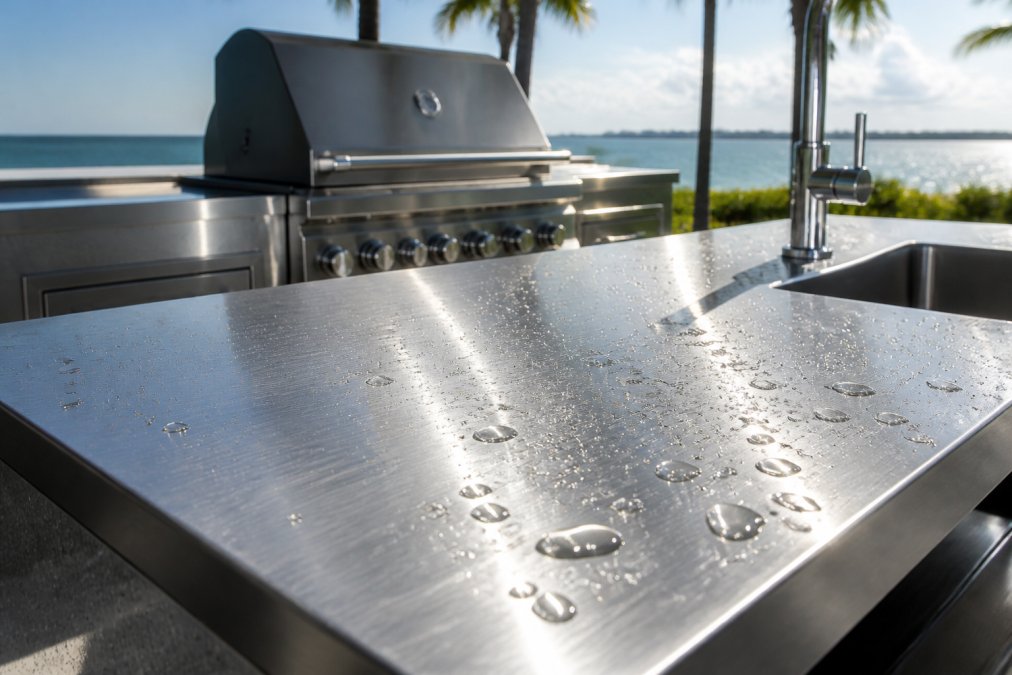
Stainless Steel Work Surfaces
Stainless steel brings professional aesthetics and durability, but not all grades perform equally in Florida's coastal environment.
Marine-grade stainless steel (316 or 316L) resists salt air corrosion for years, while 304 stainless steel pits and corrodes within months in coastal zones.
Brushed or honed finishes hide water spots better than polished surfaces, which require constant wiping in Florida's humid environment.
Fasteners must be marine-grade stainless steel; ordinary steel fasteners corrode and stain surrounding surfaces. Welds require professional finishing to prevent corrosion initiation.
Monthly cleaning with stainless-specific cleaner removes salt deposits. Annual inspection for pitting allows early intervention before professional refinishing becomes necessary.
Selecting Cabinetry and Structural Materials
The cabinet structure supports everything, countertops, appliances, and the weight of food preparation. In Florida, structural materials must resist moisture, salt air, and the thermal stress of temperature swings. Ordinary kitchen cabinetry fails within a year outdoors.
Marine-Grade Stainless Steel vs. Powder-Coated Alternatives
Marine-grade stainless steel cabinetry resists salt air corrosion and requires minimal maintenance, creating a cohesive, corrosion-resistant system.
Marine-grade stainless steel cabinetry commands premium pricing but pays dividends over a 15-20 year lifespan for homeowners prioritizing longevity.
Powder-coated metal cabinetry offers budget-conscious alternatives with UV and salt air resistance, but scratches expose underlying metal to corrosion, and coastal salt spray gradually degrades coating integrity.
Powder-coated cabinetry offers cost and aesthetic flexibility. For secondary or temporary outdoor kitchens, powder-coated options make sense; for permanent coastal installations, marine-grade stainless steel is superior.
High-Density Polymer and HDPE Options
HDPE cabinetry is lightweight, affordable, and resistant to moisture and salt air, requiring no sealing or maintenance.
HDPE lacks rigidity; cabinets flex under load, causing misalignment. Significant thermal expansion stresses fasteners and can warp cabinets in Florida's heat.
HDPE is susceptible to UV degradation; after 5-7 years of direct sun, it shows visible fading and brittleness despite UV stabilizers.
HDPE works well for storage cabinets that don't bear heavy loads or for secondary outdoor kitchen areas. For primary cooking islands with frequent use, the structural limitations become apparent quickly.
Maintaining Stainless Steel in Coastal Climates
Marine-grade stainless steel requires specific maintenance practices to remain corrosion-free in Florida's coastal environment. Understanding these practices ensures your investment maintains its appearance and structural integrity.
Monthly cleaning with stainless steel-specific cleaner removes salt deposits before corrosion initiates. Rinse thoroughly with fresh water to remove cleaner residue.
Inspect fasteners, welds, and seams quarterly for white or brown discoloration indicating early pitting. Early professional refinishing prevents deeper corrosion.
Annual professional inspection identifies early corrosion and refinishes minor pitting, extending cabinet lifespan.
Flooring and Non-Slip Surfaces for Wet Conditions
Outdoor kitchen flooring must handle constant moisture, salt spray, and the slippery conditions that develop around grills and beverage stations. Ordinary deck materials or tile fail quickly in these conditions.
Porcelain tile with honed finish is the standard for outdoor kitchen flooring, providing traction and resisting salt air. Select porcelain rated for outdoor use and freeze-thaw resistance.
Stamped concrete requires aggressive maintenance: monthly power washing and sealing every 1-2 years. It eventually cracks from thermal expansion, creating safety hazards and water infiltration.
Composite decking resists moisture and salt air better than wood and requires less maintenance than concrete, but verify slip-resistance ratings for wet conditions.
Flooring must slope away from appliances to prevent water pooling. Proper substrate preparation with gravel or sand base allows free drainage.
Outdoor Kitchen Permit Requirements and Code Compliance
Florida building codes and Broward County requirements govern outdoor kitchen construction. Ignoring them results in failed inspections, fines, and mandatory removal.
Gas line installation must be performed by a licensed plumber or gas fitter; DIY installation is illegal and dangerous. Electrical work must meet NEC code and be performed by a licensed electrician with GFCI protection.
Setback requirements specify how far appliances and structures must be from property lines and existing structures. These vary by county and zoning. A professional contractor familiar with local codes ensures compliance before construction begins. Violations discovered during inspection require expensive modifications.
Permit applications require detailed plans showing material specifications, appliance locations, gas and electrical layouts, and drainage solutions. The plans must be signed by a licensed architect or engineer in many jurisdictions. Processing typically takes 2-4 weeks, though expedited review is available for an additional fee.
Dimensions Luxury Builders manages the entire permit process for outdoor kitchen projects. Our team handles plan preparation, application submission, and inspection coordination. This eliminates delays and ensures code compliance from the start, protecting your investment and avoiding costly rework.
DIY Outdoor Kitchen Island Frame Materials and Durability
Building a DIY outdoor kitchen island requires careful material selection for the frame structure. The frame supports countertops, appliances, and user weight, so structural integrity is non-negotiable.
Pressure-treated lumber is the traditional choice for DIY outdoor structures. The wood is chemically treated to resist rot and insect damage. However, pressure-treated lumber is not ideal for outdoor kitchens in Florida.
Material Lifecycle Cost Analysis and Sustainable Options
Choosing outdoor kitchen materials requires balancing upfront cost against long-term durability and maintenance expenses. A material that costs 30% less initially but requires replacement in 8 years is more expensive than a premium material lasting 20 years.
Frequently Asked Questions
What is the best material to use for an outdoor kitchen in high-humidity coastal areas?
Marine-grade stainless steel and ultra-compact surfaces rank highest for coastal humidity. Marine-grade stainless contains molybdenum, which resists salt air corrosion far better than standard stainless. Ultra-compact surfaces offer non-porous durability without grout lines that trap moisture. High-density polymer (HDPE) cabinetry resists warping and salt air damage. Avoid standard wood, untreated concrete, and low-grade metals, they fail quickly in salt spray environments.
Do you need a permit for an outdoor kitchen in Florida?
Yes. Most outdoor kitchens require building permits in Florida, particularly if they include permanent structures, electrical work, gas lines, or plumbing. Broward County requires permits for any fixed outdoor kitchen with appliances. Unpermitted work can affect insurance claims and property resale. Building codes enforce structural integrity, drainage, and safety standards specific to hurricane-prone zones. Consult your local building department or a licensed contractor to confirm requirements before construction begins.
How does salt air affect outdoor kitchen material longevity?
Salt air accelerates corrosion in unprotected metals and degrades porous surfaces through salt crystallization. Standard stainless steel oxidizes in salt environments; marine-grade stainless resists this through higher molybdenum content. Grout lines, untreated wood, and powder-coated finishes degrade faster when exposed to salt spray. Porcelain tile and ultra-compact surfaces resist salt damage better than natural stone. Regular rinsing with fresh water and annual sealing of porous materials extends lifespan significantly in coastal zones.
What countertop materials are most durable for outdoor kitchens exposed to direct UV and heat?
Ultra-compact surfaces and porcelain tile resist UV fading and thermal expansion best. These materials maintain color and structural integrity under intense sun exposure. Stamped concrete requires UV-resistant sealers reapplied every 2-3 years. Stainless steel reflects heat but requires maintenance to prevent fingerprints and discoloration. Avoid light-colored natural stone outdoors, it fades and can crack from thermal stress. Choose honed or leathered finishes for better traction and heat retention than polished surfaces.