 comparison
Steam Shower vs Traditional Shower: Cost Comparison
Table of Contents
- Steam Shower vs Traditional Shower: Side-by-Side Cost Breakdown
- Initial Installation Costs and Setup Requirements
- Long-Term Operating Costs: Energy and Water Usage
- Steam Shower Maintenance Requirements and Costs
- Health and Wellness Benefits vs Cost
- Bathroom Remodeling ROI and Resale Value Impact
- DIY vs Professional Installation: Labor and Risk
- Total Cost of Ownership: 10-Year Comparison
- Frequently Asked Questions
Last Updated: September 28, 2026
Steam Shower vs Traditional Shower: Side-by-Side Cost Breakdown
When planning a bathroom renovation, the choice between a steam shower and a traditional shower represents a significant financial decision. A steam shower vs traditional shower cost comparison reveals that true expense includes installation complexity, ongoing energy consumption, maintenance requirements, and long-term resale value. Understanding these layers helps you make an informed investment rather than discovering hidden costs months into your renovation.
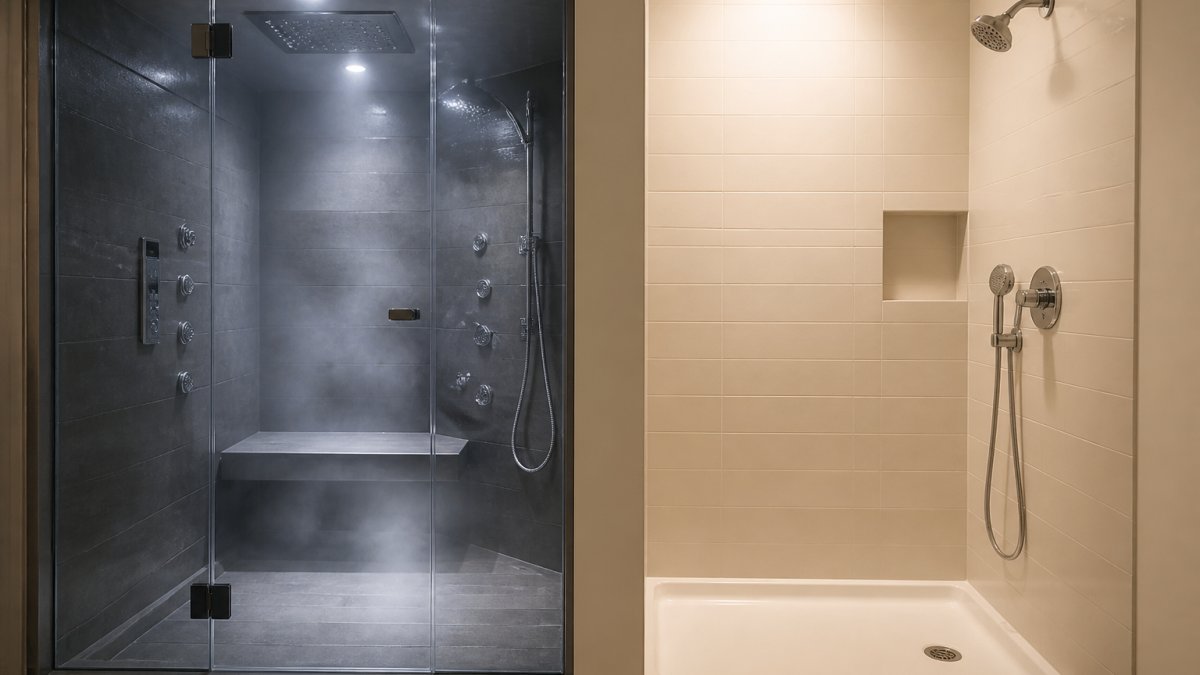
A traditional shower delivers water at a fixed temperature, while a steam shower generates and circulates hot steam through an enclosed space.
Initial Installation Costs and Setup Requirements
A steam shower's upfront investment significantly exceeds a traditional shower because it demands specialized components and often requires structural modifications, while traditional showers leverage existing plumbing and electrical infrastructure.
Steam Generator Requirements and Electrical Upgrades
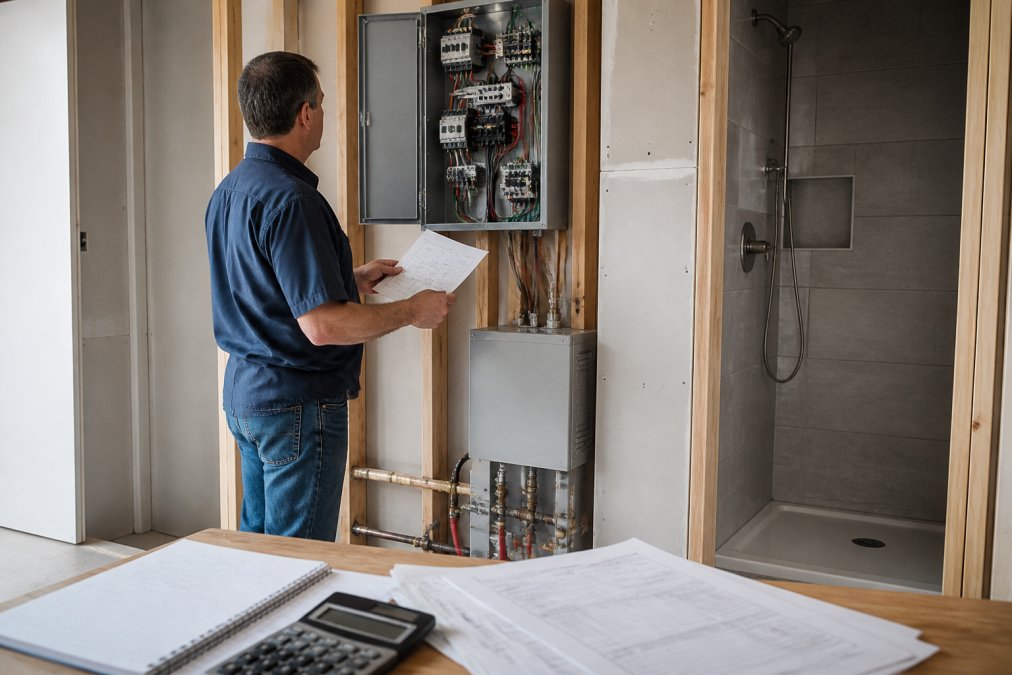
A steam generator requires a dedicated electrical circuit, typically 240V or 208V depending on the unit's power rating. Installing a new dedicated circuit requires a licensed electrician to assess your home's electrical panel capacity and run new wiring, a cost many homeowners don't anticipate.
Plumbing and Waterproofing Considerations
Steam showers demand sophisticated plumbing infrastructure: a dedicated water supply line for the generator, a drain line for condensation, and often a water softening system to prevent mineral buildup. Traditional showers need only basic supply and drain lines.
Long-Term Operating Costs: Energy and Water Usage
A 9kW steam generator running 30 minutes uses 4.5 kilowatt-hours. At $0.13 per kilowatt-hour, one session costs roughly $0.59. For 4-5 weekly sessions, annual electricity costs reach $120-$150. Traditional showers consume less than half the energy intensity.
Steam Shower Maintenance Requirements and Costs
Maintenance separates true cost of ownership from sticker price. Traditional showers need occasional caulk replacement and cleaning. Steam showers require ongoing specialized maintenance.
Descaling, Ventilation, and Mold Prevention
Mineral deposits accumulate inside steam generators, reducing efficiency and causing failure. Professional descaling costs $150-$300 per visit every 3-6 months. A water softening system ($1,000-$2,500 upfront) reduces frequency but adds maintenance costs.
Health and Wellness Benefits vs Cost
Steam showers deliver measurable physiological effects, but benefits depend on your health profile, usage frequency, and whether alternative therapies offer comparable value.
Physiological Effects and Documented Benefits
Heat from steam dilates blood vessels, increasing circulation and reducing blood pressure temporarily, particularly relevant for arthritis or chronic muscle tension. Heat opens pores and increases perspiration, which some dermatologists recommend for psoriasis or eczema, though results vary.
Evaluating Cost-Benefit for Your Health Profile
The financial case depends on matching benefits to your needs. A person with arthritis using steam 4-5 times weekly may experience genuine pain reduction. For that person, a $12,000 installation and $800-$1,200 annual operating cost might deliver measurable quality-of-life improvement.
The Maintenance Reality and Wellness Consistency
Wellness benefits require consistent use. A steam shower that sits unused delivers zero health value while still consuming electricity and requiring upkeep. Many homeowners use them sporadically after the first few months.
Bathroom Remodeling ROI and Resale Value Impact
Steam showers don't return their investment at resale. A $12,000 installation typically adds $3,000-$5,000 in value (25-40% return), while a $3,000 traditional shower often returns $2,000-$3,500 (65-115% return).
DIY vs Professional Installation: Labor and Risk
Steam shower installation requires mandatory licensed work for electrical and plumbing, making DIY not viable and labor costs unavoidable.
Electrical Requirements and Code Compliance
A steam generator requires a dedicated 240V or 208V circuit with GFCI protection, proper wire gauge, conduit protection, and a disconnect switch. National Electrical Code Article 680 governs this work. You cannot legally install this yourself, it requires a licensed electrician and permit with inspection. DIY installation violates code, voids insurance, and creates liability.
Plumbing Code and Water Supply Isolation
The steam generator requires a dedicated water supply line with isolation valve, proper slope and support, a condensation drain, and compliance with backflow prevention codes. A licensed plumber and plumbing permit are required. Unpermitted work may void insurance coverage for water damage.
Ventilation and Moisture Management
Building codes require dedicated 6-inch exhaust ductwork to the exterior, an exhaust fan (50-80 CFM minimum), proper installation with minimal bends, and dampers to prevent backflow. If exterior ductwork doesn't exist, this may require structural modifications or HVAC coordination.
Waterproofing and Moisture Barriers
Steam showers require specialized waterproofing: cement board, waterproof membranes, sealed penetrations, and steam-specific grout and sealants. Waterproofing failures cause $5,000-$15,000 in remediation. Professional waterproofing adds $1,200-$3,000 to installation.
Installation Sequence and Permit Coordination
Steam shower installation requires a specific sequence to pass inspections:
- Electrical rough-in, Licensed electrician installs dedicated circuit and disconnect switch (permit inspection required)
- Plumbing rough-in, Licensed plumber installs water supply, drain, and isolation valves (permit inspection required)
- HVAC rough-in, Exhaust ductwork installed and tested for proper airflow
- Waterproofing, Moisture barriers and membranes applied after all rough-in work is complete
- Fixture installation, Generator, controls, and showerheads installed and tested
- Final inspection, Electrical, plumbing, and building inspectors verify compliance
Labor Cost Breakdown
Professional steam shower installation typically costs $3,000-$6,000 in labor:
- Electrical: $1,200-$2,500
- Plumbing: $1,500-$3,500
- HVAC/Ventilation: $500-$1,500
- Waterproofing/Tile: $1,500-$3,000 (sometimes included in general contractor labor)
- Project management and coordination: $500-$1,000
By contrast, traditional shower installation labor runs $1,500-$3,000 because it requires only basic plumbing and standard waterproofing, with no electrical or HVAC demands.
Total Cost of Ownership: 10-Year Comparison
Here's where the full financial picture emerges. Let's compare a mid-range steam shower system with a quality traditional shower renovation over 10 years.
| Cost Category | Steam Shower | Traditional Shower |
|---|---|---|
| Generator/Equipment | $2,500 | $400 |
| Electrical Upgrades | $1,500 | $200 |
| Plumbing/Waterproofing | $2,500 | $800 |
| Installation Labor | $4,500 | $2,000 |
| Annual Energy (10 years) | $1,200 | $300 |
| Annual Maintenance (10 years) | $1,000 | $200 |
| Repairs/Replacement (10 years) | $2,000 | $500 |
| Total 10-Year Cost | $15,700 | $4,400 |
Frequently Asked Questions
How much does it cost to convert a regular shower to a steam shower?
Converting a standard shower to a steam shower typically requires a steam generator, specialized plumbing rough-in, electrical circuit upgrades, waterproofing with a moisture barrier, and a glass enclosure. Total costs vary based on bathroom size, existing plumbing layout, electrical capacity, and whether you choose a pre-fabricated cubicle or custom installation. Professional installation is strongly recommended due to the complexity of generator sizing, thermostatic valve installation, and GFCI protection requirements. For an accurate estimate tailored to your space and preferences, consult a licensed contractor.
Is a steam shower worth the cost for home resale value?
Steam showers appeal to affluent buyers and can differentiate your home in the luxury market, but resale value depends on local buyer preferences and overall bathroom quality. A well-executed steam shower installation, paired with high-quality tile, glass enclosure, and proper ventilation, signals premium craftsmanship. However, the return rarely equals the full installation investment. The real value lies in daily enjoyment and wellness benefits during ownership. If resale is your primary concern, prioritize foundational bathroom updates (layout, fixtures, waterproofing) before adding a steam generator.
What are the primary maintenance costs associated with steam showers?
Regular maintenance includes descaling the steam generator (annually or as needed), cleaning the glass enclosure and tile to prevent mold, and replacing water filters. Ventilation systems must work efficiently to manage moisture and prevent structural damage. Most steam generators have a 5-10 year lifespan before needing replacement or major repairs. Annual maintenance typically costs $200-$500 depending on water hardness and usage frequency. Hard water areas require more frequent descaling. Budget for potential repairs or component replacement as the system ages.
How does the energy consumption of a steam shower compare to a standard shower?
A steam shower consumes significantly more energy than a traditional shower. Steam generators typically require 4kW to 15kW of electrical power and operate for 15-30 minutes per session, using 3-5 times more energy than a 10-minute traditional shower. This translates to higher monthly utility bills, especially with frequent use. Energy consumption varies by generator size, bathroom insulation, and usage patterns. Traditional showers rely on your home's water heater and use minimal electricity. If energy efficiency is a priority, a steam shower represents a long-term operational cost increase.
Do steam showers require specialized plumbing or electrical upgrades?
Yes. Steam showers require dedicated plumbing rough-in for water supply and drainage, a moisture barrier and vapor barrier to protect framing, and a waterproofing system to prevent mold and structural damage. Electrically, most homes need a dedicated 240-volt circuit with GFCI protection and adequate breaker capacity for the steam generator. Bathroom ventilation must be upgraded to handle excess moisture. These upgrades add significant cost and complexity, which is why professional installation by a licensed contractor is essential to ensure code compliance and proper system function.
Ready to make an informed decision about your bathroom renovation? Dimensions Luxury Builders offers free consultations where we assess your space, discuss your wellness priorities, and model the true cost of ownership for both options. Get a free quote today and let our team guide you through every decision with transparency and expertise.