 how-to
What Permits Are Needed for a Home Addition in Broward County
Table of Contents
- Which Home Addition Permits Are Required in Broward County?
- Step-by-Step: How to Apply for a Home Addition Permit
- How Long Does It Take to Get a Building Permit in Broward County?
- Broward County Residential Building Code Requirements for Additions
- Consequences of Building Without a Permit in Florida
- Common Permitting Mistakes Homeowners Make (and How to Avoid Them)
- Frequently Asked Questions
Last Updated: October 3, 2026
Which Home Addition Permits Are Required in Broward County?
If you are wondering what permits are needed for a home addition in Broward County, the short answer is: a building permit, separate electrical, plumbing, and mechanical permits, and often zoning or environmental approvals before any of those are issued. Knowing the order is.
A home addition permit is the county's written approval to build a new structure on your property. It confirms the work meets the Florida Building Code, flood rules, and local zoning limits.
Most homeowners assume one permit covers everything. It does not.
Building Permit
The building permit is the core approval. It covers the structure itself: foundation, framing, roof, walls, and windows. You cannot legally start excavation without it.
The county reviews your plans for structural soundness and code compliance. For additions, that review is stricter than for interior remodels.
Electrical, Plumbing, and Mechanical Permits
These are separate permits, even when they are filed with the building permit.
- Electrical: new circuits, outlets, and panel upgrades
- Plumbing: added bathrooms, kitchen lines, and water heaters
- Mechanical: HVAC ducts, vents, and AC units
Each trade must be licensed and each inspection is scheduled on its own.
Other Approvals: Zoning, Environmental, and HOA
Zoning checks setbacks, lot coverage, and height limits. If your addition crosses a line, you need a variance first.
Environmental review matters near wetlands, canals, or flood zones. Broward sits in a high-wind and flood-prone region, so this step is common.
If you live in a deed-restricted community, your HOA must approve the design before the county will look at it.
Step-by-Step: How to Apply for a Home Addition Permit
Applying for a home addition permit in Broward County follows a set sequence. Miss a step and your application sits in review while your contractor waits.
What You'll Need Before You Apply
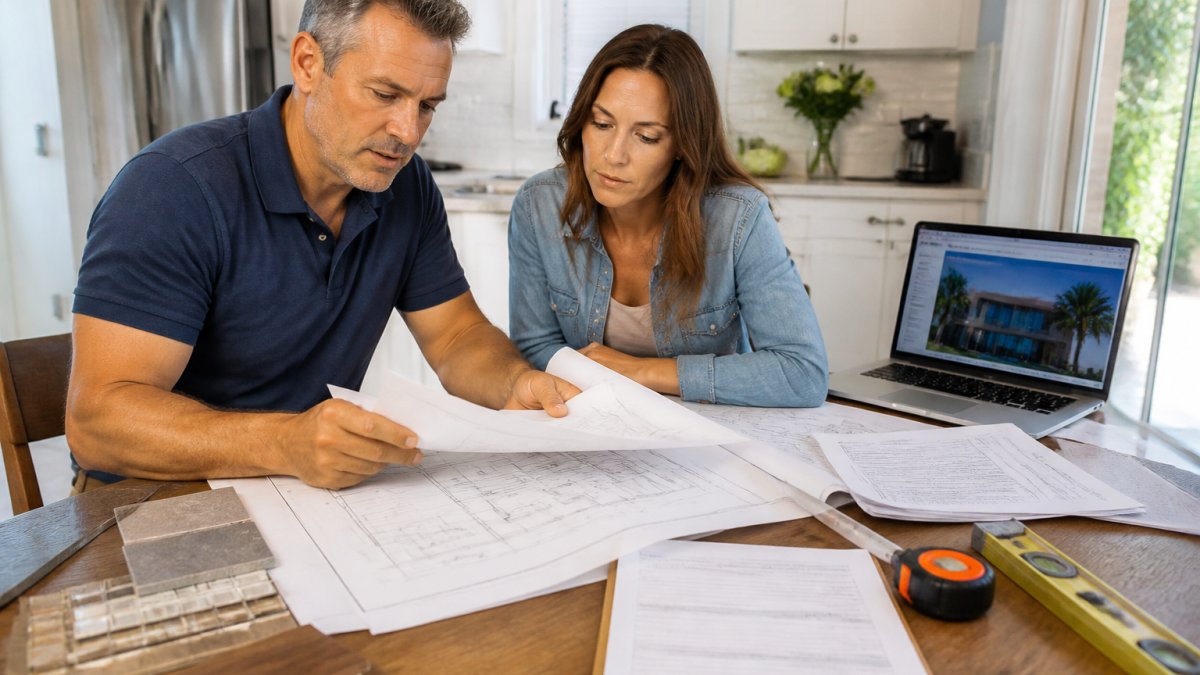
Gather these before you file:
- Stamped architectural and structural drawings
- A survey showing property lines and setbacks
- A Notice of Commencement if the project value crosses the threshold
- Your contractor's state license number
- HOA approval letter, if applicable
Incomplete packets are the number one cause of delay. The county will not start review until everything is in.
Submitting Your Application and Tracking Progress
Submit online through the county's permitting portal or in person at a building department office. You will get a tracking number the same day.
From there, the process runs like this:
| Step | What Happens | Typical Timing |
|---|---|---|
| Application filed | County logs your packet | Day 1 |
| Plan review | Staff checks code compliance | Several weeks |
| Corrections (if any) | You resubmit fixed plans | Adds time |
| Permit issued | You can legally build | After approval |
| Inspections | Scheduled at each phase | Throughout build |
Plan review is where most projects lose weeks. A clean, complete submittal moves fastest.
How Long Does It Take to Get a Building Permit in Broward County?
Timelines vary by project size and how complete your application is. Small additions with clean plans often move faster than large structural projects that need multiple reviews.
Several things push the clock:
- Incomplete or unclear drawings
- Zoning variances that require a public hearing
- Environmental review near flood or wetland areas
- Peak permit season, when the county handles more volume
The honest answer is that no one can promise an exact date. What we can control is the quality of the submittal. At Dimensions Luxury Builders, we build the permit packet to county standards the first time, which cuts the back-and-forth that causes most delays.
If you are planning around a move-in date, pad your schedule. Build in a buffer for at least one correction cycle.
Broward County Residential Building Code Requirements for Additions
Broward County residential building code requirements for additions go beyond the state minimum. Because the area sits in a high-wind zone, your addition must meet stricter structural and impact standards than homes inland.
The Florida Building Code sets the baseline. Local amendments tighten it for wind, flood, and energy performance.
Key requirements for additions include:
- Impact-rated windows and doors, or approved shutter systems
- Reinforced roof-to-wall connections
- Wind-rated framing and fasteners
- Elevation rules for flood zones
- Energy code compliance for new HVAC and insulation
Your plans must show how each of these is met. Reviewers check them line by line.
Hurricane-Rated Construction Standards
Hurricane-rated construction is not optional here. Impact windows and doors must carry a Florida product approval and be installed to the manufacturer's spec.
The thing most homeowners miss: a rated product installed wrong fails like an unrated one. Proper flashing, sealing, and anchoring matter as much as the glass.
This is where a licensed local builder earns their keep. Impact-rated windows and doors must be installed to spec, so the rating holds up when it counts.
Consequences of Building Without a Permit in Florida
The consequences of building without a permit in Florida are serious and expensive to undo. Unpermitted work is a code violation, and the county can stop your project, fine you, and require you to tear out or legalize the work.
The fallout usually includes:
- Stop-work orders that halt construction
- Fines that accrue daily until you comply
- Required demolition of non-compliant work
- Denied or delayed insurance claims
- Problems selling, because unpermitted additions surface in title searches
- Refinancing roadblocks when lenders see the discrepancy
There is also a safety angle. Unpermitted additions may not meet wind or flood standards, which puts your family and your investment at risk.
Fixing it later almost always costs more than permitting it upfront.
Common Permitting Mistakes Homeowners Make (and How to Avoid Them)
Most permit problems trace back to a handful of repeat mistakes. Here is how to sidestep each one.
| Mistake | Why It Hurts | How to Avoid It |
|---|---|---|
| Starting before approval | Stop-work order, fines | Wait for the issued permit |
| Skipping HOA approval | County approval stalls | Get HOA sign-off first |
| Incomplete plans | Review delays | Use a county checklist |
| Ignoring flood rules | Failed inspection | Confirm your flood zone early |
| Hiring an unlicensed contractor | Invalid permit | Verify the license number |
A common mistake is treating the permit as a formality. It is a legal gate, and everything else waits behind it.
What most guides miss is the sequencing. HOA first, then zoning, then the building and trade permits. Get the order right and the rest moves.
If you would rather not manage any of it, Dimensions Luxury Builders manages the full permit process, from drawings to final inspection, so you are not stuck chasing paperwork.
Most homeowners underestimate how much the permit process shapes a renovation timeline. Get the sequence wrong and a project that should take months can stretch far longer. Dimensions Luxury Builders handles permitting end to end as a licensed and insured Florida contractor, with local specialists who know the county's review standards and one point of contact from design to walkthrough. Get a free quote and let us manage the permits, the trades, and the inspections while you plan the space you have been waiting for.
Frequently Asked Questions
Do I need a building permit for a room addition in Broward County?
Yes. Any addition that changes the footprint, square footage, or structural load of your home requires a building permit in Broward County. This includes bedroom additions, garage conversions, enclosed patios, and second-story expansions. You will also need separate electrical, plumbing, and mechanical permits if your project involves those systems. Even cosmetic-only projects that do not alter structure typically do not require a permit, but additions almost always do.
How long does it take to get a building permit in Broward County?
Review timelines vary by project complexity and municipality. A straightforward addition with complete plans may move through review in a few weeks, while projects requiring zoning variances, environmental review, or resubmittals can take several months. Incomplete applications are the most common cause of delay. Working with a contractor who knows local submittal requirements helps avoid back-and-forth that adds weeks to the process.
What happens if I build an addition without a permit in Broward County?
Building without a permit in Florida can result in stop-work orders, daily fines, and mandatory removal of unpermitted work at your expense. You may also face difficulty selling or refinancing your home because unpermitted additions surface during title searches and inspections. Insurance carriers can deny claims for damage to unpermitted structures. After-the-fact permitting is possible but often costs more and requires opening walls for inspection.
Are there specific hurricane-rated requirements for additions in Broward County?
Yes. Broward County sits in the High-Velocity Hurricane Zone, so additions must meet strict wind-load and impact-resistance standards under the Florida Building Code. This affects roof connections, window and door ratings, and structural framing. Impact-rated windows and doors are typically required for new additions. Your contractor should specify products with the proper Florida Product Approval or Miami-Dade NOA to pass inspection.