 listicle
Best Impact Windows for Hurricanes: 2026 Buyer's Guide
Table of Contents
- Top Impact Window Brands for Hurricane Protection
- Hurricane Window Ratings Explained: What the Numbers Mean
- Hurricane Impact Window Cost: What Drives the Price
- Impact Window Installation Process: From Measure to Final Seal
- Retrofitting vs. Full Replacement: Which Makes Sense for Your Home
- Insurance Premium Discounts and Noise Reduction: The Hidden Payoffs
- Frequently Asked Questions
Last Updated: September 14, 2026
Top Impact Window Brands for Hurricane Protection
Choosing the best impact windows for hurricanes comes down to certified performance, frame quality, and installation. In Broward County, where wind-borne debris and hurricane-force winds are a real seasonal threat, the right system protects your home, your family, and your insurance standing. This guide from Dimensions Luxury Builders breaks down the brands worth considering, what the ratings mean, and how to evaluate installation quality before you sign.
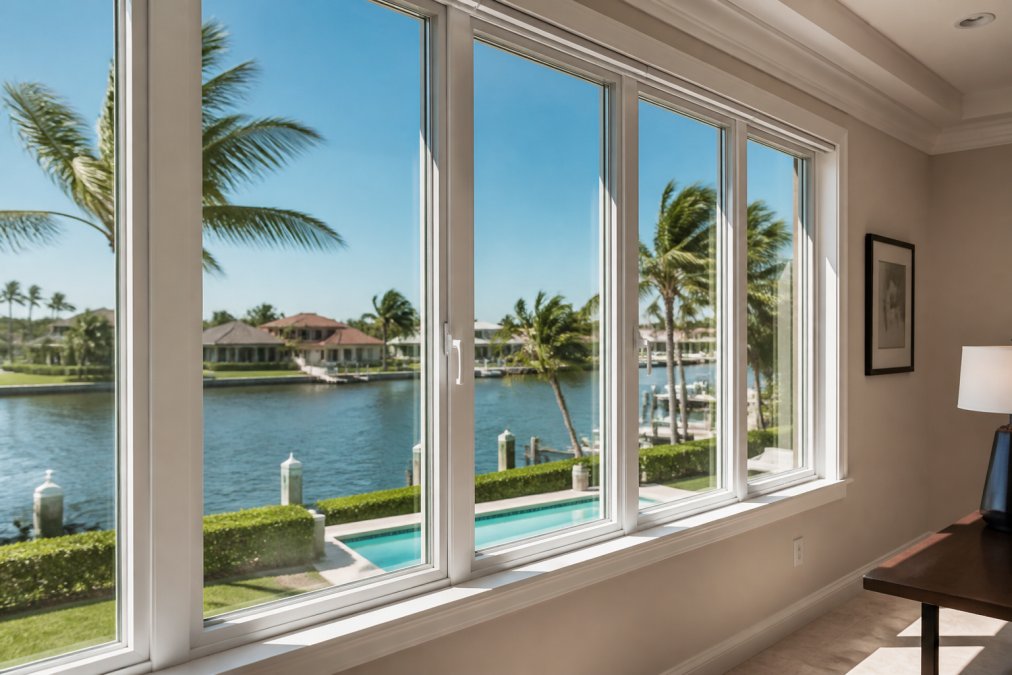
Hurricane impact windows are laminated glass assemblies engineered to resist flying debris and extreme wind pressure without shattering. The glass sandwiches a polyvinyl butyral interlayer between two panes, so even after a strike the pane stays in its frame and keeps the building envelope sealed.
What matters most is certification, not brand marketing. A window that passes the debris impact test and carries the correct design pressure rating for your home will outperform a premium name that is under-specified for your exposure (floridabuilding.org).
How We Evaluated These Hurricane Impact Windows
We scored each brand on certified impact performance, frame material and structural integrity, coastal availability, and long-term durability. Brands with documented debris impact testing and clear coastal code compliance ranked highest.
Pricing varies by size, frame material, and glass package, so treat every "contact for pricing" listing as quote-based rather than fixed.
| Brand | Frame Options | Best For | Standout Feature |
|---|---|---|---|
| Dimensions Luxury Builders | Vinyl, aluminum | Full-service local installation | End-to-end project management |
| Pella Hurricane Shield Series | Vinyl, wood | Brand-name reliability | 2x4 debris tested at 50 ft/sec |
| PGT Custom Windows | Aluminum, vinyl | Coastal high-wind zones | Hurricane-specific engineering |
| Andersen Impact-Rated | Wood, vinyl | Aesthetic + protection | Laminated glass stays in frame |
| Marvin Impact-Rated | Wood, aluminum | Custom dimensions | Advanced weather-stripping |
| ES Windows & Doors | Aluminum | Extreme-weather priority | Corrosion-resistant finishes |
| CWS (Custom Window Systems) | Vinyl, aluminum | Code-compliant local builds | Florida-climate testing |
| Sentinel Impact Windows | Reinforced frames | Style + storm reliability | High wind-load design |
| JELD-WEN Impact-Resistant | Vinyl, wood | Material variety | Broad catalog |
| Ply Gem Impact Windows | Vinyl | Budget-conscious buyers | Energy-efficient glass |
Dimensions Luxury Builders is our top pick for homeowners who want the window decision handled inside a fully managed renovation. As a licensed and insured contractor working across Broward County, the team manages permitting, local supplier access, and installation through a single point of contact, the difference between a sealed envelope and a callback six months later.
Hurricane Window Ratings Explained: What the Numbers Mean
Hurricane window ratings explain how much wind pressure and debris impact a window can withstand. The two numbers that matter most are design pressure and the debris impact test result.
Design pressure is the wind load, in pounds per square foot, a window is rated to resist; your required rating depends on location, height, and exposure category. Impact rating confirms the unit survived the standard debris impact test, typically a 2x4 lumber projectile fired at high velocity, followed by cyclic pressure loading.
Look for certification from a recognized testing body and a permanent label on the frame. A window without a visible rating label is not a rated window, no matter what the salesperson says.
Hurricane Impact Window Cost: What Drives the Price
Hurricane impact window cost is quote-based, but the drivers are predictable. Understand the five variables below and you can read a bid and know whether it is padded, thin, or fair before you sign.
1. Unit size and count. Glass is priced by the square foot, and the laminated assembly costs more than a standard insulated unit. A large sliding glass door or a wall of fixed picture windows will dominate the budget, and per-unit price climbs faster than opening area because framing, hardware, and shipping weight scale with size.
2. Frame material. This is the single biggest swing factor after size:
- Vinyl, lowest upfront cost, good thermal performance, limited color and profile options. Best for budget-conscious replacements where the opening is standard.
- Aluminum, mid-to-premium pricing, slim sightlines, excellent structural strength for large openings and high design pressures. Requires a thermal break to perform well in energy terms.
- Wood and clad-wood, premium pricing, best for custom dimensions and architectural match. Cladding (aluminum or vinyl over wood) protects the exterior face and is common on high-end coastal renovations.
3. Glass package. The laminated interlayer is the core of impact performance, but upgrades stack on top: low-emissivity coatings, argon or krypton gas fill, warm-edge spacers, and triple glazing. Each adds cost and changes the U-factor and SHGC. Do not pay for an energy package you cannot document on the NFRC label.
4. Opening complexity. A standard double-hung in a square, plumb opening is the cheapest install. Every complication adds labor: out-of-square frames, rot repair, brick or stucco removal, second-story access, custom trim, and multi-point locking hardware, the line items that make two bids on the same window differ by thousands.
5. Permitting and structural work. Coastal jurisdictions require permits and inspections for window replacement, and some openings need header or framing reinforcement to carry the rated load, often the hidden line item a low bid omits.
How to compare bids fairly. Ask every contractor for a line-item quote that separates:
- Window units (brand, model, and rating per opening)
- Installation labor
- Permitting and inspection fees
- Structural reinforcement, if any
- Old window removal and disposal
- Flashing, sealant, and trim
A lump-sum number tells you nothing. The line-item breakdown exposes whether a bid is cheap because it is efficient or cheap because it is missing scope.
Retrofit vs. full replacement cost. Retrofitting into sound existing frames costs less than a full tear-out because it avoids frame removal, rough-opening repair, and new trim. The savings are conditional: if the existing frame is not rated for the required design pressure, a retrofit does not deliver the rating you are paying for. Full replacement costs more upfront but produces a warrantable system from frame to glass.
NFRC label and energy performance ratings
Because pricing is quote-based, no two homes get the same number. But the drivers above are consistent, and a contractor who can explain each one, and show you the rating label for every unit, is worth hiring.
Impact Window Installation Process: From Measure to Final Seal
The impact window installation process runs through six stages, and skipping any one undermines the rating you paid for.
- Measure and template each opening, noting out-of-square frames and existing water damage
- Verify the specification against your required design pressure and impact rating
- Prepare the opening, repairing rot or structural weakness before anything goes in
- Set and shim the unit, checking plumb and level
- Anchor and seal with the correct fasteners and flashing detail
- Test and finish with water checks and trim
The seal is where most failures originate. Flashing must shed water to the exterior, and sealant alone is never a substitute for proper flashing. Ask your installer how they handle the sill pan and head flashing specifically. A confident, specific answer is a good sign.
Retrofitting vs. Full Replacement: Which Makes Sense for Your Home
Retrofitting keeps your existing frame and swaps the sash or glazing, while full replacement removes the entire unit down to the rough opening. Retrofitting is faster and less disruptive. Full replacement corrects problems a retrofit cannot fix.
Choose retrofit when frames are sound, square, and already rated for the load. Choose full replacement when frames are rotted, openings are undersized for modern units, or you want to change the room's look and configuration.
Retrofit saves money and time but locks you into the existing opening. Full replacement costs more and takes longer but gives you a clean, warrantable system from frame to glass. For a home you plan to keep, replacement usually wins on long-term value.
Insurance Premium Discounts and Noise Reduction: The Hidden Payoffs
Most guides mention that impact windows 'save money' and stop there. The two payoffs below are the ones that change the math on your project.
How Wind Mitigation Credits Actually Work
In coastal states, many homeowners insurance carriers offer wind mitigation credits, premium reductions for verified storm-resistant features. Impact-rated windows and doors qualify, alongside roof-to-wall attachments, roof covering, and secondary water barriers.
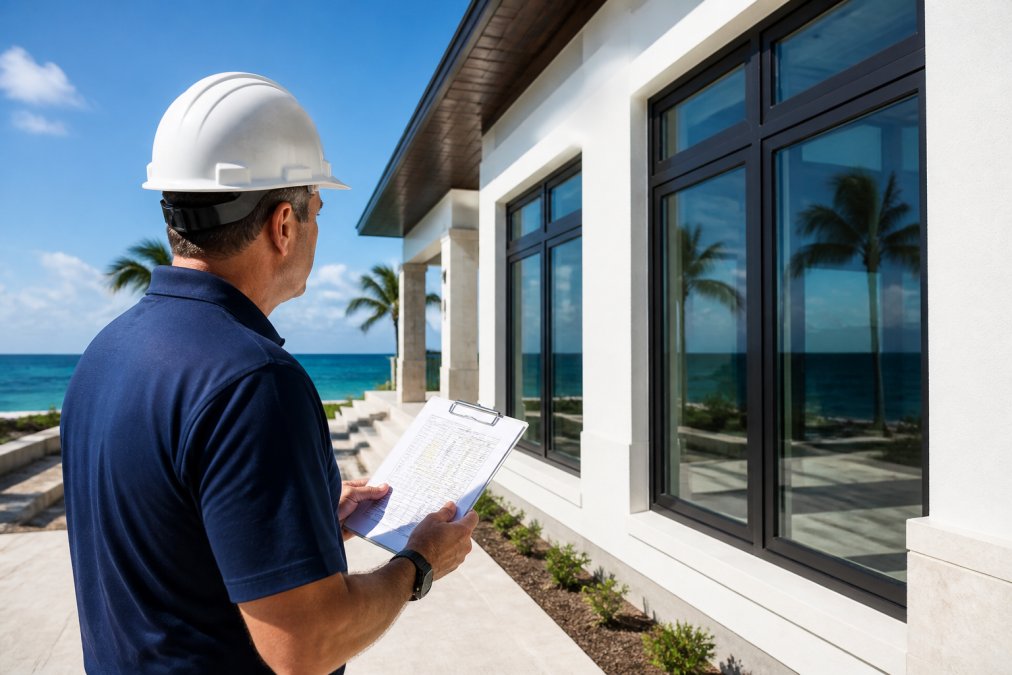
The credit is not automatic. It depends on a wind mitigation inspection, typically performed by a licensed inspector who documents each feature and submits a standardized form to your carrier, which then applies a discount based on which features are present and how the home scores overall.
What that means in practice:
- The window must be rated and labeled. A permanent label on the frame showing the design pressure and impact rating is what the inspector looks for. No label, no credit.
- The installation must match the rating. A rated window in an unreinforced opening can fail the inspection or, worse, fail in a storm. Rating and installation are inspected together.
- You must request the inspection. Carriers do not send inspectors unprompted. Ask your agent which form your carrier accepts and who is approved to complete it.
- The credit is re-verified. Many carriers require a new inspection after a certain number of years or after any roof or window change. Keep your documentation current.
How much can it save? It varies by carrier, home value, location, and the full set of mitigation features. A home with multiple verified features typically sees a larger credit than one with windows alone, because carriers score the whole envelope. Ask your agent for a side-by-side quote with and without the credit before you commit, that number is the only one that matters for your policy.
The documentation you must keep:
- Certification labels or a photo of the label on each unit
- The permit and final inspection record
- The completed wind mitigation inspection form
- The window manufacturer's product approval or evaluation report
Without this paperwork, the discount does not happen, and it is difficult to reconstruct after the fact.
Wind mitigation inspection guidance
Noise Reduction: The Benefit You Feel Every Day
Impact windows are built around a laminated glass assembly, two panes bonded to a polyvinyl butyral interlayer. That interlayer stops debris, but it also acts as a sound-dampening membrane, producing a measurable drop in interior noise that homeowners notice immediately, especially near busy roads, rail lines, airports, or commercial corridors.
Three factors determine how much quieter your home becomes:
- Glass thickness and asymmetry. A laminated pane paired with a different-thickness inner pane disrupts sound waves more effectively than two identical panes. This is why some impact units outperform standard double glazing on sound.
- Air space width. A wider gap between panes improves both thermal and acoustic performance, up to a point.
- Installation seal. Sound leaks through gaps the same way water does. Proper shimming, anchoring, and sealing are as important for noise as for storm protection.
If noise is a primary reason you are considering impact windows, tell your contractor. Some manufacturers publish sound transmission class (STC) ratings alongside impact and energy ratings, and a higher STC performs better in a noisy environment. Not every impact window is optimized for sound, so request this specification explicitly.
Both benefits depend on documentation and specification. Keep your certification labels, permit records, and mitigation inspection report, and make sure the unit you buy is rated for the job you are asking it to do.
Frequently Asked Questions
Which brand of hurricane impact windows is the best for the money?
Value depends on your priorities. Ply Gem and CWS offer competitive pricing for code-compliant protection, while Pella and Andersen cost more but include extensive testing and longer warranties. For coastal Broward County homes, PGT and ES Windows balance hurricane performance with mid-range pricing. Request quotes from at least three manufacturers and compare the design pressure ratings, frame materials, and installation warranties side by side before deciding.
Do hurricane impact windows really work?
Yes. Impact windows use laminated glass with a polyvinyl butyral interlayer that holds glass together when struck by flying debris. Products meeting Florida building codes must pass a debris impact test, typically a 2x4 lumber projectile fired at 50 feet per second, plus cyclic pressure testing. When properly installed, they prevent window breach, which is the primary cause of roof failure and catastrophic interior damage during hurricanes.
What is the average cost per window for hurricane impact windows?
Pricing varies widely based on window size, frame material, glass package, and installation complexity. Manufacturers in our comparison use quote-based pricing rather than published rates. Factors that raise cost include custom sizing, multi-point locking systems, and energy-efficient coatings. For an accurate number, schedule an on-site assessment so a contractor can measure each opening and account for structural reinforcement needs.
How do I know if my windows are hurricane-rated?
Check the permanent label on the window frame or sash. It should list the manufacturer, a design pressure (DP) rating of at least 50 for most coastal zones, and a Florida Product Approval or Miami-Dade NOA number. If no label exists, your windows are likely not impact-rated. A licensed inspector or window contractor can verify compliance with your local wind-borne debris region requirements.
Who is the best impact window manufacturer for high-wind zones?
For high-wind zones like coastal Broward County, look for manufacturers whose products carry Miami-Dade NOA certification, the strictest standard in the country. Pella Hurricane Shield, PGT, and ES Windows all offer lines tested to this level. The best choice depends on your home's architecture, budget, and how quickly you need delivery. Custom manufacturers like Marvin excel when standard sizes do not fit.