 how-to
Who Should You Hire for Window Replacement?
Last Updated: October 27, 2026
Quick Summary
Hire a licensed, insured window contractor certified by the manufacturer for window replacement, not a handyman. Verify the state license, insurance certificate, and installer certification before you sign, and confirm the contractor pulls the permit and provides a written labor warranty covering water intrusion.
- Most jurisdictions require a permit for window replacement, and coastal Florida impact units are inspected for anchoring and flashing.
- Ask for the license, insurance certificate, and manufacturer certification before signing anything.
- The contractor, not you, should pull the permit and meet the inspector.
- Compare estimates by line items, not bottom lines, since permits, disposal, and flashing are often excluded.
- Walk away from cash-only payment, large upfront deposits, and today-only pricing.
Table of Contents
- Why Window Replacement Is Not a Handyman Job
- Window Installer Qualifications to Verify Before You Sign
- Questions to Ask a Window Replacement Contractor
- How to Read Window Replacement Estimates
- What a Window Replacement Warranty Should Cover
- Red Flags and Contractor Scams to Walk Away From
- Request Your Window Replacement Consultation
- Frequently Asked Questions
Why Window Replacement Is Not a Handyman Job
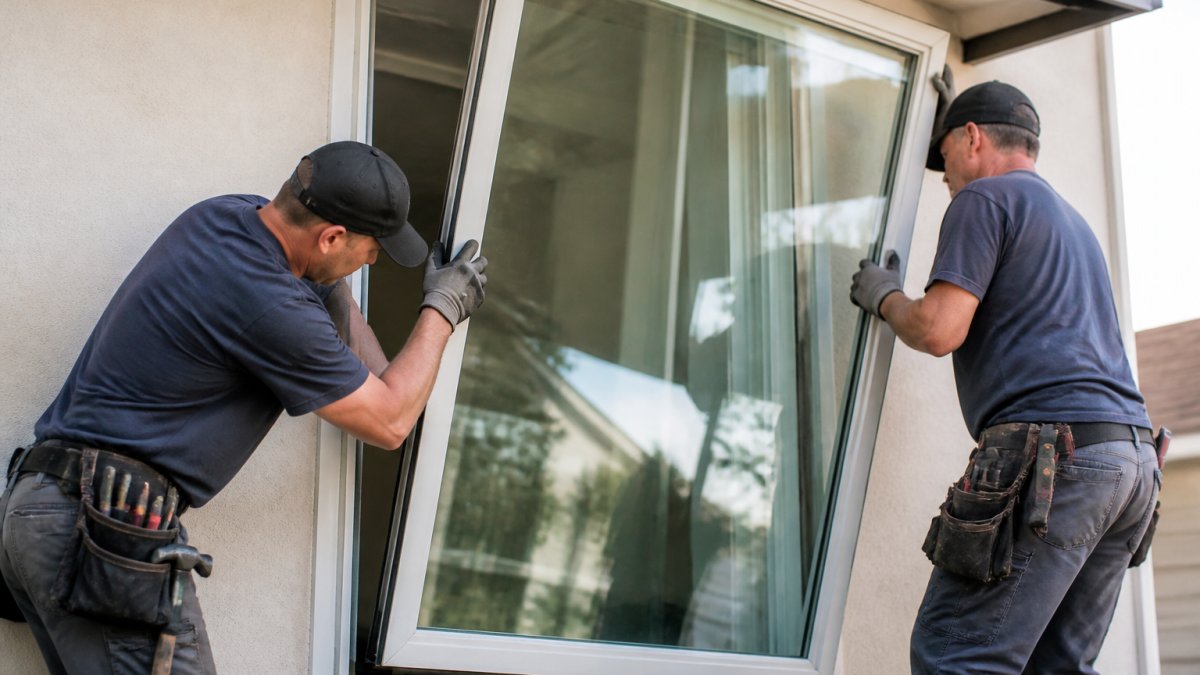
Hiring a professional for window replacement is the most consequential decision in the project, because the crew controls whether the units perform. A handyman can swap a light fixture; a window replacement in a hurricane zone is a structural, code-governed, permit-required job tied to waterproofing, wind-load ratings, and your insurance profile.
Three things separate a window replacement from general handyman work:
- Permits and inspections. Most jurisdictions require a permit for window replacement, and impact-rated units in coastal Florida are inspected for correct anchoring and flashing.
- Product-specific certification. Manufacturers train and certify installers. An uncertified crew can void the warranty on the units themselves.
- Water management. Flashing, sill pans, and sealant sequencing decide whether the opening stays dry for twenty years or leaks in the first rainy season.
The installation quality, not the glass, is what fails. Keep that in mind as we walk through how to vet the person holding the caulk gun.
Window Installer Qualifications to Verify Before You Sign
Window installer qualifications come down to three documents: a state license, a certificate of insurance, and the manufacturer's installer certification. Ask for all three before you sign. A legitimate window contractor sends them without hesitation; a bad one stalls or promises to "get them over to you later."
A state contractor license shows the business is registered and accountable to a regulator. Insurance, both general liability and workers' compensation, protects you if a worker is injured or your home is damaged.
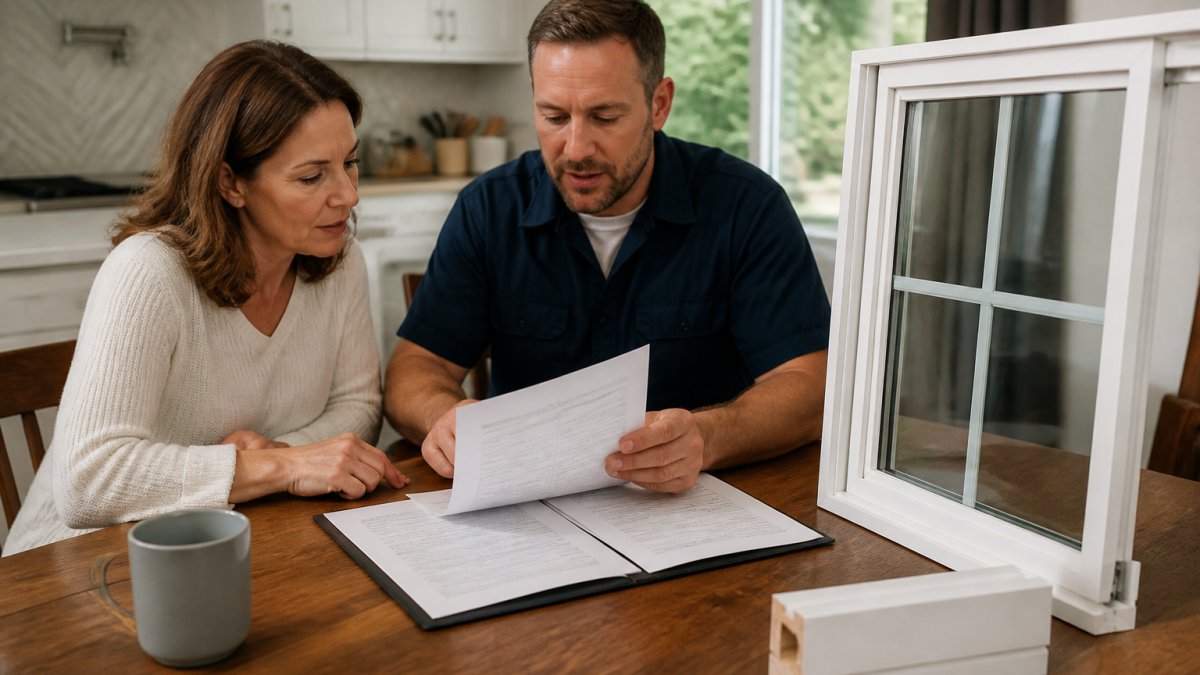
License, Insurance, and Manufacturer Certification
Verify the license number on the state's licensing database, not the contractor's website. Confirm the business name matches your contract and the license is active, not expired or suspended. For a step-by-step walkthrough, see our guide on how to verify a contractor license in Florida.
Insurance deserves the same scrutiny. Ask for a certificate of insurance and call the insurer to confirm the policy is current and covers window installation.
Questions to Ask a Window Replacement Contractor
The right questions to ask a window replacement contractor expose whether you are talking to an installer or a salesperson. Ask them in the first meeting, write down the answers, and listen for specifics, not reassurances, the goal is a written record you can compare across bidders.
Bring a printed list and take notes. A contractor comfortable being quoted answers directly; one who bristles at note-taking is telling you something.
- "Who pulls the permit, and who meets the inspector?" The answer should be the contractor, not you. Ask for the permit number once issued and confirm the scope matches the work. If the contractor suggests an owner-builder permit, treat that as a warning: it shifts inspection responsibility and can complicate resale and insurance claims.
- "Are your installers employees or subcontractors, and are they certified on this product?" Subcontractors are common, but certification still must be confirmed. Ask for the lead installer's name and whether that person holds the manufacturer's certification for the specific product line, certification on one line does not carry to another.
- "What's your written warranty on labor, and how long does it run?" Labor warranty is separate from the product warranty and is where cheap installs cut corners. Ask for the document, not a verbal promise, and confirm it covers water intrusion and is transferable if you sell.
- "How do you handle flashing and sill pans at each opening?" A vague answer is a warning sign. A strong answer names the flashing material, describes how the sill pan integrates with the weather-resistive barrier, and explains the sealant sequence. Ask whether flashing and trim are included or billed as extras.
- "What's the realistic timeline, including permit approval?" Anyone promising a fixed date before the permit is issued is guessing. Ask for typical permit turnaround, how the crew sequences demolition, installation, and inspection, how many openings it completes per day, and whether your home stays weather-tight each workday.
- "Can you give me three recent references in my area I can call?" Then call them. Ask whether the crew arrived when promised, whether the walkthrough caught punch-list items, and whether the contractor returned for adjustments. A reference who cannot remember the contractor's name is not a reference.
- "What's your change-order process if we find rot or framing damage once the old units come out?" Window replacement frequently uncovers concealed damage, and the difference between a fair contractor and a difficult one is how change orders are priced and documented. Get the hourly rate and material markup in writing before work begins.
- "Who registers the manufacturer warranty, and will you give me the registration confirmation?" The contractor should register it in your name and provide proof. If it falls to you, confirm the deadline and required documents.
What Good and Bad Answers Sound Like
A strong answer is specific and verifiable: a license number, a policy number, a certification name, a permit jurisdiction, a warranty term in years. A weak answer is a generality, "we handle all that," "we've never had a problem." Weak answers are not necessarily lies, but they are not commitments you can enforce.
A common pattern: the salesperson answers during the pitch and the production manager answers differently after signing. Ask whether the person answering will run the job; if not, speak with the production manager before signing.
A common mistake is accepting a verbal answer on warranty. Get it in the contract. The labor warranty often matters more than the product warranty, because installation defects are the most frequent cause of failure, and the interview reveals whether the contractor will stand behind the labor or point to the manufacturer.
How to Read Window Replacement Estimates
Window replacement estimates are only comparable when you compare line items, not bottom lines. Quotes differing by thousands usually differ in what is included: permit fees, disposal of old units, flashing and trim, screen and hardware, and whether labor warranty is priced in. The lower number is often lower because something was left out.
Ask every bidder for the same breakdown so you can line them up:
| Line Item | What to Confirm | Why It Matters |
|---|---|---|
| Units and glass | Exact model, U-factor, impact rating | Determines performance and warranty |
| Labor | Employees or subs, certification | Installation quality and coverage |
| Permit and inspection | Who pulls and pays | Unpermitted work can fail resale |
| Flashing and trim | Included or extra | The most common leak point |
| Old window disposal | Included or extra | Often a surprise charge |
| Labor warranty | Length and terms in writing | Your protection after the crew leaves |
| Payment schedule | Deposit and milestone terms | Ties payment to progress |
Comparing Line Items, Not Bottom Lines
Put every bid into the same table and the real differences surface. If a contractor cannot or will not itemize, that is your answer. For a fuller walkthrough, read our guide on getting a quote for impact windows.
Watch out: a large deposit demanded up front, before permits or materials are ordered, is one of the most common ways homeowners lose money. Tie payments to milestones you can verify.
What a Window Replacement Warranty Should Cover
A window replacement warranty should cover two things: the product and the labor. The product warranty comes from the manufacturer and covers unit defects. The labor warranty comes from the contractor and covers installation defects, where leaks and failures usually start.
Read the exclusions closely. Many product warranties exclude water intrusion caused by poor installation, so a leaky window installed badly may fall outside both warranties.
Reading the Warranty Documents Before You Sign
Ask for the full warranty documents, not a summary, before you sign, and read them alongside the bid. Three terms decide most disputes:
- Duration and start date. Product warranties are often expressed in years from the date of manufacture or installation, and the two are not the same. Labor warranties are usually shorter than product warranties. Confirm the start date for each and whether the clock begins at installation or at substantial completion.
- Transferability. If you sell the home, does the warranty transfer to the buyer, and is there a fee or registration step? A transferable warranty is a resale asset; a non-transferable one ends with you.
- Exclusions and maintenance conditions. Look for exclusions for improper installation, failure to maintain sealant, alterations by others, and acts of nature. Some warranties require periodic inspection or sealant maintenance; missing that step can void a claim.
A common pattern: the product warranty is generous on paper and the labor warranty is thin. The labor warranty covers the leak at the sill pan, so weigh it accordingly.
How a Warranty Claim Actually Works
A warranty is only as good as its claim process. Ask the contractor to walk you through a hypothetical claim before you sign:
- Who do you call first, the contractor or the manufacturer? For installation defects, the contractor is the first call. For unit defects such as failed seals or glass, the manufacturer may be the first call, but the contractor often has to file on your behalf.
- What is the response window? Ask for the stated time to inspect a claim and the time to complete a repair. A warranty that promises coverage but not a response time leaves you waiting through rainy season.
- Who pays for labor on a product claim? Many product warranties cover the replacement unit but not the labor to remove and reinstall it. Confirm whether the contractor absorbs that labor or bills you.
- What documentation is required? Keep the contract, the permit, the warranty registration confirmation, and photos of the installation. A claim without documentation is a slow claim.
Post-Installation Support and the Callback Window
Ask what happens after the crew leaves.
Also ask how the contractor handles a leak that appears months later. The answer should include a diagnostic step, checking flashing, sill pan, and sealant before blaming the unit, because the fix depends on the cause.
Finally, keep your own file: the signed contract, the itemized bid, the permit, the warranty registration confirmation, and dated photos of each opening after installation. That file is what makes a claim fast instead of contested.
Red Flags and Contractor Scams to Walk Away From
Contractor scams follow a recognizable script, and the tells show up before the first payment. Walk away from any of these:
- Door-to-door pressure after a storm. Legitimate contractors do not need to knock on doors to find work.
- Cash-only payment or large upfront deposits. No paper trail, no recourse.
- No physical business address or a P.O. box only. You cannot hold anyone accountable.
For a closer look at what poor workmanship looks like after the fact, our article on signs of poor window installation breaks down the visual and performance clues to check for.
Request Your Window Replacement Consultation
The hiring process is a filter, and the right contractor clears it without friction. Verified license, current insurance, manufacturer certification, itemized estimates, and a written labor warranty that covers water intrusion.
At Dimensions Luxury Builders, we handle window replacement as a fully managed project: one point of contact from design consultation to final walkthrough, and hurricane-rated impact windows and doors.
Get started with Dimensions Luxury Builders and explore impact windows for your home. Request your window replacement consultation, and once your date is set, review how to prepare your home for window installation so the day runs smoothly.
Frequently Asked Questions
Can a handyman install a new window?
A handyman can swap a simple interior fixture, but window replacement involves structural openings, flashing, sealing, and code compliance. For any full-frame or impact window replacement, consider the qualifications and insurance of the contractor you hire.
How do I compare window replacement estimates fairly?
Compare line items, not totals. Check whether each estimate includes removal and disposal, flashing and sealing, trim and finish work, permit fees, and the exact window model and glass package. Ask each contractor to itemize labor, materials, and permits so you can see what is included. Also confirm the warranty terms and whether installation labor is covered.
What should I ask a window replacement contractor before hiring?
Ask for their license number and proof of insurance. Ask about their experience with your specific window product and whether they are manufacturer-certified. Request local references so you can ask about their experience. Finally, ask who handles permits, who supervises the crew on site, and what the written warranty covers for labor versus materials.
What should a window replacement warranty cover?
Ask what the product and labor warranties cover, and request the warranty terms in writing before signing.