 how-to
How to Keep a Bathtub Finish Looking New
Last Updated: November 6, 2026
Quick Summary
To keep a bathtub finish looking new, rinse and dry the tub after each use and clean it weekly with a mild, non-abrasive liquid cleaner and a soft sponge. Avoid abrasive powders, acidic cleaners, undiluted bleach and stiff brushes, since they scratch the surface and make it look dull over time.
- Rinse with warm water and wipe dry with a microfiber cloth after each use.
- Clean weekly using a mild, non-abrasive liquid cleaner and a soft sponge.
- Identify your tub material before cleaning, since acrylic, fiberglass and enamel react differently.
- Avoid abrasive powders, scouring pads, steel wool and undiluted bleach.
- Wait at least 48 to 72 hours before using a reglazed tub, and confirm timing with your refinisher.
Table of Contents
- Why Bathtub Finishes Dull and Scratch
- Identify Your Tub Material and Finish Before You Clean
- How to Clean a Bathtub Without Damaging the Finish
- Bathtub Cleaning Products to Avoid
- How to Remove Bathtub Stains and Buildup Safely
- How Long to Wait to Use a Tub After Reglazing
- A Maintenance Schedule to Protect Your Bathtub Finish
- Booking a Professional Assessment for Your Bathtub Finish
- Frequently Asked Questions
Why Bathtub Finishes Dull and Scratch
Most bathtub finishes lose their shine slowly. Soap scum, hard water deposits and small scratches build up over months, and the surface starts to look tired. The good news is that most of this damage is preventable with the right habits. A tub that was installed or refinished well can look worn within a few years when it is cleaned the wrong way.
Dullness usually starts with a thin film. See how similar bathroom surfaces such as marble are kept looking new for comparable care habits. Hard water leaves mineral deposits, and body oils and soap bind to them. Over time, that film hides the glossy surface underneath. Scratches work differently. They come from abrasive scrubbers, gritty grime left on the floor of the tub, or dropped tools. Each scratch catches more dirt, so the area looks darker even when it is clean.
Watch out: harsh scrubbing does more harm than dirt does. A scratch made by a stiff brush is harder to fix than a stain.
Identify Your Tub Material and Finish Before You Clean
Before you pick a cleaner, find out what your tub is made of. Most tubs are acrylic, fiberglass or cast iron with an enamel coating. Acrylic and fiberglass are lighter and flex slightly, while cast iron is heavy and hard. Each material reacts differently to cleaners and abrasives.
Check whether the tub has been refinished. A refinished tub has a new coating applied over the original surface, and it needs gentler care for the first few weeks. You can compare tub types and how refinished tubs suit spa bathrooms before deciding how to care for yours.
- Acrylic: Gentle cleaners only. Avoid anything with bleach or strong acid.
- Fiberglass: Similar to acrylic. Scratches show easily, so use soft tools.
- Enamel cast iron: Harder, but the enamel can chip. Avoid dropping heavy items.
- Refinished surfaces: Follow the refinisher's care sheet, which often specifies cleaners and wait times.
How to Clean a Bathtub Without Damaging the Finish
Routine cleaning is the best way to protect your finish. The steps below take about 10 minutes and work for most materials.
- Rinse the tub with warm water to loosen loose dirt.
- Apply a mild, non-abrasive liquid cleaner to a soft sponge or cloth.
- Wipe the surface in gentle circles, starting at the top and working down.
- Pay extra attention to the drain area and the tub floor, where soap scum collects.
- Rinse thoroughly with clean water to remove all cleaner residue.
- Wipe the tub dry with a soft microfiber cloth to prevent water spots.
A common mistake is cleaning with a dirty sponge. Grit trapped in the sponge scratches the finish just like a scrub brush does. Replace sponges and cloths often.
Bathtub Cleaning Products to Avoid
Some popular cleaners cause more damage than the dirt they remove. Avoid the following products on any bathtub finish:
- Abrasive powders and scouring pads: They scratch the surface and leave it dull.
- Acidic cleaners: Strong acids can etch enamel and acrylic over time.
- Undiluted bleach: It can weaken the coating and cause discoloration.
- Oven cleaners and drain openers: These are too harsh for any tub surface.
- Steel wool or stiff brushes: They leave fine scratches that trap dirt.
Read labels before you buy. If a product says it is for tough stains or heavy scrubbing, check whether the manufacturer approves it for your tub material. When in doubt, use a mild liquid cleaner made for bathtubs.
How to Remove Bathtub Stains and Buildup Safely
Most stains come from hard water, rust, soap scum, or mildew, and the right method depends on both the stain and your tub material. Start with the gentlest approach and move up only if the stain persists. Always test any cleaner on a small hidden area first, and never mix cleaners, combining bleach with vinegar or ammonia can release harmful fumes.
Soap scum is the most common buildup. It is alkaline and binds to body oils. On acrylic and fiberglass, use a mild liquid cleaner or a paste of baking soda and water, let it sit for 3 to 5 minutes, then wipe with a soft sponge. On enamel cast iron, the same approach works, but avoid abrasive powders that dull the enamel. Rinse thoroughly and dry with a microfiber cloth.
Hard water spots come from calcium and magnesium deposits. White vinegar diluted with equal parts water is effective on many tubs, but vinegar is acidic and can etch enamel or acrylic if left too long. Apply, let it dwell no more than 5 minutes, then rinse and dry. For refinished surfaces, check the refinisher's care sheet before using any acid, even diluted vinegar. A non-abrasive cleaner labeled for hard water is a safer default on refinished tubs.
Rust stains are usually caused by metal items left in the tub or by iron in the water. Use a rust remover made for bathtubs and follow the label exactly. Do not use household bleach on rust, it can set the stain. On acrylic and fiberglass, avoid pumice stones or abrasive pads, which scratch the surface and create places for rust to cling.
Mildew appears as black or pinkish spots, often near the drain or in corners. A cleaner labeled for mildew on bathtubs is appropriate, but avoid products with strong bleach on refinished surfaces. Improve ventilation and dry the tub after each use to prevent recurrence.
Stubborn buildup should be handled by increasing dwell time, not scrubbing force. A stiff brush or scouring pad can scratch the finish and make the area look darker. If a stain does not respond after two gentle attempts, stop and consult a professional.
Watch out: never combine a bleach-based cleaner with an acid-based descaler, even on separate days without thorough rinsing, because residual chemicals can react and damage the finish or create fumes.
How Long to Wait to Use a Tub After Reglazing
If your tub was reglazed, the new finish needs time to cure. Most refinishers recommend waiting at least 48 to 72 hours before using the tub, and longer if the product requires it. Do not use harsh cleaners during this period. Use only water and a soft cloth until the finish has fully cured. Always confirm the exact timing with your refinisher, since different coatings have different cure times.
A Maintenance Schedule to Protect Your Bathtub Finish
A simple routine keeps the finish looking new without much effort, but the right frequency depends on your tub material, water hardness, and how often the tub is used. The schedule below is a practical baseline; adjust it if you have hard water or a refinished surface.
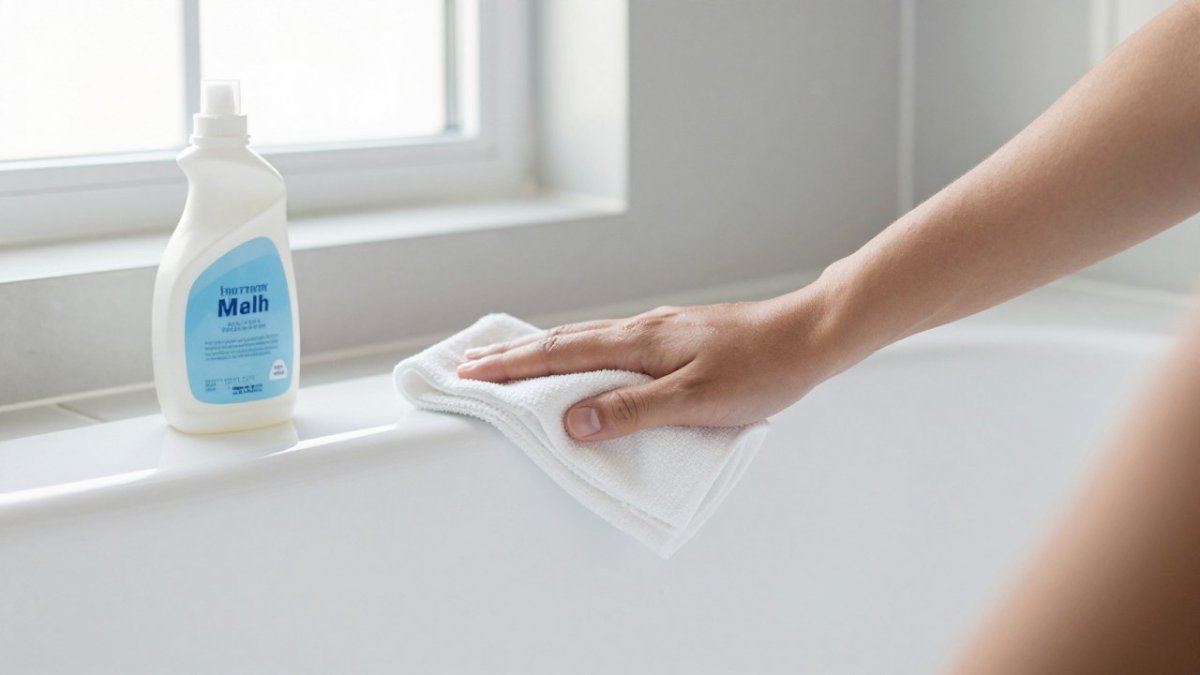
After each use: Rinse the tub with warm water and wipe it dry with a soft microfiber cloth. This single habit removes soap film and minerals before they bind to the surface. On refinished tubs, drying is especially important during the first 30 days.
Weekly: Clean with a mild, non-abrasive liquid cleaner and a soft sponge. Pay attention to the tub floor and the area around the drain, where soap scum collects fastest. On acrylic and fiberglass, use a sponge rather than a brush. On enamel cast iron, a soft cloth is sufficient. If you have hard water, add a weekly rinse with diluted white vinegar on enamel only, and rinse thoroughly.
Monthly: Deep-clean the drain area and check for early signs of dullness, chips, or scratches. Remove and clean the drain cover if it is removable. Inspect the caulk line for mildew and re-caulk if needed. On refinished tubs, avoid abrasive cleaners entirely and use only products approved by the refinisher.
Every three to six months: Inspect the entire surface for chips, peeling, or persistent stains. Address small chips early, a chip left exposed can let water under the finish and lead to larger failures. For acrylic and fiberglass, a repair kit made for those materials can handle minor scratches. For enamel, a touch-up product made for enamel is appropriate. If the finish is peeling or dull beyond cleaning, professional refinishing may be more cost-effective than repeated repairs.
Seasonal check: Test your water hardness if you notice frequent spotting. A water softener or a whole-house filter can reduce mineral buildup and extend the life of any tub finish. Also check bath mats and suction cups, grit trapped under them can scratch the tub floor over time.
Consistency matters more than intensity. Small weekly steps prevent the buildup that leads to harsh scrubbing. Keep a dedicated soft sponge and microfiber cloth for the tub, and replace them when they become gritty or worn.
Here is a quick reference for the cleaning frequency the article recommends.
| Frequency | Task |
|---|---|
| After each use | Rinse with warm water and wipe dry with a microfiber cloth |
| Weekly | Clean with a mild, non-abrasive liquid cleaner and soft sponge |
| Monthly | Deep-clean the drain area and inspect for chips or scratches |
| Every 3 to 6 months | Inspect the full surface for chips, peeling or persistent stains |
| Seasonal | Test water hardness if spotting is frequent; check bath mats for grit |
Booking a Professional Assessment for Your Bathtub Finish
If your tub is already dull, scratched or stained beyond what cleaning can fix, a professional assessment can help. Contact Dimensions Luxury Builders for current details on assessments and pricing. You can review our remodeling insights for more guidance, or read our frequently asked questions to learn how the process works. Our real stories from homeowners show how we have handled similar bathroom work for other families.
For a clear recommendation tailored to your tub, contact Dimensions Luxury Builders for a free quote.
Frequently Asked Questions
What is the best way to clean a bathtub without damaging the finish?
Use a mild, non-abrasive, non-acidic liquid cleaner and a soft sponge or microfiber cloth. Rinse the tub thoroughly with warm water and wipe it dry to prevent water spots and soap scum from building up. Avoid scouring pads, steel wool, and powdered abrasives, which can scratch and dull the surface over time. Check the manufacturer's care instructions first, especially for acrylic, fiberglass, or refinished tubs, because the right cleaner depends on the finish.
How long should I wait to use a tub after reglazing?
Most refinishers recommend waiting several days before using a newly refinished bathtub, and the exact timing depends on the coating product and the curing conditions in your home. Avoid standing in the tub, running water, or using harsh cleaners during this period, since the surface is still hardening. Follow the specific wait time given by your refinisher, and ask about it before the work begins so you can plan showers around the curing window.
Which cleaners should I avoid on a bathtub finish?
Avoid abrasive powders, scouring pads, bleach-heavy products, and strong acidic cleaners such as those containing hydrochloric or muriatic acid. These can etch, dull, or discolor the surface, and they can wear away a refinished coating. Read product labels for ingredient warnings and compatibility notes, and do not mix cleaners, since combining chemicals can create hazardous fumes. When in doubt, test any new product on a small, hidden area first.
How often should I clean my bathtub?
Wipe the tub down with a mild cleaner after each use or at least once a week to prevent soap scum and mineral buildup from settling into the finish. A deeper clean every few weeks helps remove dirt and grime that accumulate along the edges and drain area. Drying the surface after use reduces water spots, and quick routine care is far easier on the finish than occasional heavy scrubbing.