 ultimate-guide
Signs of Poor Window Installation: What to Look For
Table of Contents
- Visible Gaps and Air Leaks in Window Frames
- Water Infiltration and Moisture Damage Around Windows
- Condensation and Fogging Between Window Panes
- Common Window Installation Mistakes That Compromise Performance
- How to Check Window Seal Integrity and Spot Problems
- Preventing Leaks in Impact Window Installation
- Why Professional Installation Matters for Your Home's Value and Safety
- Frequently Asked Questions
Last Updated: September 3, 2026
Visible Gaps and Air Leaks in Window Frames
The most obvious sign of poor window installation is visible daylight or drafts coming through gaps around the window frame. When a window isn't installed correctly, the frame doesn't sit flush against the opening, leaving space where air infiltrates directly into your home. These gaps compromise both comfort and energy efficiency, forcing your HVAC system to work harder.
A properly installed window should have minimal clearance, sealed with expanding foam insulation and caulking. If you can see light around the perimeter or feel cold air during winter, the installation likely failed to account for proper shimming and leveling. The window frame must be plumb and level; even slight misalignment creates air pathways.
Common installation mistakes include insufficient shimming, improper fastener placement, and inadequate foam insulation. Shims are wedges that hold the frame perfectly level and square; without them, gravity pulls the frame out of alignment. Professional installers space fasteners every 12 inches around the frame perimeter; amateur work often spaces them too far apart, allowing the frame to flex and shift (nfrc.org).
Check the exterior caulking line as well. A continuous bead of silicone or polyurethane sealant should run along the entire perimeter where the window frame meets the exterior cladding. Gaps or missing sections are red flags that allow water and air to penetrate behind the frame.
Water Infiltration and Moisture Damage Around Windows
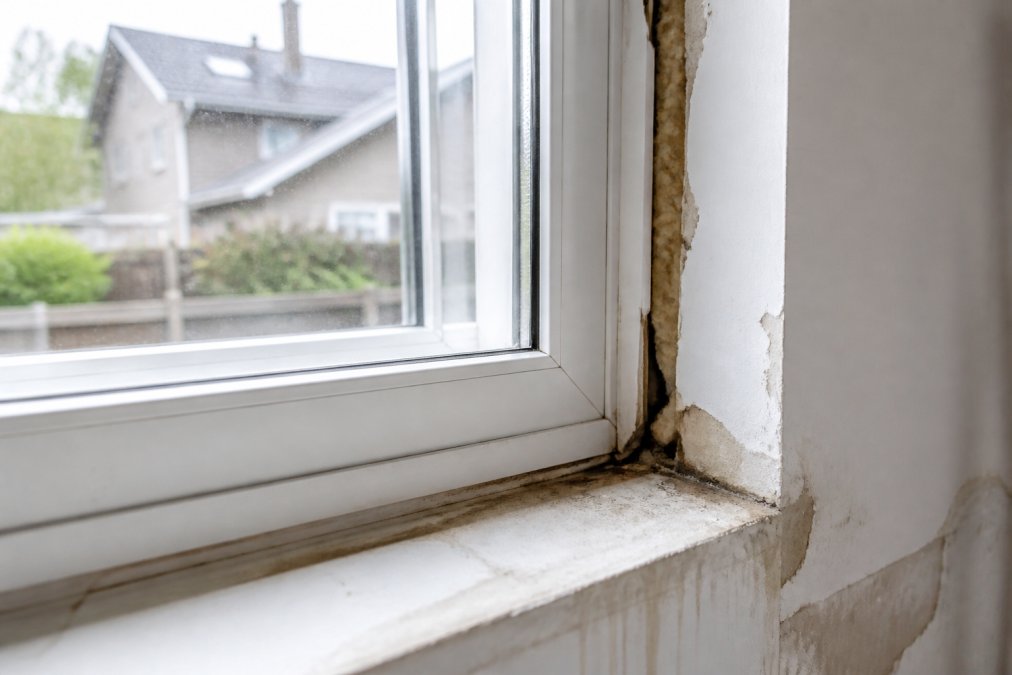
Water damage around windows is one of the most serious consequences of poor window installation. Even minor gaps allow moisture to seep behind the frame and into wall cavities, where it promotes mold growth and structural decay. This damage often goes unnoticed for months because it happens inside the wall.
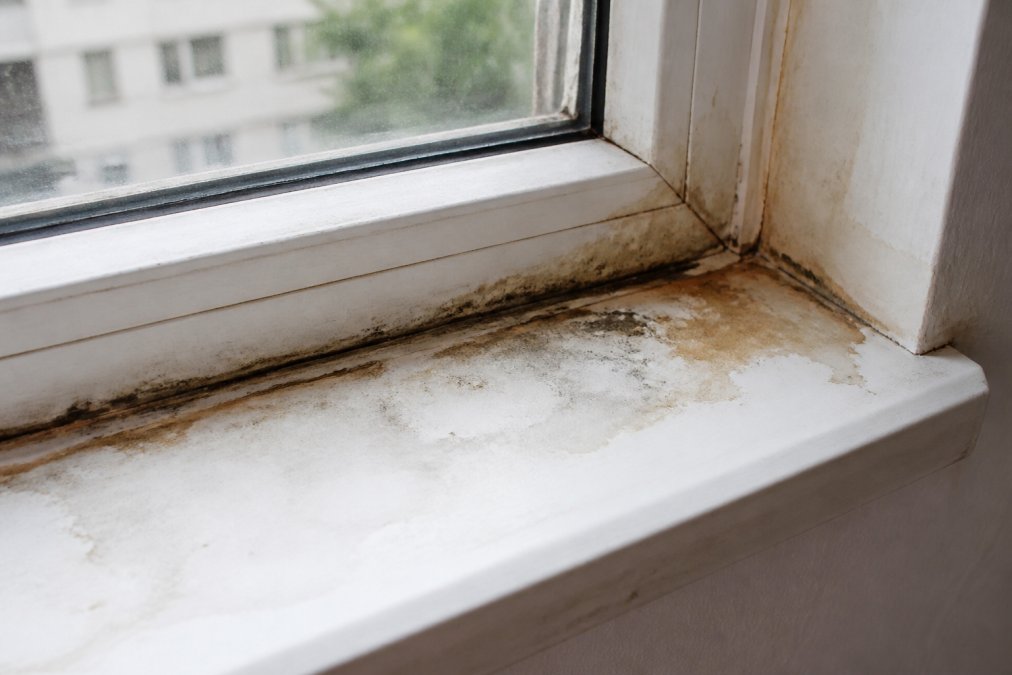
The first visible signs are damp patches on the interior wall near the window, discoloration on the sill, or soft wood around the frame. Look for mold growth, black or greenish spots on the sill, frame, or surrounding wall.
Exterior flashing is the critical component that prevents water from entering the wall. Flashing is a thin metal or membrane barrier installed beneath the exterior window trim, designed to direct water downward and away from the wall cavity. Improper flashing installation is the leading cause of window-related water damage. Common mistakes include flashing installed upside down, flashing that doesn't extend far enough onto the wall, or flashing that wasn't sealed properly to the window frame.
The weep holes at the bottom of the window frame are drainage points designed to release water that makes it past the flashing. If these are clogged or missing, water accumulates inside the frame cavity instead of draining out.
Another red flag is caulking applied on the exterior where it shouldn't be. Some installers caulk the entire exterior perimeter, trapping water inside instead of allowing it to drain. Proper installation leaves the bottom edge unsealed to allow drainage, with caulk applied only to the top and sides.
Condensation and Fogging Between Window Panes
Condensation between the glass panes indicates a failed window seal. Modern windows use insulated glass units (IGUs) with two or three panes separated by spacers and sealed around the perimeter. This seal traps inert gas (usually argon) between the panes, which provides insulation. When the seal fails, air enters, moisture accumulates, and fogging results.
This is distinct from exterior condensation, which is normal on cold mornings. Interior fogging, moisture trapped permanently between the panes, means the seal has failed and cannot be cleaned away.
A failed IGU seal can result from poor installation practices. The spacer frame around the perimeter must be perfectly sealed with sealant. If the sealant is applied unevenly, too thin, or not fully cured before the window is installed, the seal fails prematurely. Thermal stress also contributes; if the window wasn't properly supported during installation, the frame flexes slightly over time, stressing the seal until it breaks.
Condensation between panes is irreversible without replacing the entire IGU. Once fogging appears, the window's insulation value drops significantly. A reputable installer stands behind their work with a warranty covering seal failure for 5-10 years.
Common Window Installation Mistakes That Compromise Performance
Understanding the most frequent installation errors helps you recognize poor workmanship. The first major mistake is improper frame leveling and shimming. The window frame must sit perfectly level and plumb in the opening. If tilted even slightly, it stresses the sash, making it difficult to open and close and eventually cracking the frame or breaking the hardware.
Inadequate insulation around the frame is another critical error. Building codes require foam insulation in the gap between the window frame and rough opening, typically R-3 or higher (iccsafe.org). Some installers use minimal foam or skip it entirely to save time and cost, leaving thermal bridging and direct pathways for cold air.
Fastener placement and spacing directly affects long-term performance. Fasteners must be spaced no more than 12 inches apart around the frame perimeter and driven through the frame's nailing fin into the rough opening framing. Improper spacing allows the frame to flex and shift.
Caulking and sealant application is frequently done poorly. The sealant must be continuous, properly tooled, and fully cured before the window is subjected to weather. Exterior caulking must remain flexible to accommodate thermal expansion; rigid caulk cracks over time.
Flashing installation errors cause most water damage. The flashing must overlap the window frame and extend onto the wall framing, sloping downward to shed water. Many installers install flashing incorrectly or skip it entirely on the sides and bottom.
Finally, poor window selection for the application is a mistake at the design stage. Windows in hurricane-prone areas require impact-resistant glass and frames rated for wind loads. Using standard windows in these locations leads to failure during storms.
How to Check Window Seal Integrity and Spot Problems
Conduct a visual inspection of all windows at least annually. Start with the exterior, examining each window frame, caulking, and trim for gaps between the frame and siding, cracks in caulking, or separation between components. Check the flashing and weep holes to ensure they're clear.
Next, examine the interior. Feel around the window frame for air movement on a windy day. Check the sill and interior trim for water stains, soft spots, or mold. Look between the glass panes for condensation or fogging. Gently try to move the window frame; it should be rigid with no flexing or rattling.
Test the sash operation. The window should open and close smoothly without binding. If it requires force or sticks, the frame may be misaligned.
For a more thorough assessment, use a smoke test. Light a smoke stick or incense and hold it near the window frame while it's closed. Smoke should not be drawn toward the frame. If smoke is pulled inward, air is leaking through.
Check caulking condition by pressing on it with your finger. Quality caulk is flexible and springs back. If it's hard, cracked, or missing, it needs replacement. Inspect the weatherstripping around the sash; it should be intact with no tears, compression, or hardening.
If you notice multiple problems, gaps, water stains, condensation, and difficult operation, the window likely has fundamental installation issues. A professional home inspector can provide a detailed assessment using thermal imaging to identify air leaks and moisture problems.
Preventing Leaks in Impact Window Installation
Preventing leaks in impact window installation starts with proper planning and material selection. Impact windows require reinforced frames, impact-resistant glass, and specialized installation techniques. The frame must be anchored securely to the home's structural framing, not just the rough opening.
The flashing system is critical for impact windows. Many professionals recommend using self-adhering membrane flashing, which provides a more complete water barrier than traditional metal flashing. The membrane must extend at least 6 inches onto the wall framing on all sides.
Proper sealing of the frame perimeter is essential. The gap between the frame and rough opening should be filled with high-quality expanding foam designed for exterior use, applied evenly and allowed to cure fully. After the foam cures, it should be trimmed flush and sealed with exterior-grade caulk.
The fastening system must be strong. Impact windows typically require fasteners spaced 6 inches apart instead of the standard 12 inches (fema.gov). Fasteners must be corrosion-resistant stainless steel or hot-dipped galvanized to prevent rust.
Proper shimming ensures the frame remains level and square under stress. Impact windows may require more shims than standard windows, placed at fastener locations to provide support.
The installation team should verify proper operation before completing the job. The window should open and close smoothly, and all hardware should function correctly. The installer should provide written verification that the window was installed according to manufacturer specifications and applicable building codes.
Why Professional Installation Matters for Your Home's Value and Safety
Professional installation directly impacts your home's value, safety, and long-term durability. A well-installed window system protects your investment by preventing water damage, maintaining energy efficiency, and ensuring structural integrity.
From a resale perspective, buyers in hurricane-prone areas specifically seek homes with properly installed impact windows. A professional installation with documented compliance to building codes and manufacturer specifications increases buyer confidence and justifies higher pricing.
Safety is paramount. Impact windows are designed to protect your home and family during severe weather. If they're not installed correctly, they fail to provide this protection.
Professional installers carry insurance and are licensed by the state. This means they're accountable for their work. If problems arise from installation defects, the installer's insurance covers repairs.
At Dimensions Luxury Builders, we understand that window installation is not a DIY project for most homeowners. Our team combines local expertise with professional craftsmanship to ensure every window is installed to the highest standards. We handle the entire process, from selecting the right windows for your home's specific needs to managing all installation details and inspections. Our end-to-end project management means you have one point of contact, and we're responsible for getting it right.
Proper installation also preserves warranty coverage. Most window manufacturers require professional installation by licensed contractors to honor their warranties. DIY or amateur installation voids the warranty, leaving you unprotected if the window fails prematurely.
Poor window installation creates problems that compound over time. Visible gaps become water infiltration, which becomes mold and structural rot. What seems like a small installation shortcut becomes an expensive repair bill years later.
The best protection is professional installation from the start. Dimensions Luxury Builders specializes in impact window installation for homes in hurricane-prone areas. We ensure proper flashing, sealing, leveling, and fastening, every detail that determines whether your windows perform as designed. Our licensed, insured team manages permitting, inspection coordination, and warranty documentation, so you can be confident your investment is protected. Get a free quote to learn how we can upgrade your home's windows with professional installation that lasts.
Frequently Asked Questions
What are the most common signs of poor window installation?
The most obvious signs include visible gaps around the window frame, drafts coming through closed windows, condensation or fogging between panes, water stains or moisture damage on interior trim, difficulty opening or closing sashes, and uneven or messy caulking. If your windows were recently installed and you notice any of these issues, contact your installer immediately. Poor installation often compromises the weatherstripping, sealant, and flashing that protect your home from water and air infiltration.
How do I check if my impact windows are sealed properly?
Inspect the perimeter where the window frame meets the exterior cladding and interior casing. Look for consistent, smooth caulking with no cracks or gaps. Run your hand around the frame to feel for drafts. Check that the window operates smoothly and closes completely without binding. For impact windows, verify that the flashing is properly installed and sealed, this diverts water away from the structural opening. If you see daylight around the frame or feel air movement when the window is closed, the seal integrity is compromised and requires professional remediation.
Can poor window installation affect my home's resale value?
Yes. Buyers and home inspectors specifically evaluate window condition and installation quality. Water damage, mold growth, and structural issues caused by improper installation significantly reduce property value and create liability concerns. Impact windows installed incorrectly may fail to meet code requirements or provide the hurricane protection they're rated for, which is a major concern in hurricane-prone regions. Addressing installation problems before selling protects your investment and prevents disclosure complications that can derail a sale.
Should I attempt DIY repairs or hire a professional for window installation problems?
For minor caulking or weatherstripping replacement, some homeowners can handle basic maintenance. However, structural issues, water damage, flashing problems, or seal failures require professional assessment and repair. Improper remediation can worsen the problem or void warranties. If your windows were recently installed and show defects, contact the original installer first, they may be obligated by warranty to correct the work at no cost. For complex issues or if the installer is unresponsive, hire a licensed contractor who specializes in window installation and repair.
This article was written using GrandRanker