 blog
blog
Luxury Kitchen Flooring Alternatives to Hardwood
Table of Contents
- Why Luxury Kitchens Need Flooring Alternatives to Hardwood
- Best Kitchen Flooring Options for High-End Spaces
- Porcelain Tile Kitchen Flooring: Durability Meets Elegance
- Natural Stone Kitchen Flooring: Timeless Sophistication
- Kitchen Flooring for Adjoining Rooms: Design Continuity
- Performance Comparison: Water Resistance, Durability, and Maintenance
- Total Cost of Ownership: Installation, Maintenance, and Longevity
- Choosing the Right Alternative for Your Luxury Kitchen
- Frequently Asked Questions
Last Updated: October 10, 2026
Why Luxury Kitchens Need Flooring Alternatives to Hardwood
When it comes to designing a luxury kitchen, hardwood flooring isn't always the best choice, even though it's the traditional default. At Dimensions Luxury Builders, we help homeowners discover that alternatives to hardwood flooring for luxury kitchens offer superior performance, durability, and design flexibility without sacrificing elegance or sophistication.
Hardwood has real limitations in kitchens. It's vulnerable to moisture, scratches, and the constant foot traffic of a busy culinary space. Spilled wine, splashed cooking oil, and humidity from steam can damage wood over time.
The right kitchen flooring alternative depends on your lifestyle, design vision, and long-term maintenance preferences. Some materials mimic the warmth of wood while outperforming it. Others offer dramatic design possibilities hardwood can't provide.
Best Kitchen Flooring Options for High-End Spaces
Luxury kitchens demand flooring that balances visual impact with functional reliability. The best kitchen flooring options for high-end spaces fall into three categories: wood-look alternatives that deliver hardwood aesthetics with superior performance, natural materials that bring timeless elegance, and engineered solutions designed specifically for kitchen environments.
Each option serves different priorities. Some homeowners prioritize authentic material warmth. Others want the look of hardwood without its maintenance burden. Still others seek distinctive design statements that set their kitchen apart. Understanding what each alternative delivers helps you match material to your actual needs.
Luxury Vinyl Plank: The High-End Hardwood Look
Luxury vinyl plank (LVP) has transformed from a budget option into a legitimate luxury choice. High-end LVP replicates hardwood grain patterns, color variation, and tactile texture with remarkable accuracy.
The performance advantages are substantial. Installation is faster than hardwood, and the material works with radiant floor heating systems, a feature hardwood requires careful engineering to accommodate.
Maintenance is straightforward: regular sweeping and occasional damp mopping keep LVP looking new. Unlike hardwood, it doesn't require refinishing, sanding, or special conditioning treatments. For kitchens where practicality matters as much as appearance, this simplicity is valuable.
The trade-off is authenticity. While luxury vinyl plank looks remarkably like wood, it doesn't feel like it underfoot. Some homeowners find the slight give of vinyl less satisfying than solid hardwood.
Engineered Hardwood: Stability Without Compromise
Engineered hardwood offers a middle path, real wood veneer bonded to plywood or high-density fiberboard. This construction resists the moisture and temperature fluctuations that cause solid hardwood to warp and cup.
The top layer is genuine hardwood, so the material feels and ages like real wood. The engineered core provides dimensional stability that solid hardwood can't match.
Installation flexibility is another advantage. Engineered hardwood can be glued directly to concrete subfloors and works with radiant heating systems. Solid hardwood requires floating or nailed installation over wooden subfloors and typically conflicts with radiant systems.
The limitation is the veneer layer. Once the top veneer wears through, which takes decades in normal use but can happen faster in high-traffic kitchens, refinishing options are limited.
Bamboo Flooring: Sustainable Luxury
Bamboo has emerged as a sophisticated alternative for luxury kitchens, combining environmental responsibility with genuine aesthetic appeal. Bamboo is harder than most hardwoods, offering superior scratch resistance.
The material comes in multiple finishes. Natural bamboo has warm honey tones. Carbonized bamboo (heat-treated) offers deeper caramel and chocolate shades. Strand-woven bamboo, compressed for maximum density, delivers dramatic appearance with exceptional durability.
Moisture resistance is better than solid hardwood but not waterproof. Like engineered hardwood, quality bamboo flooring handles kitchen humidity better than traditional solid hardwood. It works with radiant heating systems and can be refinished multiple times during its lifespan.
The drawback is inconsistency in quality and finishing standards. Bamboo flooring varies widely by manufacturer. Premium brands deliver luxury-grade products; budget manufacturers produce flooring that shows wear quickly. For high-end kitchens, sourcing quality matters significantly.
Porcelain Tile Kitchen Flooring: Durability Meets Elegance
Porcelain tile represents the ultimate in kitchen durability. Unlike ceramic tile, porcelain is fired at higher temperatures and has lower water absorption, making it genuinely waterproof.
The design possibilities are extensive. Modern porcelain tiles replicate natural stone, wood, concrete, and leather with stunning accuracy. Large-format tiles (24" × 48" and larger) create seamless, contemporary aesthetics. Smaller tiles enable intricate patterns and traditional designs.
Performance is exceptional. Porcelain resists staining, scratching, and fading. It requires no sealing or special maintenance. A quick sweep and mop keeps it pristine indefinitely.
The trade-offs are underfoot feel and installation precision. Tile is harder and cooler than wood, which some find less comfortable. Grout lines, while manageable with modern sealed grout, create visual breaks that some find less unified than seamless hardwood.
Large-format porcelain tiles with minimal grout lines create the most unified, contemporary appearance. They also mean fewer grout lines to maintain, which reduces long-term cleaning burden.
Natural Stone Kitchen Flooring: Timeless Sophistication
Natural stone brings unmatched elegance to luxury kitchens. Each stone is unique, no two pieces are identical. This individuality creates character that manufactured materials can't replicate.
Marble: The Classic Choice
Marble represents luxury flooring at its most refined. Its soft veining, subtle color variations, and luminous surface quality create timeless elegance. Marble feels warm underfoot and develops a subtle patina over time that many find beautiful.
Marble requires honest acknowledgment of its limitations. It's softer than granite or porcelain, making it vulnerable to scratching and etching from acidic substances like lemon juice or wine. It stains more easily than harder stones. Marble demands regular sealing and careful maintenance.
For luxury kitchens where appearance matters more than carefree practicality, marble works beautifully, especially in areas away from the primary cooking zone. Many designers use marble in dining areas adjacent to kitchens, reserving more durable materials for high-traffic cooking areas.
Granite and Limestone: Practical Elegance
Granite is harder and more stain-resistant than marble, making it a more practical choice for active kitchens. Its crystalline structure creates dramatic visual interest. Granite ranges from subtle earth tones to bold, statement-making colors.
Limestone offers warmth between marble and granite. It's softer than granite but harder than marble, and it develops a beautiful patina with age. Limestone works well in kitchens where you appreciate natural material character and accept that visible wear adds to rather than detracts from its appeal.
Both granite and limestone require sealing and periodic resealing. They're more durable than marble but demand more maintenance than porcelain or luxury vinyl. For homeowners who view stone maintenance as part of the material's appeal, they're excellent choices.
Kitchen Flooring for Adjoining Rooms: Design Continuity
How your kitchen flooring transitions to adjoining spaces shapes the entire home's visual flow. The best approach depends on your home's layout and design vision.
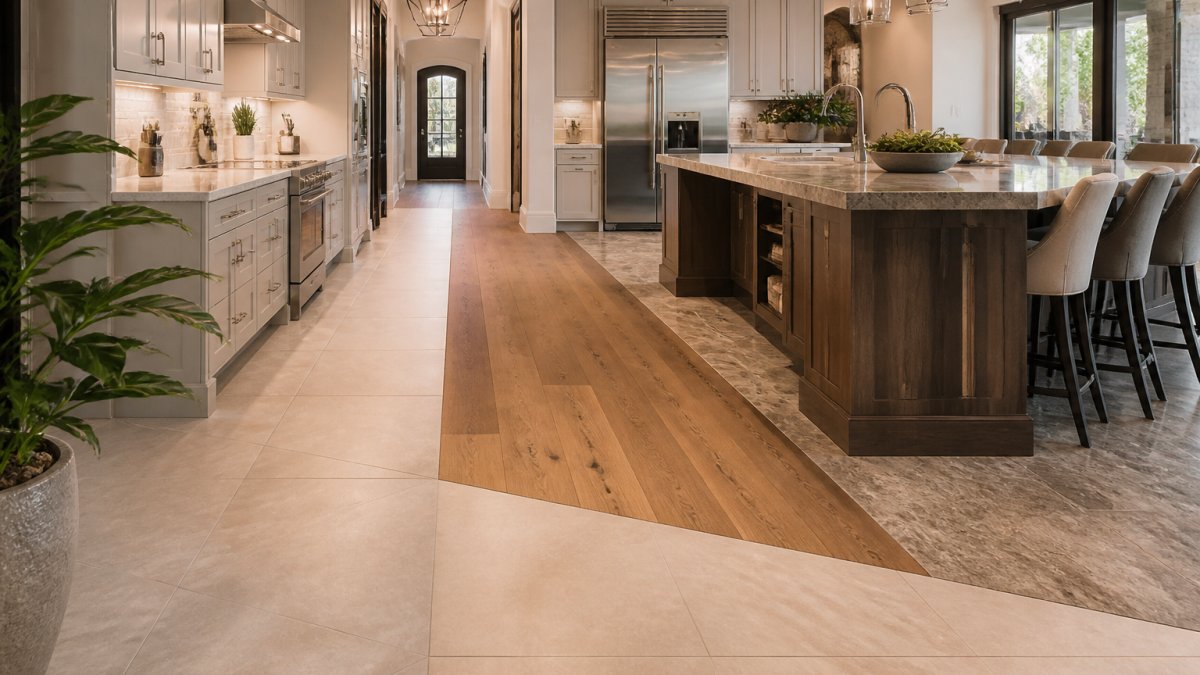
Open-plan kitchens benefit from material continuity. Using the same flooring throughout the kitchen, dining, and living areas creates visual expansion and unified design. This works beautifully with large-format porcelain tile or luxury vinyl plank, which feel cohesive across large spaces.
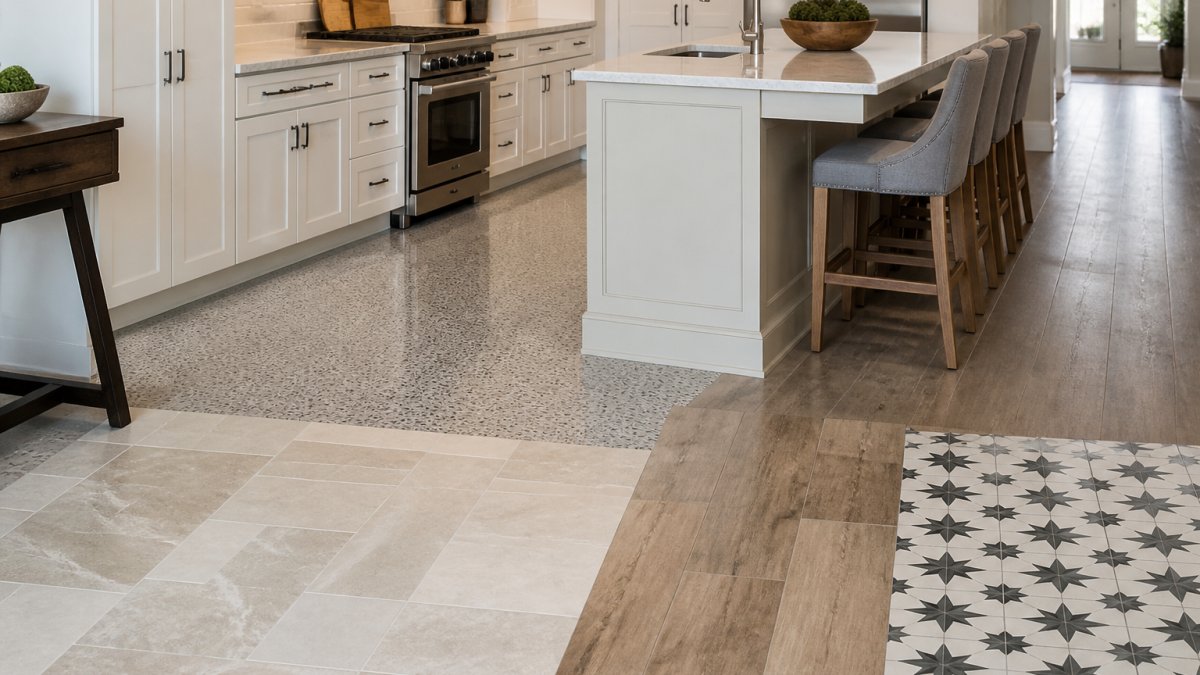
For kitchens with defined boundaries, material transitions mark functional zones. Many designers pair kitchen porcelain tile with hardwood in dining rooms, or transition from luxury vinyl plank to engineered hardwood.
Radiant heating compatibility matters when kitchens connect to heated spaces. Not all materials work equally well with radiant systems. Porcelain tile and luxury vinyl plank excel with radiant heat. Solid hardwood requires careful installation.
Performance Comparison: Water Resistance, Durability, and Maintenance
Understanding how materials perform against kitchen-specific challenges helps you choose with confidence.
| Material | Water Resistance | Scratch Resistance | Maintenance | Radiant Heat Compatible |
|---|---|---|---|---|
| Luxury Vinyl Plank | Excellent | Very Good | Minimal (sweep/mop) | Yes |
| Engineered Hardwood | Good | Good | Moderate (occasional conditioning) | Yes |
| Bamboo | Good | Excellent | Moderate (occasional conditioning) | Yes |
| Porcelain Tile | Excellent | Excellent | Minimal (sweep/mop) | Yes |
| Marble | Fair | Poor | High (frequent sealing) | Yes |
| Granite | Excellent | Excellent | Moderate (periodic sealing) | Yes |
Water resistance is critical in kitchens. Luxury vinyl plank and porcelain tile are genuinely waterproof. Engineered hardwood and bamboo tolerate moisture better than solid hardwood but aren't waterproof. Natural stone varies, granite handles moisture well; marble requires careful protection.
Scratch resistance matters for active kitchens. Bamboo and porcelain excel here. Marble is the most vulnerable. Luxury vinyl plank resists scratches but can show wear patterns in high-traffic areas over years.
Maintenance burden influences long-term satisfaction. Porcelain tile and luxury vinyl plank demand minimal upkeep. Natural stone requires regular sealing and careful attention. Hardwood and bamboo need periodic conditioning to maintain appearance.
Total Cost of Ownership: Installation, Maintenance, and Longevity
Initial material cost is only part of the equation. True cost of ownership includes installation, maintenance, repairs, and how long the material lasts before replacement becomes necessary.
Luxury vinyl plank has low material cost and minimal installation expense. Maintenance is nearly free. Longevity is 15-25 years in kitchens before visible wear accumulates.
Porcelain tile costs more initially but requires minimal maintenance and lasts indefinitely. Professional installation is essential and represents significant cost.
Natural stone carries high material and installation costs. Marble requires expensive regular maintenance. Granite is more forgiving but still demands periodic sealing. Longevity is excellent, natural stone outlasts most homes.
Engineered hardwood and bamboo occupy middle ground. Material costs are moderate. Installation is straightforward. Maintenance is periodic but manageable. Longevity is 20-30 years with proper care.
Choosing the Right Alternative for Your Luxury Kitchen
The right choice depends on three factors: your lifestyle, your design vision, and your maintenance tolerance.
If you prioritize ease of care and practical durability, porcelain tile or luxury vinyl plank deliver luxury appearance with minimal upkeep.
If you want authentic wood warmth without hardwood's limitations, engineered hardwood or bamboo offer genuine material character with better kitchen performance than solid hardwood.
If you value distinctive elegance and accept higher maintenance demands, natural stone, particularly granite for kitchens, creates timeless beauty that hardwood can't match.
When evaluating kitchen flooring alternatives, consider the specific conditions your kitchen faces.
At Dimensions Luxury Builders, we help homeowners navigate these decisions by connecting material choices to actual living patterns.
Choosing the right kitchen flooring alternative shapes how your luxury kitchen performs for decades.
Frequently Asked Questions
What is the best alternative to hardwood flooring in a kitchen?
The best kitchen flooring alternative depends on your priorities. Luxury vinyl plank offers authentic wood appearance with superior water resistance and durability. Porcelain tile provides exceptional durability and low maintenance, ideal for high-traffic kitchens. Natural stone delivers timeless elegance but requires more upkeep. Engineered hardwood balances traditional aesthetics with better moisture stability than solid hardwood. For luxury kitchens, porcelain tile and luxury vinyl plank lead the market due to their performance in wet environments and design versatility.
What flooring looks most like hardwood but is more water-resistant?
Luxury vinyl plank (LVP) is the top choice for authentic wood appearance with superior water resistance. Modern LVP mimics wood grain, knots, and color variation convincingly while being fully waterproof. Engineered hardwood offers a genuine wood surface with better moisture stability than solid hardwood, though it's not waterproof. Porcelain tile with wood-look finishes provides realistic wood aesthetics combined with superior durability and water resistance, making it ideal for kitchen applications where spills and moisture are common.
How should kitchen flooring coordinate with hardwood in adjoining rooms?
Create visual continuity by matching color tone and wood species appearance across transitions. Use luxury vinyl plank or porcelain wood-look tile in the kitchen that mirrors the hardwood's undertones. Install threshold transitions at doorways to define spaces while maintaining aesthetic flow. Consider the same wood-look finish in both areas if changing materials. For natural stone kitchens adjoining hardwood, choose stone with warm or cool undertones matching the hardwood's character. Consult with your designer about transition pieces that complement rather than contrast your overall home aesthetic.
What is the most durable flooring for a high-end kitchen?
Porcelain tile ranks highest for durability in kitchen environments. It resists scratches, stains, moisture, and thermal shock from temperature changes. Natural stone like granite offers exceptional durability but requires regular sealing. Luxury vinyl plank provides excellent durability with waterproof protection and scratch resistance. Engineered hardwood is more durable than solid hardwood but less resilient than tile or vinyl. For luxury kitchens with heavy use, porcelain tile and high-quality luxury vinyl plank deliver the best balance of durability, water resistance, and aesthetic appeal.