 comparison
Is Radiant Floor Heating Worth It in Florida?
Table of Contents
- The Verdict: When Radiant Floor Heating Makes Sense in Florida
- Radiant Floor Heating Cost: What Drives Your Investment
- Electric vs. Hydronic Radiant Floor Heating: Which Suits Florida Homes?
- Radiant Floor Heating Energy Use and Operating Costs in a Warm Climate
- Radiant Floor Heating vs. Heat Pumps: The Florida Efficiency Question
- Radiant Floor Heating Installation in Existing Homes: Retrofit Challenges
- Room-by-Room Recommendations for Florida Homeowners
- Conclusion: Weighing Comfort Against Cost in a Warm Climate
- Frequently Asked Questions
Last Updated: October 7, 2026
The Verdict: When Radiant Floor Heating Makes Sense in Florida
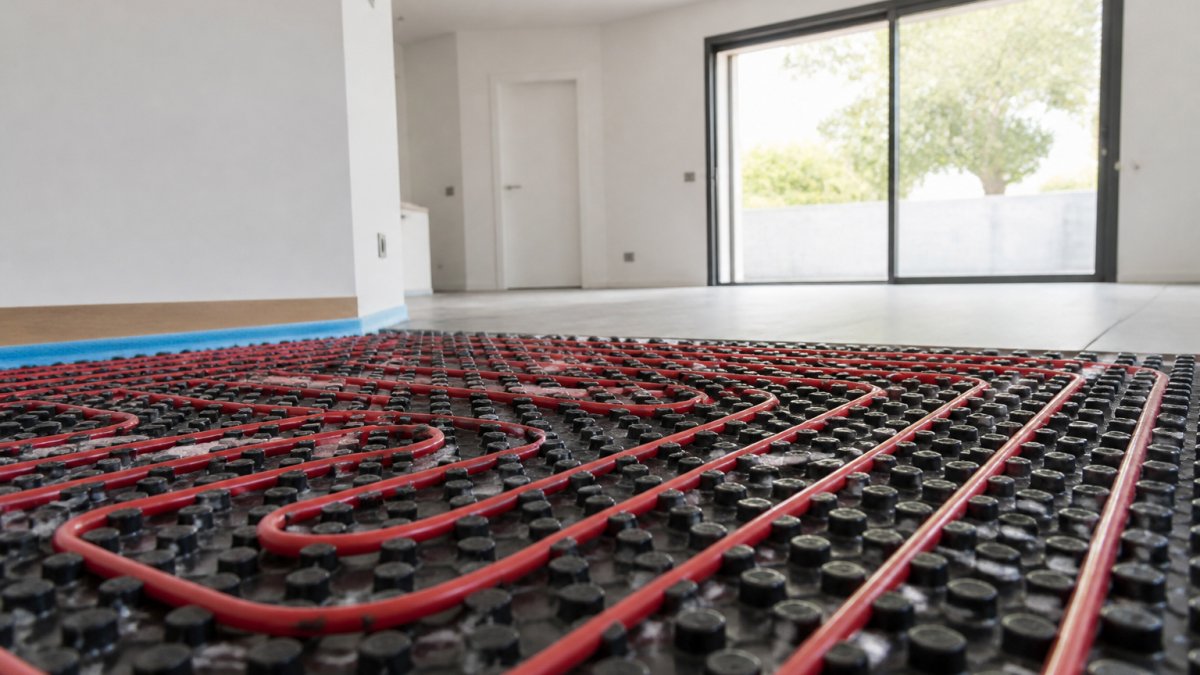
Radiant floor heating runs electric cables or warm-water tubing beneath the finished floor, turning the floor itself into the heat source.
At Dimensions Luxury Builders, we install and renovate homes across Broward County, and this question comes up most during bathroom remodels and primary suite additions. Below, we break down what drives cost, how electric and hydronic systems compare, and which rooms justify the investment.
Radiant Floor Heating Cost: What Drives Your Investment
Radiant floor heating cost depends on three things: system type, square footage covered, and how much work it takes to get under the existing floor. Any contractor who quotes a single number before walking your space is guessing.
Installed Cost Ranges for Electric and Hydronic Systems
Published cost guides put installed electric radiant systems in a broad range, with some sources citing roughly $6 to $20 per square foot and hydronic systems running higher, around $10 to $25 per square foot, according to Willow Home's radiant floor heating cost guide.
What matters more is scope. A 40-square-foot bathroom mat is a very different project from a hydronic system running through an entire ground floor.
Hidden Factors That Affect Your Final Price
Several costs sit outside the headline per-square-foot figure:
- Floor removal and prep. Tile has to come up before a heating mat or tubing goes down, and that demolition adds labor.
- Subfloor condition. Uneven or damaged subfloor needs leveling before anything else happens.
- Electrical capacity. Electric systems draw real amperage. An older panel may need an upgrade, and that's a separate licensed electrical job.
- Thermostat and controls. A programmable floor sensor thermostat adds cost but is worth it for controlling run time.
- Permitting. Electrical work typically requires a permit and inspection, which adds time and a fee.
We always recommend checking electrical capacity before committing to an electric system. It's the most common surprise we see on retrofit projects.
The Payback Question in a Short Heating Season
This is where the math changes for a warm-weather home. Payback on radiant floor heating assumes the system replaces heating energy you were already paying for.
In this climate, that offset is small. A bathroom mat might run twenty to thirty minutes on a cool morning and stay off for days. The annual energy cost is modest, but so is the avoided cost, because there was very little heating energy to avoid.
How Cost Shifts by Region
Heating demand varies across the state, shifting the cost-benefit calculation:
- North Florida: Cooler winters and more frequent cold snaps mean more run hours per season. A whole-floor hydronic system in new construction is more defensible here than anywhere else in the state, though it still won't match cold-climate payback.
- Central Florida: A middle case. Bathrooms and primary suites justify electric mats; whole-home systems rarely do.
- South Florida: The shortest heating season and the highest humidity. Targeted bathroom and kitchen mats are the only projects that consistently pencil out, and even then the value is comfort, not savings.
Electric vs. Hydronic Radiant Floor Heating: Which Suits Florida Homes?
For most homes here, electric radiant floor heating fits small, targeted areas, while hydronic systems make more sense in new construction where tubing can be laid during the build.
Electric radiant floor heating uses heating cables or prefabricated mats installed directly under tile or stone.
Hydronic radiant floor heating circulates warm water through tubing embedded in a concrete slab or subfloor.
| Factor | Electric Radiant | Hydronic Radiant |
|---|---|---|
| Best for | Single rooms, bathrooms, kitchens | New construction, whole floors |
| Install disruption | Lower | High |
| Warm-up time | Fast | Slow |
| Retrofit feasibility | Good | Poor in finished homes |
| Floor types | Tile, stone | Concrete slab, tile |
| Slab-on-grade fit | Mat over slab, thin-set, tile | Tubing must be in or above slab |
Slab-on-Grade Reality Check
Many homes here sit on a slab-on-grade foundation, meaning the concrete slab is poured directly on the ground with no crawlspace beneath.
For an electric system, the heating mat goes on top of the slab, then a layer of self-leveling compound or thin-set, then the tile.
For a hydronic system over an existing slab, you generally can't embed tubing into the concrete without major demolition.
A Room-by-Room Decision Framework
Not every room earns its keep with radiant floor heating. Here's how we'd prioritize it, based on comfort payoff versus installation effort:
- Primary bathroom: top priority. Cold tile on bare feet is the number one complaint we hear. A small electric mat delivers the biggest comfort gain for the smallest investment.
- Guest bathroom: strong second. Quick warm-up, low run time, and it makes a small space feel more finished.
- Kitchen: situational. Only worth it if you're already replacing the floor and standing barefoot at the island matters to you.
- Bedrooms: usually skip. Bedrooms are typically carpeted or wood, which don't pair well with radiant heat, and the comfort gain is smaller.
- Whole ground floor: rarely justified. The cost and disruption rarely match the payoff in a climate with a short heating season.
If you're already planning a bathroom or kitchen renovation, that's the moment to decide. Adding radiant heat during a remodel costs far less than tearing up a finished floor later.
Radiant Floor Heating Energy Use and Operating Costs in a Warm Climate
Radiant floor heating energy use in Florida looks nothing like a cold-climate home, because the system runs far fewer hours per year. You're not heating through a five-month winter, you're taking the chill off a tile floor on the handful of mornings when it matters.
How Mild Winters Change the Math
A radiant floor system's operating cost scales with run time. In a cold state, a bathroom mat might run several hours a day for months.
That short run time is good news for your utility bills, but it also means the system can't "pay for itself" through energy savings, because there's very little heating energy to save. The value shows up as comfort, not as a lower bill.
Radiant Floor Heating vs. Heat Pumps: The Florida Efficiency Question
A heat pump moves existing heat rather than generating it, making it far more efficient per unit of energy than resistance electric heating. That's why radiant floor heating should supplement your heat pump, not replace it.
Here's how the two compare for a Florida home:
- Whole-home heating: The heat pump wins on efficiency and cost. Keep it as your primary system.
- Targeted comfort: Radiant floor heating wins for a single cold bathroom floor, where a heat pump can't reach the floor surface directly.
- Humidity control: A heat pump also dehumidifies when it runs. Radiant floor heating does not remove moisture from the air at all, so it's not a humidity solution.
- Air quality: Forced-air systems move air through ducts and filters. Radiant floors don't circulate air, which some homeowners prefer.
That last point about humidity matters more than most articles admit. The U.S. Department of Energy's guidance on home heating systems is a useful starting point for understanding how heat pumps and supplemental systems work together.
Radiant Floor Heating Installation in Existing Homes: Retrofit Challenges
Retrofitting radiant floor heating into an existing home is feasible, but difficulty depends almost entirely on your floor structure and what's installed. A bathroom with tile over a wood subframe is straightforward. A whole ground floor over a slab is a different story.
Slab-on-Grade and Tile Flooring Considerations
For an electric system, the heating mat goes on top of the slab, then self-leveling compound or thin-set, then tile.
For a hydronic system over a slab, you generally can't embed tubing into the existing concrete without major demolition.
Tile is the ideal surface for radiant heat because it conducts and holds heat well. Polished concrete and stone work similarly.
Room-by-Room Recommendations for Florida Homeowners
Not every room earns its keep with radiant floor heating. Here's how we'd prioritize it in a Florida home, based on comfort payoff versus installation effort.
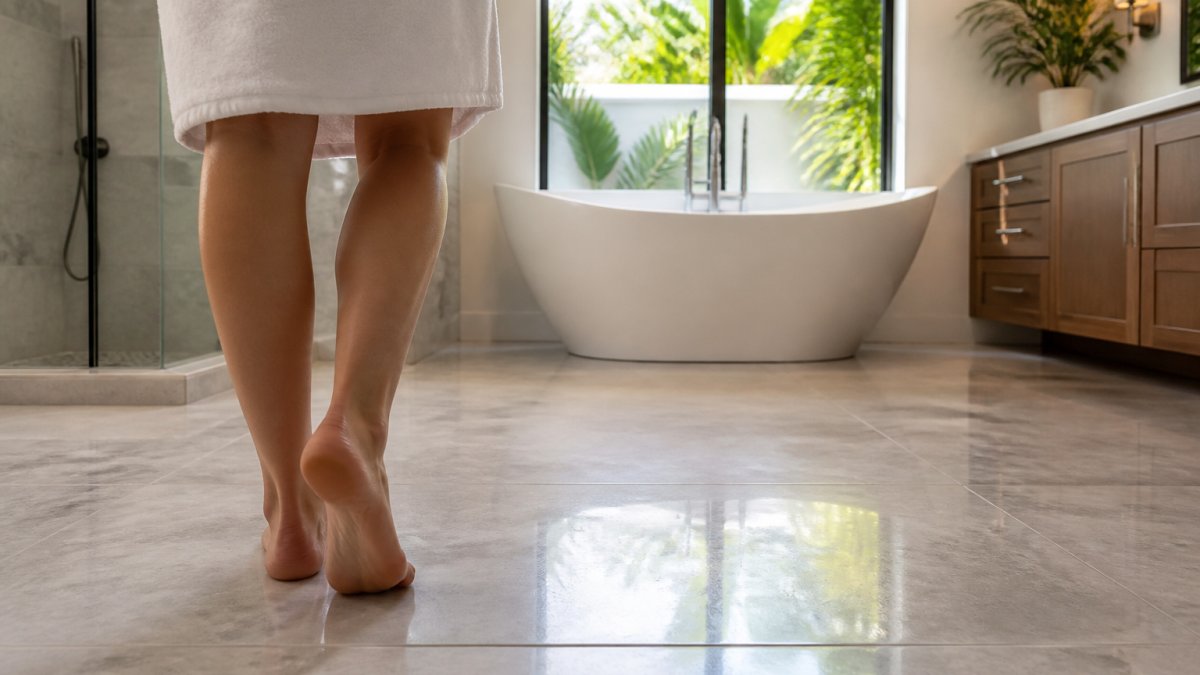
- Primary bathroom: top priority. Cold tile on bare feet is the number one complaint we hear. A small electric mat delivers the biggest comfort gain for the smallest investment.
- Guest bathroom: strong second. Quick warm-up, low run time, and it makes a small space feel more finished.
- Kitchen: situational. Only worth it if you're already replacing the floor and standing barefoot at the island matters to you.
- Bedrooms: usually skip. Bedrooms are typically carpeted or wood, which don't pair well with radiant heat, and the comfort gain is smaller.
- Whole ground floor: rarely justified. The cost and disruption rarely match the payoff in a climate with a short heating season.
If you're already planning a bathroom or kitchen renovation, that's the moment to decide, adding radiant heat during a remodel costs far less than tearing up a finished floor later.
Conclusion: Weighing Comfort Against Cost in a Warm Climate
The real challenge with radiant floor heating in Florida isn't the technology. It's deciding whether a comfort upgrade with no energy payback is worth the spend. For a primary bathroom you use every morning, it usually is.
If you're planning a luxury renovation in Broward County and want warm floors without a piecemeal, contractor-by-contractor headache, Dimensions Luxury Builders can fold radiant heating into the project from the start.
Frequently Asked Questions
What is the downside of radiant heat in a Florida home?
The main downside is cost versus limited use. Florida winters are short, so a radiant floor heating system may sit idle for most of the year. Installation runs $6 to $20 per square foot for electric systems and $10 to $25 per square foot for hydronic systems, according to Willow Home. You also need floor insulation and a concrete slab or subfloor that accommodates the system, which adds to the project scope.
Is electric or hydronic radiant floor heating better for a Florida home?
Electric radiant floor heating suits small, targeted areas like a bathroom or kitchen because it installs faster and costs less upfront. Hydronic systems, which circulate warm water through tubing, cost more to install but run efficiently across large floor areas. In Florida, where heating demand is minimal, electric mats in a few rooms often make more sense than a whole-home hydronic system.
How much does radiant floor heating cost for a 1,200-square-foot house?
Using Willow Home's installed cost ranges, a 1,200-square-foot electric system would run roughly $7,200 to $24,000, while a hydronic system would run about $12,000 to $30,000. These are broad national ranges, and pricing depends on floor type, insulation, system complexity, and local labor. Get a project-specific quote before committing to a budget.
Can radiant floor heating be installed under tile in an existing home?
Yes. Electric heating mats and cables are commonly installed under tile during a bathroom or kitchen remodel. The process involves removing existing flooring, laying the heating element, and pouring a thin self-leveling compound before setting new tile. Hydronic retrofits are more invasive because they require tubing and a boiler, so they are usually reserved for new construction or major renovations.
Is radiant floor heating practical in a warm climate?
It can be practical for spot comfort in bathrooms and kitchens, where tile floors feel cold on winter mornings. As a whole-home heating solution, it rarely justifies the cost in Florida because heat pumps already handle both heating and cooling efficiently. The best approach is to install radiant heat in one or two rooms where barefoot comfort matters most.