 how-to
How Do You Keep Marble Bathroom Countertops Looking New?
Last Updated: October 29, 2026
Quick Summary
Clean marble countertops daily with warm water, a soft microfiber cloth, and a pH-neutral stone cleaner, then dry the surface completely to prevent water spots. Wipe up spills like shampoo and perfume right away, and avoid vinegar, lemon juice, bleach, and abrasive scrubbers. Test the seal every few months with the water-drop test and reseal when water soaks in.
- Wipe marble with warm water and a soft microfiber cloth, then dry it with a second clean cloth.
- Use a pH-neutral cleaner labeled safe for natural stone or marble.
- Avoid vinegar, lemon juice, bleach, scouring powders, and steel wool, which etch or scratch the surface.
- Test the seal every three to six months with a few drops of water and wait 10 to 15 minutes.
- Reseal when water darkens the stone or soaks in, rather than on a fixed calendar date.
Table of Contents
- Why Marble Bathroom Countertops Need Different Care
- How to Clean Marble Countertops Every Day
- Safe Cleaners for Marble and What to Keep Away
- How Often to Seal Marble Countertops and How to Test the Seal
- Removing Marble Stains by Type: Water Spots, Soap Scum, Cosmetics and Etching
- Natural Marble vs. Cultured Marble: Why the Difference Matters
- Booking a Professional Marble Assessment for Your Bathroom
- Frequently Asked Questions
Marble looks stunning on a bathroom vanity, but it is one of the easiest surfaces to damage with everyday products. The good news is that a simple routine keeps marble looking new for years.
Why Marble Bathroom Countertops Need Different Care
Marble is a natural stone, and it is porous. That means liquids can soak in if they sit too long. Bathrooms are especially hard on marble because they combine humidity, hard water, soap, lotions, and cosmetics in one small room.
Most damage falls into three groups:
- Etching: Acids dissolve the surface and leave dull spots.
- Staining: Liquids soak in and leave colored marks.
- Soap scum and water spots: Mineral deposits build up over time.
Marble does not need harsh treatment. It needs gentle, consistent habits. Clean it often, use products that match the stone, and wipe up spills quickly.
How to Clean Marble Countertops Every Day
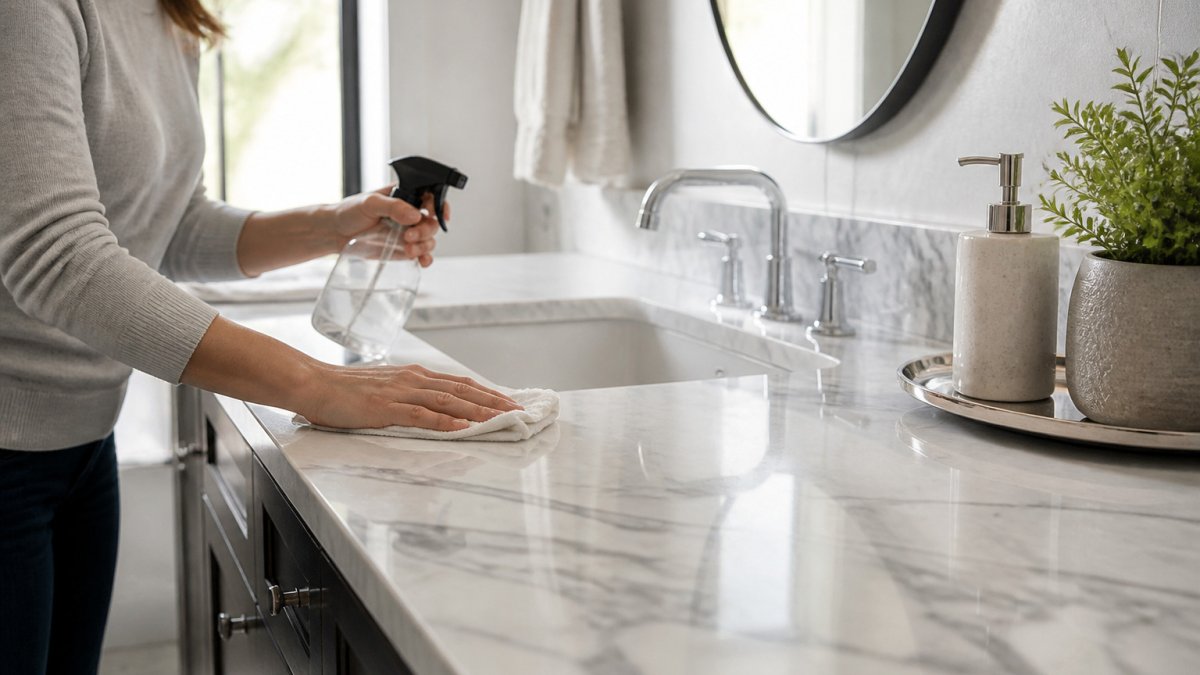
A short daily routine does most of the work. Start by wiping the surface with warm water and a soft microfiber cloth. Then dry it with a second clean cloth so water does not leave spots.
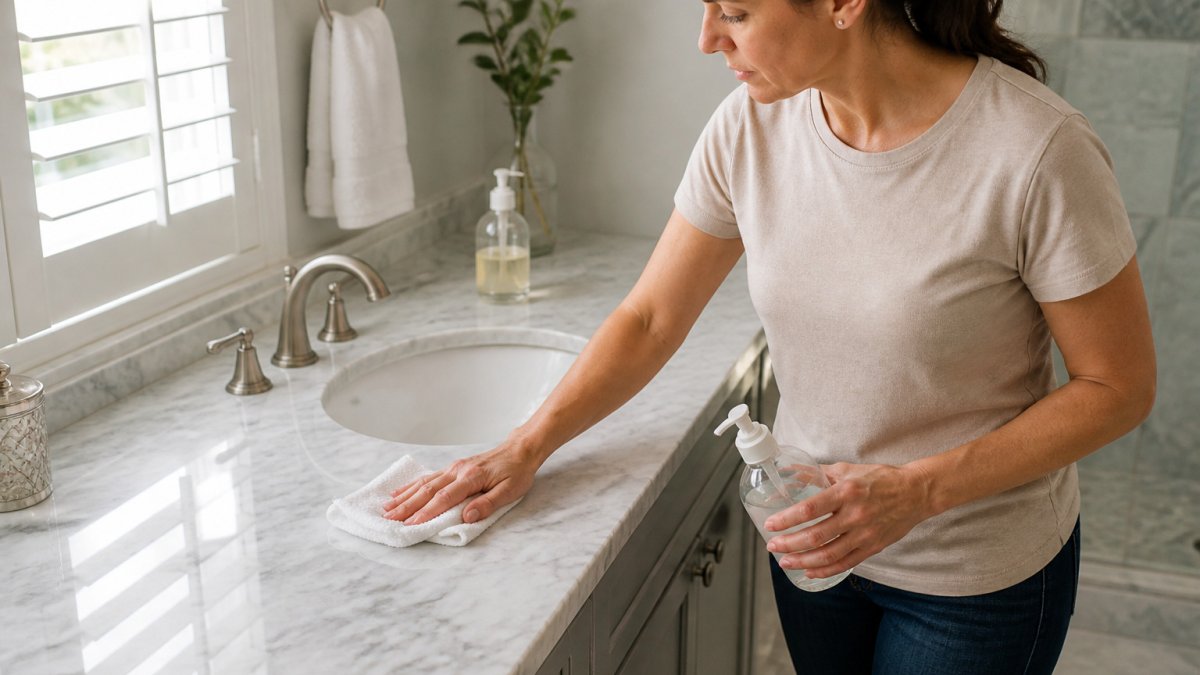
Follow these steps each day:
- Remove toiletries and small items from the counter.
- Wipe the surface with warm water and a soft cloth.
- Add a drop of mild soap for greasy or sticky spots.
- Rinse with clean water to remove soap residue.
- Dry the surface completely with a fresh cloth.
Wipe up spills right away, especially shampoo, perfume, and nail polish. The faster you clean a spill, the less chance it has to soak into the stone.
Choosing a pH-Neutral Cleaner
A pH-neutral cleaner is the safest choice for marble. It cleans without reacting with the stone. Look for labels that say "pH-neutral" or "safe for natural stone." Many people find that a mild, dedicated stone cleaner works better than a general household spray.
A common approach is to keep one stone-safe cleaner in the bathroom and use it for daily cleaning. Avoid mixing your own cleaners unless you know the ingredients are safe for marble.
Products and Tools to Avoid
Some household products cause lasting damage. Keep these away from your marble:
- Vinegar and lemon juice, which are acidic and etch the surface
- Bleach and harsh bathroom sprays, which can dull or discolor marble
- Abrasive scrubbers, steel wool, and gritty powders, which scratch the finish
- Hair dye, nail polish remover, and strong toilet cleaners, which can stain
Safe Cleaners for Marble and What to Keep Away
Choosing safe cleaners is the most important habit you can build. A simple test helps: if a product is acidic, abrasive, or contains bleach, do not use it on marble.
Look for these qualities when you shop:
- A pH-neutral formula
- Labels that mention natural stone or marble
- No added acids, bleach, or grit
Keep these products on a separate shelf or out of the bathroom entirely: vinegar, citrus cleaners, scouring powders, and bleach-based cleaners. Store them where they cannot be grabbed by mistake during a quick cleanup.
Keep these product types in mind when choosing what to use and what to avoid on marble.
| Product type | Use or avoid | Reason |
|---|---|---|
| pH-neutral stone cleaner | Use | Cleans without reacting with the stone |
| Vinegar and lemon juice | Avoid | Acidic and etch the surface |
| Bleach and harsh bathroom sprays | Avoid | Can dull or discolor marble |
| Scouring powders and steel wool | Avoid | Gritty, scratch the finish |
| Hair dye and nail polish remover | Avoid | Can stain the stone |
How Often to Seal Marble Countertops and How to Test the Seal
Sealer slows liquid absorption, but it does not make marble stain-proof. On a bathroom vanity, humidity, soap, and cosmetics break down sealer faster than in a dry hallway, so a calendar schedule is unreliable. Test the seal instead of guessing.
The water-drop test
- Clean and dry a small area in an inconspicuous spot.
- Place a few drops of water on the surface.
- Wait 10 to 15 minutes.
- Wipe dry and look closely.
How to read the result:
- Water beads and wipes away clean: The seal is intact. Recheck in a few months.
- Water spreads flat and leaves a dark ring that fades slowly: The seal is weakening. Plan to reseal soon.
- Water darkens the stone or soaks in within minutes: The seal has failed. Reseal before using the counter for cosmetics or toiletries.
A common pattern is to test every three to six months in a busy bathroom, and to reseal when the test shows weakness rather than on a fixed date. Many fabricators recommend resealing every one to three years, but heavy use, harsh cleaners, and frequent water exposure shorten that window.
Choosing and applying a sealer
- Use a penetrating sealer labeled for natural stone, not a topical coating that can peel or yellow.
- Match the sealer to the finish: polished marble usually takes a penetrating sealer; honed or tumbled marble may need a different product.
- Apply to a clean, dry surface. Most sealers need 24 hours of cure time before water exposure, so plan around bathroom use.
- Reseal the whole surface, not just the tested spot, so protection is even.
When sealing is not enough
If the counter still absorbs water after resealing, the surface may be etched or the sealer may be incompatible with the finish. In that case, a professional can assess whether the stone needs polishing, honing, or a different sealer before you apply more product.
Removing Marble Stains by Type: Water Spots, Soap Scum, Cosmetics and Etching
Most marble damage on a bathroom vanity comes from a short list of everyday products: toothpaste, mouthwash, perfume, hair dye, nail polish remover, self-tanner, and hard water. The fix depends on whether the mark is on the surface (etching) or inside the stone (staining). Test any cleaner on a hidden spot first, and never scrub hard, because abrasion turns a small mark into a dull patch.
First, decide: is it etching or staining?
- Etching is surface dulling. The stone looks lighter, chalky, or matte where acid sat. You can usually feel a slight texture change with a fingernail. It does not wipe away.
- Staining is discoloration that soaks in. The mark is darker than the surrounding stone and follows the shape of the spill. It may fade slowly but will not wipe off.
This distinction matters because cleaners remove stains, but only polishing or honing removes etching.
Stain-removal guidance by type
- Water spots and hard-water film: These are mineral deposits, common around faucets and soap dishes in humid bathrooms. Wipe with a damp microfiber cloth and a pH-neutral stone cleaner, then dry completely. For stubborn rings, a marble-safe hard-water remover labeled for natural stone is safer than vinegar, which etches. Keep a squeegee or dry cloth handy to prevent standing water.
- Soap scum and toothpaste residue: Use warm water with a drop of mild dish soap, rinse with clean water, and dry. Toothpaste is mildly abrasive and can dull a polished finish if rubbed in; rinse it promptly rather than scrubbing.
- Oil-based stains (lotion, body oil, makeup, sunscreen): These darken the stone. Blot, then apply a poultice: mix an absorbent powder (such as kaolin clay or diatomaceous earth) with a solvent like acetone or a stone-safe degreaser to a peanut-butter consistency, spread it over the stain, cover with plastic wrap, tape the edges, and leave it 24 to 48 hours. Remove, wipe clean, and let the area dry. Repeat if needed.
- Organic stains (coffee, tea, wine, food, hair dye): These often respond to a poultice made with hydrogen peroxide or a stone-safe bleach alternative. Hair dye is one of the fastest-staining bathroom products; blot immediately and poultice rather than rubbing.
- Rust stains: These come from metal cans, razors, or fixtures. Use a poultice with a commercial rust remover labeled safe for marble, or call a professional. Household rust removers often contain acids that etch marble.
- Nail polish and polish remover: Acetone can dull a sealer and etch polished marble. Blot immediately, then clean with a pH-neutral stone cleaner. Do not pour remover directly on the counter.
When to call a professional
If a stain does not lift after two poultice cycles, or if the surface is dull and chalky across a large area, the stone likely needs honing and polishing rather than more cleaning. Deep etching, chips, and widespread dullness are restoration jobs, not DIY cleaner jobs.
Natural Marble vs. Cultured Marble: Why the Difference Matters
Not every bathroom "marble" is natural stone. Cultured marble is made from crushed stone bonded with resin. It is less porous than natural marble and usually easier to maintain, but it can still be scratched or dulled by harsh cleaners.
Natural marble has the classic veining and depth that many homeowners want. It also needs more care. If you are unsure which you have, check with the installer or look for seams and surface patterns that repeat too evenly. Knowing the difference tells you which products and sealing schedule to follow.
Booking a Professional Marble Assessment for Your Bathroom
If your marble shows deep etching, repeated stains, or a seal that fails the water test, a professional assessment can save time and money. You can find a local bathroom remodeling service in Broward County to schedule one. A local expert can judge whether the stone needs polishing, honing, or resealing.
Frequently Asked Questions
How do you clean marble bathroom countertops?
Rinse the surface with warm water, then apply a few drops of pH-neutral stone cleaner or a mild soap diluted in water. Wipe with a soft microfiber cloth in gentle circular motions, rinse with clean water to remove soap residue, and dry the surface with a second clean cloth so water spots do not form. Clean after each heavy use, especially around the sink where toothpaste, soap and hair products collect. Avoid scrubbing pads and all-purpose sprays, which can dull the polish or etch the stone over time.
How often should marble bathroom countertops be sealed?
Most marble bathroom countertops need sealing about once a year, though high-use vanities or very porous stone may need it more often. Test the surface by placing a few drops of water on it; if the water darkens the stone or soaks in within a few minutes, the seal is worn and the countertop should be resealed. Use a penetrating stone sealer labeled for marble and follow the manufacturer's curing time before resuming normal use.
What cleaners are safe to use on marble countertops?
Look for pH-neutral stone cleaners, which are formulated to clean without reacting with calcium carbonate in the marble. A mild dish soap in warm water also works for routine cleaning. Avoid vinegar, lemon juice, bleach, ammonia-based products, tile cleaners and abrasive powders, since acids and abrasives can etch the surface or strip the sealer. Check any product label before use, and when in doubt, test it on a hidden spot first.
Can etched marble countertops be repaired?
Light etching, which appears as a dull or matte spot where acid has dissolved the polish, can often be fixed by a professional who hones and re-polishes the area. Deeper etches or chips may require more extensive work, and the repair may leave a slight difference in sheen. Preventing etching is easier than repairing it, so wipe up acidic spills such as citrus juice, cosmetics with acid, or cleaning products promptly.
Marble rewards careful, consistent care. Clean it daily with a pH-neutral cleaner, wipe spills quickly, and test the seal regularly. Dimensions Luxury Builders is ready to help you protect your investment for years to come.