 ultimate-guide
Steps for Luxury Kitchen Remodeling: 2026 Guide
Table of Contents
- Step 1: Define Your Vision and Set a Realistic Luxury Budget
- Step 2: Assess Your Space and Plan Layout Optimization
- Step 3: Hire a Luxury Design-Build Firm
- Step 4: Select Premium Materials and Finishes
- Step 5: Integrate High-End Appliances and Smart Home Integration
- Step 6: Understand the Kitchen Remodeling Timeline
- Step 7: Explore Luxury Kitchen Design Trends for 2026
- Step 8: Maximize Resale Value and Sustainable Luxury
- Frequently Asked Questions
Last Updated: September 13, 2026
Step 1: Define Your Vision and Set a Realistic Luxury Budget
Luxury kitchen remodeling starts with a clear vision and a budget that reflects the scale of what you want to build. Before you select a single finish, decide how you actually cook, entertain, and move through the room. Many homeowners find that writing down their daily routines first prevents expensive mid-project changes later.
A luxury kitchen is not defined by a price tag. It is defined by how precisely the space fits the way you live, from the height of the countertops to the path between the range and the sink.
The 30% Rule in Remodeling
A common approach is to reserve roughly 30% of your total budget for the elements you cannot see. Structural work, electrical upgrades, plumbing relocation, and permitting often consume far more than homeowners expect. If your budget cannot absorb those costs, the visible finishes get compromised.
Step 2: Assess Your Space and Plan Layout Optimization
Layout optimization determines whether a luxury kitchen feels effortless or cramped, regardless of how much you spend. Measure the room, map the existing plumbing and gas lines, and identify which walls are load-bearing before any design work begins.
The classic work triangle still matters, but high-end kitchens now favor zones: a prep zone, a cooking zone, and a cleanup zone, each with its own storage. Spatial planning that respects these zones reduces steps and keeps the room functional during a dinner party.
National Kitchen & Bath Association remodeling guidance
Step 3: Hire a Luxury Design-Build Firm
Hiring a luxury design-build firm consolidates design, permitting, and construction under one contract, which reduces the coordination failures that derail large projects. At Dimensions Luxury Builders, we manage every phase from the initial design consultation to the final walkthrough, so homeowners deal with one point of contact instead of five subcontractors.
When you evaluate firms, ask for proof of licensure and insurance before signing anything, and request a written scope that names every trade involved. Contractor selection is where most projects are won or lost.
- Verify the license and insurance certificate directly
- Ask how change orders are priced and approved
- Confirm who handles permits and inspections
- Request a schedule with named milestones
Step 4: Select Premium Materials and Finishes
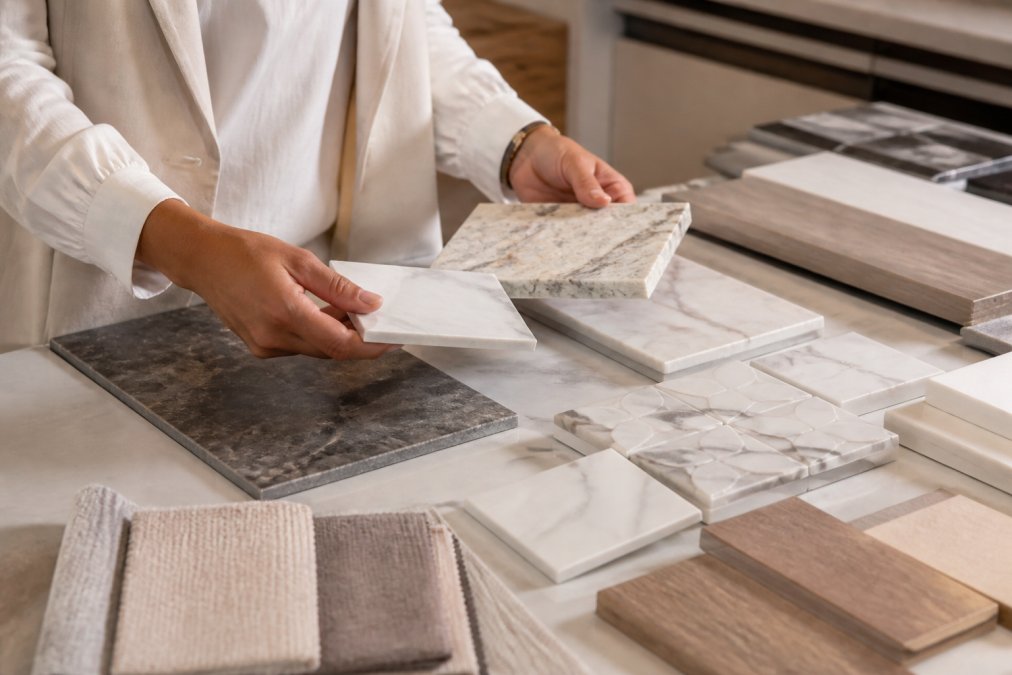
Premium materials and finishes carry the luxury aesthetic, but they also carry long-term maintenance obligations and sourcing lead times that shape the entire schedule. A design consultation should match each surface to how the kitchen is actually used, not just how it photographs.
Countertop Trade-Offs by Stone Type
Countertop durability varies by stone, and the right choice depends on traffic, cooking style, and tolerance for patina.
| Surface | Durability | Maintenance | Best For |
|---|---|---|---|
| Quartz | High scratch and stain resistance | Wipe clean, no sealing | Busy family kitchens |
| Natural marble | Moderate, prone to etching | Periodic sealing, careful cleaning | Statement islands, low-traffic prep |
| Butcher block | Moderate, refinishable | Oil regularly, avoid standing water | Prep zones and casual areas |
| Porcelain slab | High heat and stain resistance | Wipe clean | Full-height backsplash and counters |
| Soapstone | Low scratch resistance, patinas over time | Mineral oil application | Period-style kitchens, farmhouse sinks |
Natural marble etches on contact with acidic foods like lemon juice, vinegar, and tomato sauce, so it belongs on islands used for display and light prep rather than heavy chopping. Quartz and porcelain slab tolerate everyday cooking but can scorch under a hot pan, which is why trivets remain standard practice even on "heat-resistant" surfaces.
Sustainable Luxury and Eco-Conscious Sourcing
Luxury is shifting toward sustainability, and the materials that qualify are increasingly specified by name. Look for:
- FSC-certified cabinetry and millwork, the Forest Stewardship Council certifies wood harvested under responsible forestry standards.
- Low-VOC and zero-VOC finishes, paints, stains, and adhesives that reduce indoor air contaminants, relevant for households with allergies or respiratory sensitivity.
- Reclaimed and engineered stone, reclaimed barn wood and engineered quartz blends reduce virgin material demand while offering distinctive character.
- Energy Star certified appliances, the EPA program identifies appliances meeting federal efficiency thresholds, which lowers operating cost over the life of the kitchen.
Buyers in high-end markets increasingly ask about material provenance, so documentation of sourcing is worth keeping.
Custom Millwork and the Finish Schedule
Custom millwork and bespoke cabinetry should be specified with the hardware and finish schedule in one document, because cabinet hardware and backsplash design must be coordinated before fabrication begins. The finish schedule names every stain, paint, and metal finish by manufacturer and code so the fabricator, painter, and installer are working from the same reference. Without it, cabinet pulls ordered in "brushed brass" can arrive in three different tones from three vendors.
Post-Remodel Maintenance for High-End Surfaces
Maintenance belongs in the plan from day one, not after installation:
- Natural stone, reseal annually or when water stops beading on the surface.
- Unlacquered brass, develops a living patina; polish to restore shine or leave it to age.
- Butcher block, oil monthly for the first year, then as the wood dries.
- Porcelain slab, wipe with a pH-neutral cleaner; avoid abrasive pads.
Step 5: Integrate High-End Appliances and Smart Home Integration
High-end appliances only perform as designed when the ventilation, electrical, and cabinetry around them are specified to match. Ventilation performance depends on duct sizing and routing, not just the hood's rated capacity, so the duct path should be planned before the ceiling is closed.
Smart home integration now extends past basic appliances. Lighting schemes, leak detection, and appliance diagnostics can all be tied into one system, but each device needs power and network access planned during the construction phase. Retrofitting these connections later means opening finished walls.
U.S. Department of Energy guidance on kitchen ventilation and appliance efficiency
Step 6: Understand the Kitchen Remodeling Timeline
The kitchen remodeling timeline for a luxury project typically runs several months from design through final inspection, with the construction phase itself taking the largest share. Material sourcing drives much of the schedule: imported stone, custom cabinetry, and specialty appliances carry lead times that must be ordered early.
Project management keeps those lead times from colliding. A realistic remodel timeline sequences demolition, rough-in, inspection, and finish work so trades are not waiting on each other.
| Phase | Typical Duration | Key Dependency |
|---|---|---|
| Design and permitting | Several weeks | Plan approval and permits |
| Demolition and rough-in | Several weeks | Structural and trade coordination |
| Inspections | Days per stage | Passing rough electrical and plumbing |
| Cabinetry and surfaces | Several weeks | Fabrication and delivery lead times |
| Final finishes and punch list | Several weeks | Appliance and fixture installation |
Step 7: Explore Luxury Kitchen Design Trends for 2026
Luxury kitchen design trends for 2026 lean toward warm, tactile materials and integrated technology rather than stark minimalism. Expect to see more natural stone with visible movement, warmer wood tones in custom millwork, and lighting schemes layered across task, ambient, and accent sources.
Open-concept flow continues to dominate, but with more deliberate separation between the kitchen and living areas through cabinetry and island design. Kitchen island functionality has expanded too, with islands now housing prep sinks, seating, and concealed storage rather than serving as a single flat surface.
Houzz kitchen design trend research
Step 8: Maximize Resale Value and Sustainable Luxury
Resale value and personal luxury do not always point the same direction, and homeowners should decide which one leads before the design is finalized.
Which Luxury Upgrades Tend to Retain Value
- Kitchen islands with integrated seating and storage, buyers read these as usable square footage, not decoration.
- Professional-grade ventilation and appliance suites from established brands, recognizable names signal quality and serviceability.
- Custom cabinetry with soft-close hardware and organized interiors, pull-out drawers, dividers, and deep pot storage are evaluated on inspection.
- Layered lighting with dimmers, a functional, controllable lighting scheme reads as a finished kitchen.
- Durable, low-maintenance surfaces, quartz and porcelain slab appeal to buyers wary of marble upkeep.
Which Upgrades Tend to Narrow the Buyer Pool
Highly personalized choices may delight the current owner while limiting resale:
- Built-in pizza ovens and specialized appliance suites that occupy permanent counter or cabinet space.
- Bold, irreversible material choices such as heavily veined slabs or unusual color palettes.
- Layouts built around a single cook's workflow rather than general entertaining flow.
- Niche technology that may be obsolete or unsupported within a few years.
The practical approach is to concentrate personalized features in reversible elements, paint, hardware, lighting, and keep structural and surface choices broadly appealing.
Sustainable Luxury as a Dual-Purpose Investment
Energy Star certified appliances, FSC-certified cabinetry, and low-VOC finishes are categories buyers and appraisers most readily recognize.
Plan for Service Access Before the Walls Close
Post-remodel maintenance for high-end surfaces belongs in the plan from day one. Natural stone needs periodic sealing, wood needs refinishing, and specialty appliances need service access that should not be buried behind finished cabinetry.
Frequently Asked Questions
In what order should a luxury kitchen remodel be done?
A luxury kitchen remodel typically follows this order: design and planning, demolition, structural changes, rough plumbing and electrical, HVAC and ventilation, drywall and painting, cabinetry installation, countertops, backsplash, flooring, appliance installation, and final finishes. This sequence ensures that messy or structural work happens before finishes are installed, protecting your investment and keeping the project on schedule.
What is the 30% rule in remodeling?
The 30% rule suggests that your kitchen remodel budget should not exceed 30% of your home's total value. For luxury homes, this helps prevent over-improving for the neighborhood. However, personal enjoyment and lifestyle benefits can justify exceeding this guideline, especially if you plan to stay long-term. Always consult with a design-build firm to balance resale value with your vision.
What are the must-haves for a luxury kitchen?
Must-haves for a luxury kitchen include bespoke cabinetry with soft-close hardware, premium natural stone or quartz countertops, professional-grade high-end appliances, a well-designed lighting scheme with layered lighting, a functional kitchen island, custom millwork, and integrated smart home technology. Ventilation performance, ergonomic design, and durable flooring also rank high. These elements combine to create a culinary environment that is both beautiful and highly functional.
How does a professional design-build process differ from standard remodeling?
A professional design-build process unifies design and construction under one contract, with a single point of contact managing the entire project. This differs from standard remodeling, where you separately hire a designer and a contractor, often leading to miscommunication, budget overruns, and delays. Design-build firms handle material sourcing, permitting, construction phase, and project management, ensuring a seamless experience from concept to completion.
What is the typical timeline for a custom luxury kitchen renovation?
A custom luxury kitchen renovation usually takes 12 to 20 weeks from design to completion, depending on scope, material lead times, and permitting. The kitchen remodeling timeline includes 2-4 weeks for design and selections, 1-2 weeks for permits, 8-12 weeks for construction, and 1-2 weeks for final touches. Hiring a luxury design-build firm with local supplier access can help compress the schedule and avoid costly delays.
How do you integrate smart technology into a luxury kitchen design?
Integrate smart technology by planning for it during the design phase. This includes smart appliances (refrigerators, ovens, dishwashers) with Wi-Fi connectivity, voice-controlled lighting and shades, smart plumbing fixtures with touchless operation, and hidden charging stations. A centralized home automation system can control everything from one app or panel. Ensure your design-build firm coordinates with low-voltage specialists for seamless installation.
What materials define a modern luxury kitchen aesthetic?
Modern luxury kitchen aesthetics are defined by natural stone countertops (marble, quartzite), bespoke cabinetry with integrated handles or custom hardware, large-format porcelain or hardwood flooring, and statement backsplash designs. Matte finishes, warm metals like brass or bronze, and sustainable materials such as reclaimed wood or recycled glass are also trending. The goal is a harmonious blend of texture, durability, and timeless elegance.
How can I ensure my luxury kitchen remodel adds resale value?
To add resale value, focus on timeless design, high-quality materials, and energy-efficient appliances. Avoid overly personalized features that may not appeal to future buyers. Work with a design-build firm to allocate budget wisely: cabinetry, countertops, and appliances offer the best returns. Smart home integration and sustainable luxury features are increasingly attractive to buyers.