 listicle
Smart Home Technology for Bespoke Kitchens
Table of Contents
- Smart Home Technology for Bespoke Kitchens: An Overview
- Smart Kitchen Appliances That Define Modern Cooking
- Smart Kitchen Lighting Systems for Task and Ambiance
- Custom Kitchen Cabinets with Smart Features
- Smart Home Kitchen Integration: Unified Control Systems
- Privacy, Security, and Cybersecurity in Connected Kitchens
- Planning Your Smart Kitchen: Costs, Timeline, and ROI
- Accessibility and Inclusive Design in Smart Kitchens
- Frequently Asked Questions
Last Updated: October 19, 2026
Smart Home Technology for Bespoke Kitchens: An Overview
Smart home technology for bespoke kitchens transforms how you cook, store food, and manage daily operations. At Dimensions Luxury Builders, we've guided countless homeowners through integrating connected appliances, automated lighting, and unified control systems into custom designs.
A bespoke kitchen with smart features is about precision, efficiency, and a space that adapts to how you actually cook. Whether monitoring your refrigerator remotely, adjusting lighting for different tasks, or controlling your oven from across the room, smart home technology for bespoke kitchens delivers measurable improvements.
This guide covers the essential appliances, lighting systems, cabinetry integration, control platforms, security considerations, and planning steps you need to make informed decisions.
Smart Kitchen Appliances That Define Modern Cooking
Connected appliances form the foundation of a smart kitchen, solving real cooking problems through precision, remote monitoring, and integration with your broader home automation system.
Connected Refrigerators and Food Monitoring
A connected refrigerator tracks what's inside without you opening the door. Built-in cameras let you see your fridge's contents from your phone, reducing food waste and eliminating the "what do we have?" moment before grocery shopping.
Smart refrigerators also monitor temperature and alert you if the door stays open too long or internal temperature drifts. Some track expiration dates and suggest recipes based on available ingredients. For a bespoke kitchen, these units integrate into custom cabinetry with flush handles and concealed ventilation, maintaining a clean aesthetic.
The real value emerges over time: less food waste, fewer forgotten ingredients, and remote kitchen management. At the grocery store, you can check exactly what you have at home instead of guessing.
Smart Ovens and Precise Temperature Control
Smart ovens solve the precision problem. Traditional ovens have temperature variance and unpredictable preheating. Connected ovens deliver consistent, precise temperature control plus remote preheat, progress notifications, and automatic cooking programs.
Some models let you start cooking from your phone, set custom temperature curves, or receive alerts when food reaches your target doneness. For baking and pastry work, this precision matters enormously; for everyday cooking, it reduces guesswork and failed dishes.
In a bespoke kitchen, these ovens are built into custom cabinetry at ergonomic heights, with integrated ventilation and counter space designed for your cooking style. Smart features sit quietly in the background, accessed through a small touchscreen or your phone rather than visible controls that disrupt the design.
Smart Kitchen Lighting Systems for Task and Ambiance
Lighting is where smart home technology for bespoke kitchens delivers immediate, visible impact, changing how your kitchen feels and functions throughout the day.
Under-Cabinet and Task Lighting Automation
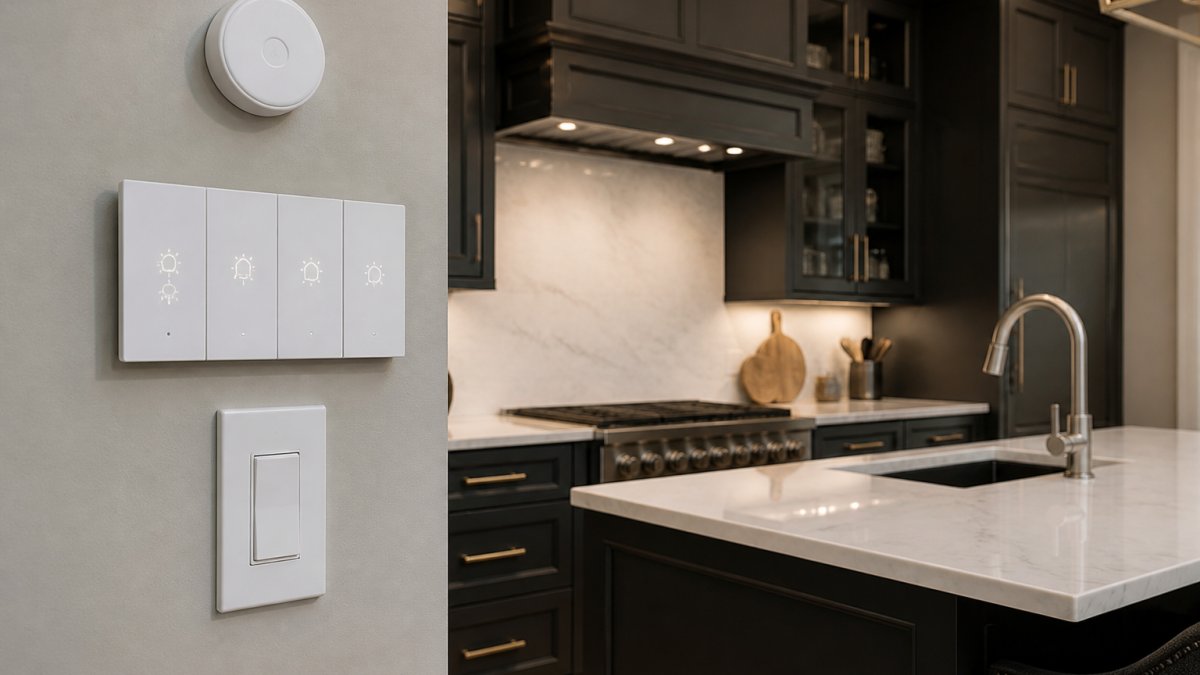
Under-cabinet lighting illuminates your work surface and highlights the countertop and backsplash. Smart under-cabinet lights adjust brightness and color temperature automatically based on time of day or activity.
Morning prep benefits from bright, cool-toned light (around 5000K); evening cooking or entertaining calls for warmer light (around 3000K). Automated systems transition smoothly between these settings without touching a switch, and some detect motion to turn on only when that area is in use, reducing energy consumption.
Task lighting over islands, sinks, and prep zones works the same way: smart fixtures dim during dinner parties and brighten during food preparation. In a bespoke kitchen, these lights are recessed into custom cabinetry or suspended from custom-designed fixtures that match your aesthetic.
Voice-Activated Lighting Control
Voice commands eliminate finding a light switch when your hands are full. "Alexa, brighten the island light" or "Hey Google, set the kitchen to dinner mode" feels trivial until you're elbow-deep in dough and can't reach a switch.
Voice control integrates with your broader smart home system, so lighting adjustments happen alongside other kitchen functions. Activate a cooking scene and the system brightens task lighting, adjusts ambient lights, and even adjusts your smart oven's display brightness.
For a bespoke kitchen, voice control is invisible, no visible speakers or microphones, just seamless integration with your chosen platform (Alexa, Google Assistant, or SmartThings).
Custom Kitchen Cabinets with Smart Features
The integration of technology into custom cabinetry defines a truly bespoke smart kitchen. This is where design and functionality merge completely.
Concealed Technology and Cable Management
Visible cables and devices destroy a luxury kitchen's aesthetic. A bespoke approach hides all infrastructure: outlets built into cabinet interiors, charging cables through hidden channels, and smart devices recessed or concealed entirely.
Custom cabinetry includes dedicated spaces for smart devices: a built-in niche for a smart display, concealed mounting for control panels, and integrated cable management. Backsplashes can incorporate hidden speakers, and under-cabinet lighting hides the fixtures, showing only the light.
This level of integration requires planning during the design phase. Your cabinetry designer and smart home integrator must work together to determine where devices live, how they're powered, and how they're accessed for updates or maintenance.
Cabinet Docking Stations and Charging Integration
Modern kitchens involve multiple devices: phones, tablets, earbuds, and smart home controllers. A bespoke kitchen includes designated charging and docking areas integrated into the cabinetry.
A pull-out drawer might include wireless charging pads, built-in USB-C ports, and a tablet dock, all hidden when closed for a clutter-free counter. Some designs put a dedicated charging station in a butler's pantry or kitchen desk area, separating device management from the main cooking space.
This integration requires careful electrical planning and coordination with your cabinetry designer to ensure outlets are positioned correctly and hidden effectively.
Smart Home Kitchen Integration: Unified Control Systems
A truly smart kitchen requires a unified platform that lets you control appliances, lighting, and other systems from a single interface, whether that's a voice command, a touchscreen, or your phone.
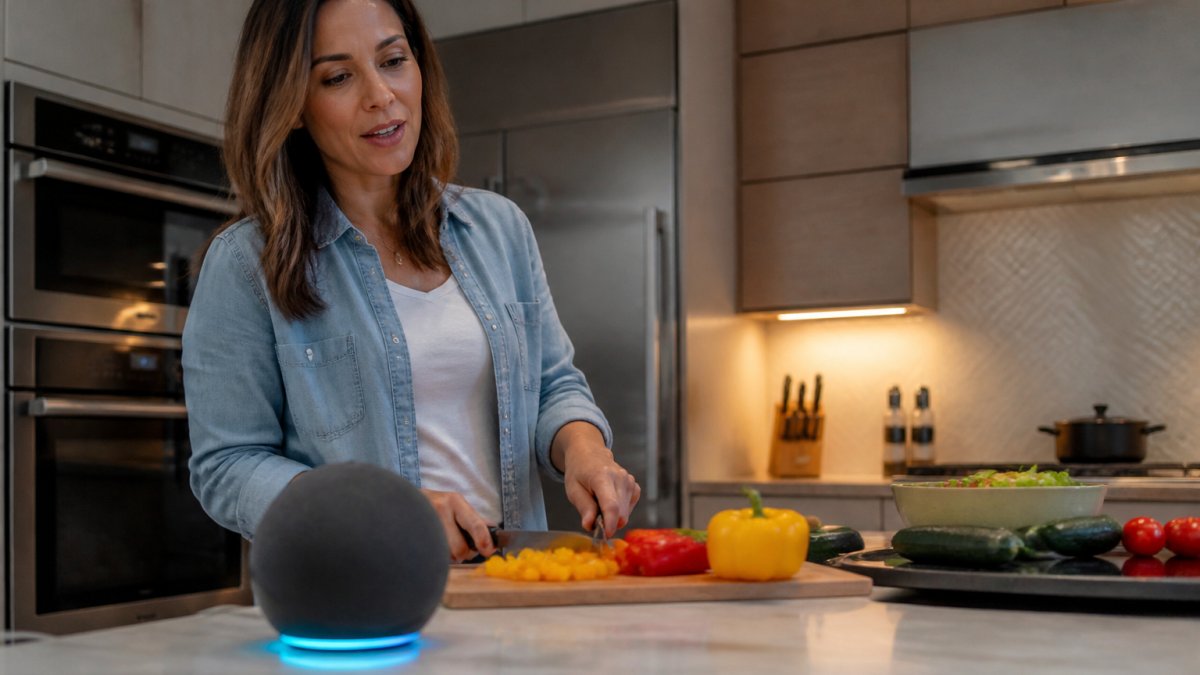
Choosing Between Alexa, Google Assistant, and SmartThings
Three major platforms dominate smart home control: Amazon Alexa, Google Assistant, and Samsung SmartThings. Each has strengths and limitations.
Alexa integrates with the broadest range of third-party devices and has the most natural voice recognition for complex commands. Google Assistant excels at context and answering questions beyond simple home control.
For a bespoke kitchen, the choice depends on your devices and voice-interaction preference. Many homeowners use multiple platforms simultaneously: Alexa for voice control, a Google Home display for recipes, and SmartThings for centralized automation rules.
The key is ensuring your chosen appliances work with your selected platform. A Samsung Bespoke refrigerator works seamlessly with SmartThings. An Amazon-branded smart display pairs naturally with Alexa. Research device compatibility before committing to a platform.
Interoperability and Future-Proofing Your Kitchen
The smart home landscape changes rapidly; a device you buy today might lose manufacturer support in five years. Future-proofing means choosing devices that use open standards and platforms supporting multiple brands.
Look for devices that support Matter, an emerging standard designed to let smart home devices work together regardless of manufacturer. Avoid proprietary ecosystems that lock you into one brand's products. Your smart refrigerator should work with any control system, not just Samsung's platform.
When planning your bespoke kitchen, build flexibility into your infrastructure: run extra conduit for future cables, install additional outlets in strategic locations, and choose control systems that support multiple device brands. This costs slightly more upfront but protects your investment as technology evolves.
Privacy, Security, and Cybersecurity in Connected Kitchens
A connected kitchen collects data about your habits, preferences, and daily routines. Protecting that information requires deliberate choices about which devices you buy and how you configure them.
Smart appliances and displays transmit data to manufacturer servers: a connected refrigerator reports what you're cooking, a smart display records voice commands.
Review the privacy policy of any device before installation. Understand what data is collected, how long it's stored, and whether it's shared with third parties.
For cybersecurity, use strong, unique passwords for all smart home accounts. Enable two-factor authentication where available. Keep devices updated with the latest firmware.
A bespoke kitchen with proper security practices delivers convenience without sacrificing privacy.
Planning Your Smart Kitchen: Costs, Timeline, and ROI
Integrating smart home technology for bespoke kitchens requires careful planning across budget, timeline, and expected returns.
What to Budget for Smart Technology Integration
Smart appliances cost more than conventional models, but the premium varies widely. A connected refrigerator might cost 20-30% more than a standard model. A smart oven adds 15-25% to the base price. Lighting systems, control platforms, and installation labor add additional costs.
The total investment depends on how extensively you integrate technology. A kitchen with smart appliances, automated lighting, and a unified control system typically costs more than a conventional kitchen, but the exact amount depends on which devices you choose and how much custom integration work is required.
For specific pricing on smart kitchen integration, contact Dimensions Luxury Builders for a consultation. We'll assess your space, discuss your priorities, and provide detailed cost estimates based on your specific vision.
Energy Efficiency and Long-Term Savings
Smart lighting systems reduce energy consumption by automatically adjusting brightness and color temperature. Smart appliances often run more efficiently than conventional models, using precise temperature control and optimized cooking cycles. Over time, these efficiency gains offset some of the initial investment.
Beyond energy savings, smart kitchens reduce food waste through better monitoring and inventory management. A connected refrigerator that tracks expiration dates and suggests recipes based on available ingredients pays dividends over years of use.
Accessibility and Inclusive Design in Smart Kitchens
A truly bespoke kitchen serves everyone who uses it, including people with mobility limitations, vision impairment, or other accessibility needs.
Voice control eliminates the need to reach high cabinets or bend down to access lower controls. Automated lighting adjusts without manual switches.
For someone with limited mobility, a smart oven that preheats remotely and notifies you when food is ready eliminates multiple trips to the kitchen.
Accessible design in a bespoke kitchen means thinking beyond code compliance.
When planning your smart kitchen, discuss accessibility needs with your designer.
| Smart Kitchen Feature | Primary Benefit | Integration Complexity | Typical Use Case |
|---|---|---|---|
| Connected refrigerator | Food monitoring, waste reduction | Medium | Families managing multiple schedules |
| Smart oven | Precise temperature, remote control | Medium | Home cooks prioritizing accuracy |
| Automated lighting | Task optimization, energy savings | Low | Any kitchen benefiting from flexible lighting |
| Voice control | Hands-free operation, convenience | Low | Busy kitchens where convenience matters |
| Concealed technology | Aesthetic consistency | High | Luxury kitchens requiring seamless design |
| Unified control platform | Centralized management | Medium | Multi-device kitchens needing coordination |
When you're ready to plan your smart kitchen renovation, Dimensions Luxury Builders brings together design expertise, smart home knowledge, and end-to-end project management to transform your vision into reality.
Get a free quote today and discover how smart home technology can enhance your kitchen's functionality and beauty.
Frequently Asked Questions
What smart kitchen appliances are worth including in a custom kitchen remodel?
Start with appliances that improve daily workflow: smart refrigerators with food monitoring, ovens with precise temperature control and remote access, and dishwashers with cycle customization. Prioritize models that connect to your chosen platform, Alexa, Google Assistant, or SmartThings, to ensure compatibility and reduce future conflicts. Focus on reliability and warranty support rather than adding every connected feature available.
How do you integrate smart home kitchen technology during a remodel?
Plan smart technology early in the design phase, not as an afterthought. Work with your designer to map electrical runs, Wi-Fi coverage, and device placement before cabinetry is installed. Install power and data lines behind walls and inside custom cabinets to hide cords. Choose a unified platform first, SmartThings, Alexa, or Google Assistant, then select compatible appliances and lighting. Test connectivity during construction before walls close. Dimensions Luxury Builders manages this coordination end-to-end, ensuring seamless integration without delays.
Can kitchen lighting be controlled with a smart home system?
Yes. Smart lighting, including under-cabinet, task, and ambient lights, integrates directly into Alexa, Google Assistant, or SmartThings. Smart fixtures offer remote dimming, scheduling, and voice control. Group lights by function, task lighting for prep work, ambient for entertaining, and automate scenes like 'morning coffee' or 'dinner prep.' This adds convenience and reduces energy use by automatically adjusting brightness and turning off unused zones.
What should you consider before choosing connected kitchen appliances?
Verify platform compatibility first; ensure appliances work with your chosen voice assistant or hub. Check warranty coverage and manufacturer support for smart features, not just the appliance itself. Consider reliability ratings and real-world reviews of the connected functions, not every brand's app is equally stable. Plan for future upgrades by choosing brands with strong track records of software updates. Finally, avoid over-specifying features you won't use; focus on appliances that genuinely improve your cooking workflow and home automation.