 comparison
Are Hurricane-Rated Sliding Glass Doors Worth It?
Table of Contents
- What Are Hurricane-Rated Sliding Glass Doors?
- Impact Sliding Glass Doors Cost: Breaking Down the Investment
- Preventing Leaks in Impact Window Installation
- Impact Window Insurance Discounts and Premium Savings
- How Hurricane-Rated Doors Outperform Standard Sliding Glass
- Resale Value and Long-Term ROI
- Is the Investment Worth It?
- Frequently Asked Questions
Last Updated: September 26, 2026
What Are Hurricane-Rated Sliding Glass Doors?
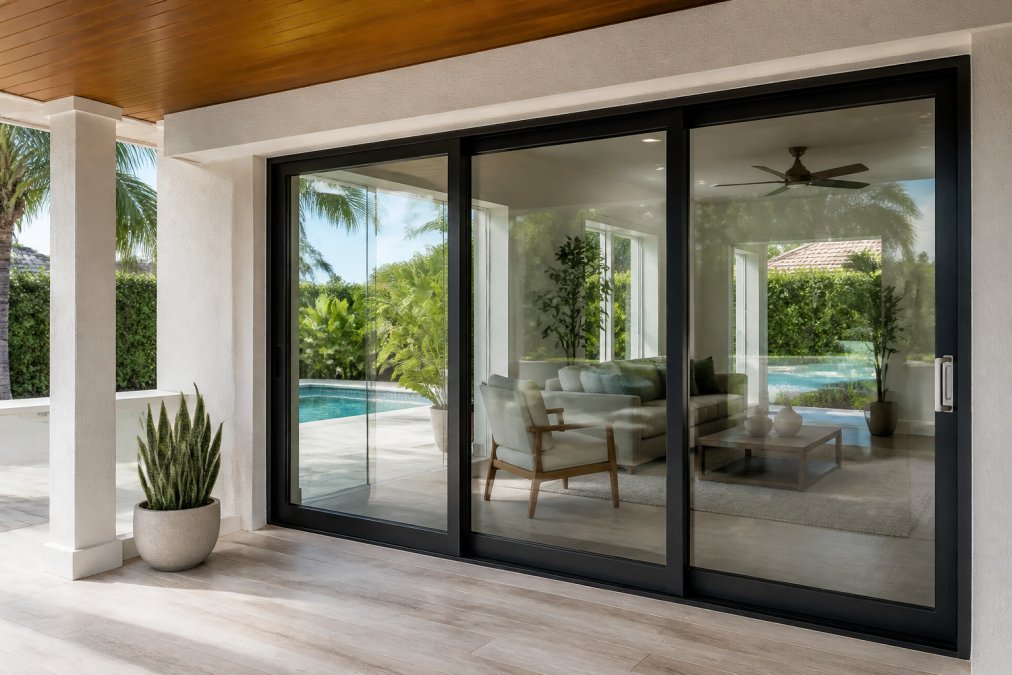
Hurricane-rated sliding glass doors are impact-resistant doors engineered to withstand extreme wind pressures and wind-borne debris during severe storms. Unlike standard sliding glass doors, these doors feature laminated glass with a polyvinyl butyral interlayer that holds the glass together even when struck by high-velocity debris. The frame is reinforced with heavy-duty aluminum or vinyl construction, and the multi-point locking system ensures the door stays secure under extreme design pressure loads.
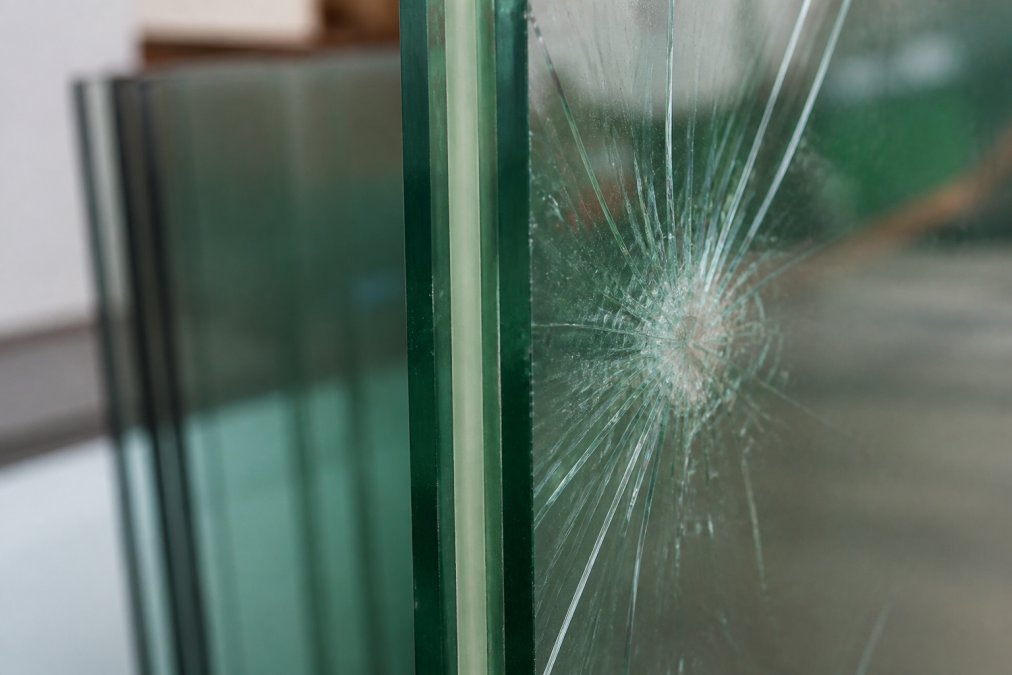
These doors meet strict building codes in hurricane-prone regions and are tested for design pressure (DP) ratings that indicate force capacity. A DP rating of 50 means the door can handle wind pressures equivalent to a Category 4 hurricane.
Impact-resistant sliding glass doors are a permanent upgrade affecting insurance costs, energy efficiency, and property value. The key question is whether the investment aligns with your priorities and timeline.
Impact Sliding Glass Doors Cost: Breaking Down the Investment
Hurricane-rated sliding glass doors cost significantly more than standard doors due to laminated glass, reinforced frames, and specialized hardware. Installation requires precise alignment and professional setup.
A single impact-resistant sliding glass door installation typically ranges from $1,500 to $3,500, with labor representing 40-50% of that total. Aluminum frames cost more upfront than vinyl but offer better durability in salt-air environments.
The Hidden Maintenance Cost Cycle
Impact-resistant doors are heavier and more complex, causing mechanical components to wear faster and require more frequent service:
-
Roller and track maintenance (Years 1-5): Annual cleaning and lubrication are essential to prevent binding. Professional cleaning runs $150-$300 per door annually.
-
Seal and gasket replacement (Years 5-10): Seals degrade from UV exposure and thermal cycling. Replacement costs $200-$500 per door.
-
Hardware replacement (Years 8-15): Multi-point locking mechanisms and specialized hardware corrode or wear out. Replacement costs $400-$800 per door.
-
Glass recoating (Years 10-15): Low-E coatings degrade over time. Recoating or replacement runs $300-$600 per door.
For four impact doors, cumulative maintenance over 15 years can reach $8,000-$15,000. Standard doors have minimal maintenance costs.
Operational Ergonomics: A Physical Trade-Off
Impact-resistant doors are 30-50% heavier than standard doors, creating usability challenges for elderly homeowners or those with mobility limitations.
Standard doors weigh 80-120 pounds; impact-resistant doors weigh 120-180 pounds. Some homeowners need motorized systems or assistance, adding $2,000-$5,000.
Total Cost of Ownership Calculation
Total 15-year cost: $12,000-$30,000 depending on maintenance diligence and accessibility modifications. Get estimates that break down material costs, labor, permitting, and structural modifications. Ask your installer about maintenance schedules and typical service costs in your region.
Preventing Leaks in Impact Window Installation
Water infiltration is a common concern with hurricane-rated sliding glass doors. Poor installation is the leading cause of leaks, not product defects.
Proper installation requires correct sizing and squaring of the rough opening, proper shims for alignment, flashing to direct water away, and flexible sealant between frame and opening.
Installation failures often result from rushing the sealing process or using wrong materials. Silicone-based sealants require proper surface preparation; dirty or wet surfaces cause leaks within months.
Professional installation should include testing for air and water infiltration before completion. This testing is the difference between a door that works and one that becomes a liability.
Impact Window Insurance Discounts and Premium Savings
Insurance companies recognize that impact-resistant sliding glass doors reduce risk and typically offer homeowners insurance premium discounts. Discounts vary by insurer and location.
Insurers offer percentage reductions on annual premiums for homes meeting impact-resistance standards. Full retrofits generate larger discounts than partial protection.
Over 10 years, cumulative savings can offset 20-30% of installation costs, depending on your current premium and how long you stay in the home.
Call your insurance agent before installation to confirm the discount in writing, as discounts vary significantly by insurer.
How Hurricane-Rated Doors Outperform Standard Sliding Glass
Standard doors fail catastrophically in high-wind events; glass shatters and frames give way. Hurricane-rated doors stay intact, laminated glass may crack but doesn't shatter, and reinforced frames with multi-point locking systems remain in place under extreme pressure.
Secondary Performance Benefits
Beyond storm protection, impact-resistant sliding glass doors offer measurable secondary benefits:
-
Noise reduction: Laminated glass and sealed frames reduce exterior noise by 30-50%, with STC ratings of 30-35 versus 20-25 for standard doors.
-
Energy efficiency: Low-E coatings reduce heat transfer by 40-50%, lowering cooling and heating costs. Reinforced frames minimize air leakage.
-
UV protection: Laminated glass blocks 99% of UV radiation versus 75-80% for standard glass, slowing furniture fading and artwork degradation.
-
Security: Reinforced frames and multi-point locking make forced entry difficult. Laminated glass doesn't shatter on impact, preventing glass-break entry.
The Performance Trade-Offs: What Competitors Don't Discuss
However, impact-resistant doors come with real performance limitations that offset some of their advantages:
-
Frame thickness and sightline reduction: Impact-resistant frames are 1.5-2 inches thicker, reducing visible glass area by 15-25% and casting more prominent interior shadows.
-
Operational weight and friction: Heavier doors and complex locking mechanisms create higher friction, compromising smooth operation. Some users report the door feeling stiff over time.
-
Limited customization options: Impact-resistant doors have fewer aesthetic options than standard luxury doors due to structural constraints.
-
Condensation potential: The sealed, multi-layer construction of impact-resistant doors can trap moisture between glass panes in humid climates or during temperature swings. While modern impact doors include desiccant packages to manage this, condensation between panes is more common than with standard doors and cannot be easily cleaned.
Performance Comparison Table
| Feature | Hurricane-Rated Doors | Standard Sliding Doors | Trade-Off Impact |
|---|---|---|---|
| Debris Impact Resistance | Yes, tested to specific DP rating | No | Critical for storm zones |
| Laminated Glass | Yes, polyvinyl butyral interlayer | No | Adds weight and cost |
| Multi-Point Locking | Yes, reinforced | Basic single lock | Increases frame thickness |
| Energy Efficiency | High, Low-E coating standard | Standard | Reduces sightline |
| Noise Reduction | Significant, STC rating 30+ | Minimal, STC 20-25 | Year-round benefit |
| UV Protection | Yes, 99% UV blockage | Partial, 75-80% | Slows fading |
| Sightline (visible glass) | 75-85% of opening | 90-95% of opening | Noticeable aesthetic difference |
| Operational ease | Heavier, more friction | Smooth, effortless | Affects daily usability |
| Customization options | Limited | Extensive | Aesthetic constraints |
| Code Compliance | Meets hurricane zone requirements | Does not meet hurricane codes | Legal requirement in some areas |
When Performance Advantages Justify the Trade-Offs
Impact-resistant doors make the strongest performance case for homeowners in high-risk hurricane zones, those with security concerns, or those in noisy urban environments where the noise reduction benefit compounds daily. The trade-offs, thicker frames, reduced sightline, operational weight, are worth accepting when storm protection is the primary driver.
For homeowners in low-risk areas or those primarily motivated by aesthetics and smooth operation, standard high-end sliding glass doors may deliver better overall performance for their priorities. The choice depends on whether you're optimizing for storm protection, energy efficiency, security, or the subjective experience of operating and viewing through the door.
Resale Value and Long-Term ROI
Impact-resistant sliding glass doors affect your home's resale value in a specific way: they matter significantly to buyers in hurricane-prone areas and matter less to everyone else. In coastal markets, buyers actively seek homes with impact protection. In inland areas, impact doors are seen as a nice-to-have upgrade rather than a necessity.
The resale value impact depends on your neighborhood's market dynamics. Homes in high-risk hurricane zones with impact-rated doors command a premium compared to similar homes without protection. Buyers in these areas understand that impact doors represent both safety and long-term cost savings through insurance discounts.
However, resale value isn't purely additive. You won't recoup 100% of your installation cost through resale value alone. The improvement adds value, but it's not a dollar-for-dollar return. Think of it as one factor among many that affects your home's market position.
The longer-term ROI picture combines several elements: insurance savings over time, energy efficiency gains, avoided damage during storms, and the resale value premium in your specific market.
Is the Investment Worth It?
The answer depends on four factors: your risk tolerance, your timeline, your location, and your financial priorities.
Frequently Asked Questions
How much does a hurricane-rated sliding glass door cost compared to standard doors?
Hurricane-rated sliding glass doors typically cost significantly more than standard models due to laminated glass construction, reinforced frames, and multi-point locking systems. Exact pricing depends on door size, frame material (aluminum vs. vinyl), glass specification, and installation complexity. For a precise quote tailored to your project, contact a local installer or manufacturer directly. The investment often pays for itself through insurance discounts and increased home value over time.
Can impact window installation prevent leaks during hurricanes?
Proper impact window installation is critical to leak prevention. Professional installers must seal all gaps around the frame with high-quality sealant, ensure correct flashing integration with your home's building envelope, and verify that the installation meets local building codes. Poor installation, including inadequate sealing or improper frame placement, is the leading cause of water infiltration. Hiring a licensed, experienced installer and requesting post-installation inspection significantly reduces leak risk during severe weather.
What insurance discounts do impact-rated doors qualify for?
Many homeowners insurance companies offer discounts ranging from 5% to 15% on annual premiums for homes with impact-rated windows and doors, depending on your insurer and location. Some insurers provide larger discounts in high-velocity hurricane zones. Discounts often apply to both wind and hail coverage. Contact your insurance agent before installation to confirm your policy's specific discount structure, and provide proof of code-compliant installation to claim the reduction.
Do hurricane-rated doors increase home resale value?
Yes, impact-rated doors typically increase resale value, particularly in hurricane-prone regions. Buyers view them as a significant safety and durability upgrade that reduces future maintenance costs and insurance premiums. The resale premium varies by market and neighborhood, but studies show homes with impact protection sell faster and command higher prices. Combined with insurance savings over time, this makes the initial investment a genuine return on investment for most homeowners.