 how-to
How Long Does Pergola Installation Take in Broward
Table of Contents
- Pergola Installation Timeline: What to Expect
- Pergola Permit Requirements and Processing Time
- Site Preparation for Outdoor Structures
- Custom Pergola Installation Timeline by Material Type
- Factors Affecting Your Pergola Project Timeline
- DIY vs. Professional Installation: Timeline Comparison
- Getting Your Pergola Project on Schedule
- Frequently Asked Questions
Last Updated: October 1, 2026
Pergola Installation Timeline: What to Expect
How long does pergola installation take in Broward depends on multiple factors. Most standard pergola projects range from 4 to 12 weeks from initial consultation to final walkthrough. This timeline accounts for design, permitting, material sourcing, and on-site construction. At Dimensions Luxury Builders, we manage every phase to keep your outdoor living space project on track.
The actual construction phase typically takes 2 to 4 weeks once permits are approved and materials arrive. However, the full project timeline extends well beyond the hammer-and-nail work. Understanding each phase helps you plan accordingly and avoid surprises.
Several variables influence your specific timeline. Weather delays in South Florida can add weeks to any outdoor project. Material lead times for custom pergolas may stretch the schedule. Permit processing in Broward County introduces its own delays. We'll break down each factor so you know exactly what to expect.
Pergola Permit Requirements and Processing Time
Pergola permit requirements in Broward County are mandatory for most installations. You cannot skip this step, and the permit processing timeline directly affects your project schedule. Most residential pergola permits take 2 to 4 weeks to process once submitted to the county.
The permit application requires detailed structural engineering plans, site surveys, and proof of property ownership. Your contractor must submit these documents to Broward County's building department. The county reviews them for compliance with local building codes and hurricane wind load standards.
Here's what slows down permit processing:
- Incomplete applications requiring resubmission
- Engineering plans that don't meet current code standards
- HOA approval delays (if your property is in a community with deed restrictions)
- County backlog during peak construction seasons
- Requests for structural modifications based on soil conditions
Dimensions Luxury Builders handles all permit paperwork and coordination with county officials. Our local expertise helps navigate the permit review process because we know exactly what Broward County inspectors require.
Site Preparation for Outdoor Structures
Site preparation typically takes 1 to 2 weeks and must happen before construction begins. This phase includes measuring the installation area, removing existing landscaping, and preparing the foundation. Your contractor marks the pergola footprint and identifies any underground utilities.
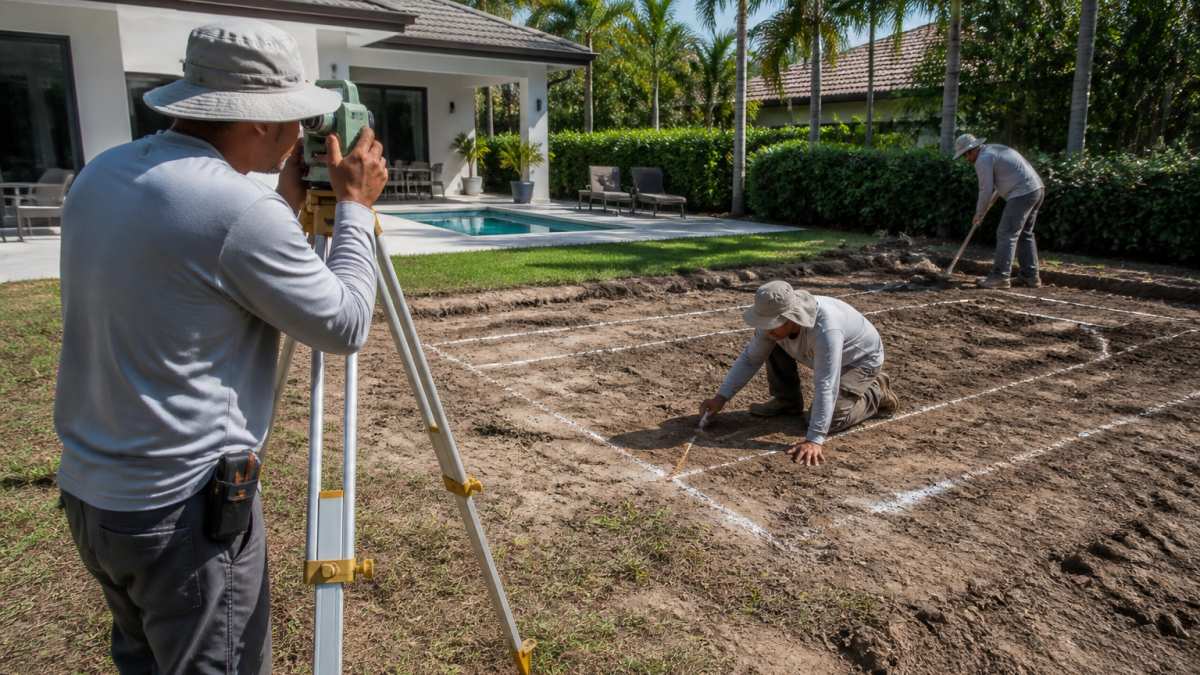
The site preparation process involves these steps:
- Utility locating (call 811 to locate buried gas, electric, and water lines)
- Ground leveling and grading
- Concrete foundation preparation if required
- Removal of trees or landscaping in the installation zone
- Soil testing for proper foundation support
Weather affects site prep significantly. Heavy rain makes the ground too soft for equipment. South Florida's sandy soil sometimes requires additional foundation reinforcement, adding time and cost. Your contractor assesses soil conditions during the consultation and adjusts timelines accordingly.
Custom Pergola Installation Timeline by Material Type
Material choice directly impacts how long pergola installation takes in Broward. Different materials have different lead times and construction requirements. Understanding these differences helps you choose wisely.
Aluminum Pergola Installation
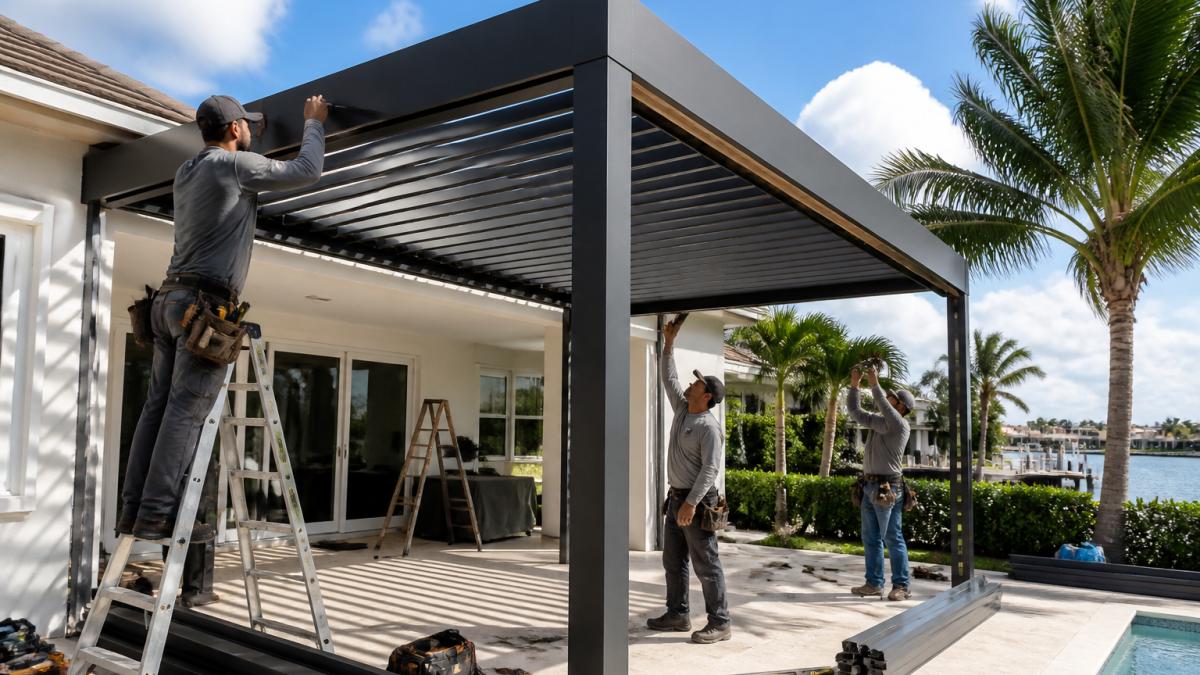
Aluminum pergolas typically arrive within 2 to 3 weeks of order. On-site assembly takes 5 to 10 days. Aluminum requires minimal site preparation because the lightweight frame doesn't need extensive foundation work. Most aluminum pergolas use adjustable feet that adapt to uneven ground.
Custom Wood Pergola Installation
Custom wood pergolas take longer. Lead times stretch to 4 to 8 weeks depending on the design complexity and wood species selected. Cedar and pressure-treated lumber have different availability. Once materials arrive, on-site construction takes 2 to 3 weeks because wood requires precision joinery and finishing.
Vinyl-Coated Pergolas
Vinyl-coated options split the difference. Lead times run 3 to 5 weeks. Installation takes 1 to 2 weeks because vinyl components fit together quickly with minimal site customization.
| Material Type | Lead Time | Installation Duration | Foundation Required | Best For |
|---|---|---|---|---|
| Aluminum | 2-3 weeks | 5-10 days | Minimal | Quick projects, low maintenance |
| Custom Wood | 4-8 weeks | 2-3 weeks | Standard concrete | Premium aesthetics, custom designs |
| Vinyl-Coated | 3-5 weeks | 1-2 weeks | Standard concrete | Balance of durability and speed |
Material sourcing delays happen frequently. Specialty wood species may need to be ordered from suppliers outside the region. Aluminum components sometimes experience supply chain delays. Your contractor should provide realistic lead times based on current supplier availability.
Factors Affecting Your Pergola Project Timeline
Beyond permits and materials, several other factors influence your pergola installation timeline. Understanding these helps you anticipate delays and plan accordingly.
HOA Approval Requirements: The Hidden Timeline Multiplier
If your property is in a homeowners association, HOA approval adds 2 to 4 weeks to the timeline, but only if your submission is complete on the first try. Many Broward County communities require architectural review before any construction begins. Others demand specific materials, color schemes, or design standards that force redesigns.
The HOA approval process typically unfolds in these stages:
- Initial Submission (1 week): You submit architectural drawings, material samples, and a completed HOA architectural review form to your community's management company or HOA board.
- Committee Review (2-3 weeks): The HOA's architectural committee reviews your submission against community guidelines. This is where delays happen. If your pergola design doesn't match the community aesthetic or violates setback requirements, the committee requests modifications.
- Resubmission and Approval (1-2 weeks): If changes are required, you revise plans and resubmit. A second rejection cycle adds another 2-3 weeks.
- Conditional Approval (1 week): The HOA issues conditional approval, often requiring specific materials (e.g., "aluminum only, no wood") or color restrictions (e.g., "earth tones matching existing structures").
Common HOA rejection reasons in Broward County communities include:
- Pergola height exceeding community guidelines (many HOAs cap structures at 10-12 feet)
- Setback violations (pergolas must be a minimum distance from property lines, typically 5-10 feet)
- Material restrictions (some communities prohibit vinyl or require pressure-treated wood only)
- Visibility concerns (HOAs in gated communities may restrict structures visible from common areas)
- Lack of engineering stamps on structural drawings
Pro tip: Request a copy of your HOA's architectural guidelines before meeting with your contractor.
Weather Contingencies
Structural Engineering Requirements
Inspection Scheduling
Contractor Availability
DIY vs. Professional Installation: Timeline Comparison
Attempting a DIY pergola installation changes the timeline dramatically. Most homeowners underestimate how long the project actually takes.
DIY Installation Reality
Professional Installation
Getting Your Pergola Project on Schedule
Successful project scheduling starts with clear expectations. Here's how to keep your pergola installation on track from start to final sign-off.
Set Realistic Timelines
Plan for Broward County Permitting
Choose Materials with Lead Times in Mind
Account for Weather and Inspections
The Final Inspection and Permit Closeout Phase (Often Overlooked)
Here's what happens after the contractor finishes on-site work:
-
Final Inspection Request (1-3 days): Your contractor requests a final inspection from Broward County's building department. The county schedules the inspection based on current workload. During peak season (October-April), this scheduling alone can take 1-2 weeks.
-
County Inspector Visit (1 day): A county building inspector visits your property to verify the pergola meets all approved plans, building codes, and hurricane wind load standards. The inspector checks:
- Foundation depth and concrete strength (if applicable)
- Structural connections and fastening
- Material specifications matching the permit
- Proper setbacks from property lines
- Electrical work (if the pergola includes lighting)
- Compliance with any HOA-mandated modifications
-
Inspection Results (1-3 days): The inspector either approves the work or issues a "notice of deficiency" if code violations are found. Minor issues (loose fasteners, paint touch-ups) can be corrected immediately. Structural deficiencies require rework and a second inspection, adding another 1-2 weeks.
-
Permit Closeout and Certificate of Completion (3-5 days): Once the inspector approves the work, Broward County issues a Certificate of Completion. This document proves the pergola was built to code and is required for:
- Future home sales (buyers request proof of permitted work)
- Insurance claims (if the pergola is damaged, insurers verify it was permitted)
- HOA records (many communities require proof of approval)
Maintain Communication with Your Contractor
Frequently Asked Questions
Do I need a permit to install a pergola in Broward County?
Yes. Most pergolas require a building permit in Broward County, especially if they're attached to your home, exceed certain height limits, or involve structural footings. Freestanding pergolas under 200 square feet may have reduced permitting requirements, but you should verify with your local building department. Permit processing typically adds 2-4 weeks to your project timeline. Professional contractors like Dimensions Luxury Builders handle permit applications, ensuring compliance with local building codes and engineering requirements.
How long does site preparation take before pergola assembly?
Site preparation usually takes 3-7 days, depending on your yard's current condition. This includes clearing vegetation, measuring and marking the footprint, excavating for concrete foundations, and ensuring proper drainage. If your site requires significant grading or has existing structures to work around, preparation may extend to 1-2 weeks. Professional contractors assess your space during the initial consultation to provide accurate timelines.
What's the difference in installation time between wood and aluminum pergolas?
Aluminum pergolas typically install faster than custom wood pergolas. Aluminum components arrive pre-fabricated and require 2-5 days of on-site assembly and fastening. Custom wood pergolas involve more precision work, finishing, and staining, extending the active construction phase to 5-10 days. Material lead times also differ: aluminum pergolas may be ready sooner if pre-designed, while custom wood designs require fabrication time before installation begins.
How long does the entire pergola project take from consultation to completion?
The full timeline ranges from 6-10 weeks for most projects. This includes initial consultation (1 week), design and permit approval (2-4 weeks), material sourcing and lead time (2-4 weeks), site preparation (3-7 days), and active construction (2-10 days). Weather contingencies and HOA approval, if required, can add 1-3 weeks. Professional project management ensures coordination across all phases, minimizing delays and keeping your project on schedule.