 how-to
How to Maintain Impact Windows After Installation
Last Updated: October 22, 2026
Quick Summary
To maintain impact windows after installation, clean the glass and frames quarterly with mild soap and water, inspect seals twice yearly for cracks or gaps, and lubricate tracks with silicone-based spray twice a year. Regular maintenance prevents water intrusion, air leaks, and hardware problems that can damage your home.
- Clean glass monthly in coastal areas and quarterly elsewhere to prevent salt and mineral buildup that etches glass
- Inspect seals and weatherstripping twice yearly for cracks, hardening, or pull-away from the frame
- Vacuum and brush tracks twice yearly to remove debris that jams rollers and traps water
- Lubricate tracks, hinges, and locks with silicone-based spray twice yearly, never with oil or grease
- Schedule professional inspection every two to three years to catch anchoring, seal, and installation problems
Table of Contents
- Why Impact Window Maintenance Matters
- How to Clean Impact Windows Safely
- Impact Window Track Cleaning and Operation
- Impact Window Seal Maintenance for Long-Term Performance
- Impact Window Maintenance Checklist by Season
- Hardware Maintenance and Lubrication
- Self-Inspection vs. Professional Inspection
- Troubleshooting Common Impact Window Issues
- Frequently Asked Questions
Why Impact Window Maintenance Matters
Impact windows protect your home from severe weather, but only if you maintain impact windows properly.
The windows that perform best after five years are the ones cleaned and inspected regularly.
This guide covers how to maintain impact windows through cleaning, sealing, hardware care, and knowing when to call a professional so they last for decades.
How to Clean Impact Windows Safely
Impact glass is tougher than regular glass but still needs the right approach, wrong tools can damage frames or seals.
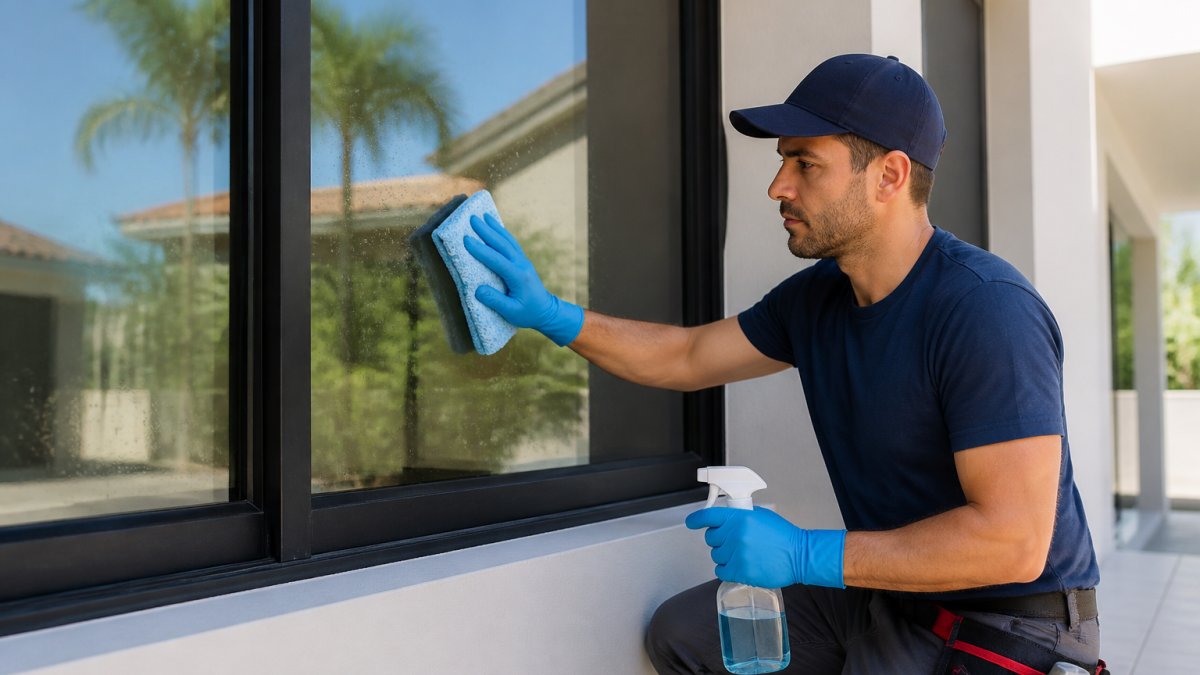
Cleaning the Glass Panes
Impact glass handles more pressure than standard glass, but soft tools work better than hard ones:
- Rinse the glass with plain water to remove loose dust
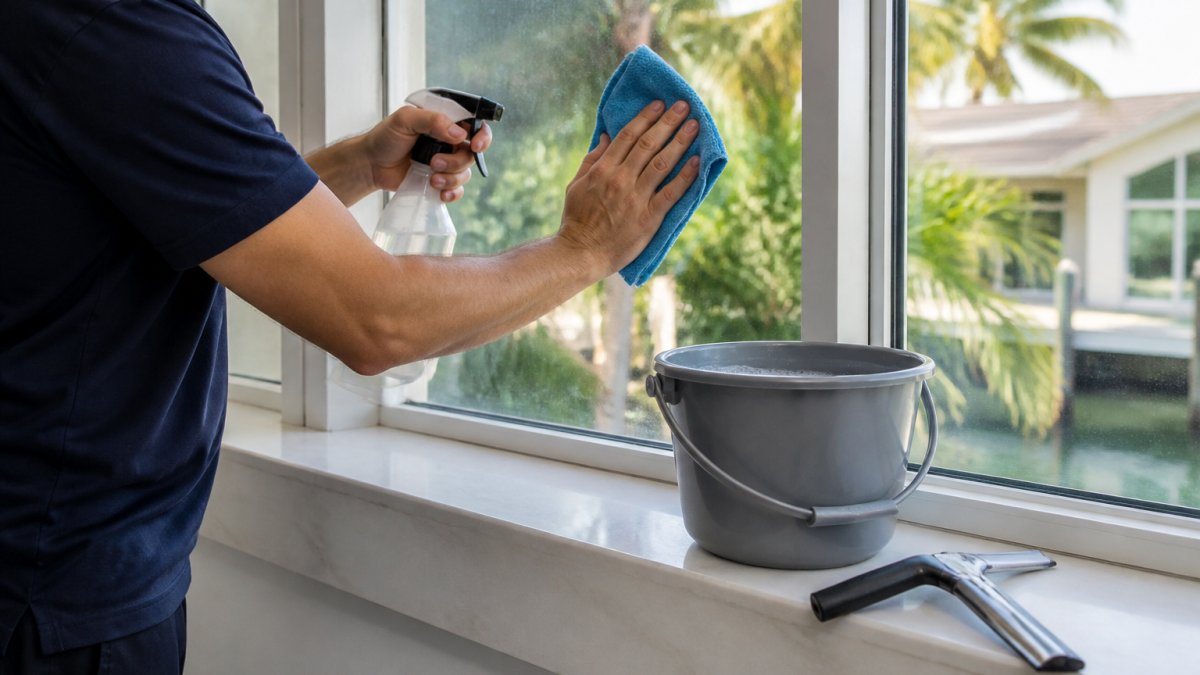
- Mix warm water with a few drops of mild dish soap
- Use a soft cloth or sponge to apply the solution
- Wipe in circular motions, working from top to bottom
- Rinse thoroughly with clean water
- Dry with a microfiber cloth to prevent water spots
Avoid abrasive cleaners, steel wool, or rough scrubbing pads, which can scratch the surface or damage protective coatings. For stubborn spots, let soapy water sit a minute before wiping.
Near the ocean, rinse windows monthly with fresh water to prevent salt buildup that can etch the glass over time.
Cleaning Frames and Removing Debris
Frames collect dirt, leaves, and debris that trap moisture. Clean them every season.
- Use a soft brush or old toothbrush to loosen debris in corners
- Wipe frames with a damp cloth
- Pay extra attention to the corners where the frame meets the glass
- Dry the frames completely to prevent water spots
Mild soap and water work for vinyl frames; use the same on aluminum but dry thoroughly, since aluminum spots easily if left wet.
Sweep away leaves, twigs, and dirt around the window, they trap moisture and can lead to mold.
Impact Window Track Cleaning and Operation
Clean your tracks at least twice a year, more often in dusty or coastal areas.
- Use a vacuum with a brush attachment to remove loose debris
- Use an old toothbrush to scrub the track channels
- Wipe with a damp cloth to remove remaining dirt
- Dry completely with a towel
- Test the window, it should slide smoothly
If the window still sticks after cleaning, lubricate the track with a silicone-based spray designed for windows.
Spray a small amount into the track, slide the window back and forth several times, and wipe away excess.
Impact Window Seal Maintenance for Long-Term Performance
Seals keep water and air out of your home, but over time they shrink, crack, or peel away from the frame.
Inspecting Weatherstripping and Seals
Check your seals at least twice a year. Look for these warning signs:
- Visible cracks or gaps in the seal material
- Weatherstripping that's pulling away from the frame
- Hard or brittle rubber that crumbles when touched
Run your hand along the seal: it should feel firm but flexible. If it feels hard, it's degrading and should be replaced.
Small gaps let air through; larger ones let in water, causing mold, wood rot, and structural damage. Address seal problems before they spread.
Checking for Air and Water Intrusion
Test your seals for signs of air or water leaks:
For air intrusion:
- Feel around the window frame on windy days. Cold air should not enter.
- Look for condensation on the interior glass on cold mornings. This suggests air leakage.
- Check utility bills. A sudden increase may mean air is escaping.
For water intrusion:
- Look for water stains on the interior walls or sills after heavy rain
- Check the area below the window for discoloration or soft spots
- Inspect the frame for mold or mildew growth
If you find signs of water intrusion, stop using the window and contact a professional immediately, water damage spreads fast and gets expensive.
Impact Window Maintenance Checklist by Season
Adjust intervals for your conditions: coastal, dusty, and construction-adjacent homes should shorten cleaning intervals, while protected inland homes can follow the baseline.
Baseline Maintenance Intervals
Use these intervals as your default calendar, then tighten them if you see buildup or sticking between visits.
| Task | Baseline interval | Tighten to | Why it matters |
|---|---|---|---|
| Rinse glass with fresh water | Monthly | Every two weeks in coastal areas | Prevents salt and mineral buildup that can etch glass over time |
| Clean glass with mild soap and water | Quarterly | Monthly in dusty or coastal areas | Removes film that traps grit against seals |
| Vacuum and brush tracks | Twice a year | Quarterly | Debris in tracks jams rollers and traps water |
| Inspect seals and weatherstripping | Twice a year | Quarterly | Catches cracking and pull-away before water intrusion |
| Lubricate tracks, hinges, and locks | Twice a year | Quarterly in coastal areas | Salt spray accelerates corrosion on moving parts |
| Test operation of every operable window | Twice a year | Quarterly | Sticking is the earliest sign of track or hardware problems |
| Post-storm inspection | After every significant storm | After every storm | Impact damage and seal breaches may not be visible from inside |
| Professional inspection | Every two to three years | Annually if you see recurring issues | Catches anchoring, seal, and installation problems you cannot see |
Spring Tasks
Spring is the deep-clean season after winter. Work from the top of each window down so loosened debris doesn't fall onto surfaces you already cleaned.
- Rinse and wash all glass inside and out with mild dish soap and water
- Wipe frames and sills, paying attention to corners where the frame meets the glass
- Vacuum tracks with a brush attachment, then scrub channels with a soft brush
Summer Tasks
Summer heat and humidity stress seals and interior moisture control. Catch condensation and mold before they spread.
- Wipe condensation from interior glass and check whether it appears between panes
- Inspect seals for gaps that let humid air reach interior surfaces
- Check for mold or mildew around frames, especially in bathrooms and kitchens
Fall Tasks
Fall is the preparation season: complete repairs before cold weather makes exterior work difficult and winter storms test every seal.
- Clean glass, frames, and tracks thoroughly before cold weather arrives
- Inspect all seals and weatherstripping and replace any that are hard, cracked, or pulling away
- Test every window for smooth operation and adjust or repair sticking hardware
Winter Tasks
Winter maintenance is mostly monitoring and avoiding damage. Never force a frozen window open or closed.
- After each storm, inspect windows for cracks, seal damage, and water intrusion
- Remove ice and snow carefully from frames and sills without striking the glass
- Wipe interior condensation regularly and note persistent moisture
How to Keep Records That Help With Warranty Questions
Maintenance records give you a factual timeline for warranty claims or installation issues. Keep a simple log of the date, task, products used, and photos of anything unusual, plus receipts for professional repairs and seal replacements. Before filing a claim, read the written warranty terms: many require proof of reasonable maintenance, and some exclude damage from neglect, improper cleaning products, or modifications.
Hardware Maintenance and Lubrication
Locks, hinges, rollers, and handles are the parts you touch daily and the first to show wear. Hardware problems cause many operation complaints, so here's what to check, how to lubricate, and when to call a professional.
What to Check on Every Operable Window
Run this operational check twice a year, and again after any storm that affects the window.
- Latch and lock engagement: Close and lock the window. The latch should catch firmly without forcing, and the lock should release smoothly. If you have to lift, push, or wiggle the sash to lock it, the sash alignment or lock strike is off.
- Hinge and pivot movement: Open the window slowly. Hinges should move without squeaking, binding, or visible rust. On casement and awning windows, check that the sash stays where you put it and does not drift.
- Rollers and slides: On sliding windows, the sash should glide with light pressure. A sash that jumps, tilts, or requires two hands points to worn rollers or debris in the track.
- Handles and operators: Cranks and handles should turn without grinding. Stiffness often means dried lubricant or corrosion inside the operator mechanism.
- Fasteners: Look for loose screws at hinges, handles, and lock plates. Snug them with the correct screwdriver, but do not overtighten into vinyl or aluminum frames.
Lubricant Selection by Material
Use the right product for the surface. The wrong lubricant attracts dirt or damages plastic and rubber components.
- Silicone-based spray: The default choice for tracks, rollers, hinges, and lock mechanisms. It dries to a thin film, does not attract dust like oil, and is safe on most window materials.
- Dry-film or PTFE lubricants: Good for sliding surfaces and rollers where you want a clean, non-greasy finish.
- White lithium grease: Acceptable for heavy-duty hinge points on some commercial-grade hardware, but use sparingly and wipe excess; it can collect grit.
Apply a small amount, work the part through several cycles, and wipe away excess with a clean cloth. More lubricant is not better; excess attracts debris.
Cleaning Hardware Before Lubricating
Lubricant applied over dirt and salt spray traps grit against moving parts. Clean first.
- Brush loose dirt from hinges, lock plates, and rollers with a soft brush.
- Wipe metal surfaces with a damp cloth and mild soap, then dry completely.
- For salt spray, rinse with fresh water and dry before lubricating.
- Check for corrosion: white or green powdery residue on aluminum or plated hardware means the finish is breaking down.
When Hardware Needs Repair or Replacement
Some hardware problems are maintenance issues; others are safety and security issues. Use these criteria to decide when to escalate.
- Adjust or lubricate yourself: Squeaking hinges, mildly stiff locks, dry rollers, and loose screws.
- Repair or replace soon: A lock that does not fully engage, a handle that turns but does not move the sash, a roller that has flat-spotted, or visible rust on load-bearing hinges.
- Call a professional: A lock that will not secure the window, a sash that binds so badly it cannot be fully closed, cracked or bent hinge components, corrosion that has weakened fasteners, or any hardware problem that appeared after a storm or suspected impact.
Do not substitute hardware from a different window system without checking with the manufacturer. Impact windows are tested as complete assemblies, and replacing locks, hinges, or rollers with non-specified parts can affect both operation and the manufacturer's written warranty terms.
Self-Inspection vs. Professional Inspection
You can handle most routine maintenance yourself. But some problems need professional eyes. Know when to call in help.
Do-it-yourself maintenance includes:
- Cleaning glass, frames, and tracks
- Applying lubricant to hinges and tracks
- Visual inspection of seals and weatherstripping
Call a professional if you notice:
- Cracks in the glass or frame
- Seals that are visibly damaged or missing
- Water stains or signs of water intrusion
A professional inspection every two to three years catches problems early. This prevents expensive repairs later. Dimensions Luxury Builders can inspect your impact windows and handle any repairs or seal replacements needed.
Troubleshooting Common Impact Window Issues
Problems happen. Here's how to fix the most common ones:
Window is hard to open or close:
- Clean and lubricate the tracks
- Check for debris blocking the frame
- Inspect the hinges for damage
Condensation on the interior glass:
- This is normal in cold weather if humidity is high indoors
- Improve ventilation by opening other windows
- Use a dehumidifier if condensation is constant
Visible cracks in the glass:
- Do not use the window
- Contact a professional immediately
- Impact glass can still function with small cracks, but large ones compromise protection
Water leaking around the window:
- Check the track for debris blocking drainage
- Inspect the seal for gaps
- Ensure the window frame is properly sealed
Seal is peeling or cracked:
- Small cracks may be cosmetic only
- Large cracks or gaps need professional replacement
- Do not ignore seal problems, they get worse with time
Maintaining impact windows is straightforward when you follow a regular schedule. Clean them, inspect them, and address small problems before they grow. We inspect impact windows, replace seals, repair hardware, and handle any structural issues. The National Association of Home Builders recommends professional inspection every few years to ensure windows remain secure and functional.
Frequently Asked Questions
How often should impact windows be cleaned and inspected?
Clean impact windows quarterly or after severe weather events. Inspect seals, weatherstripping, and hardware twice yearly, once in spring and again in fall. In coastal or hurricane-prone areas, increase inspection frequency to every three months. After storms, inspect for cracks, debris lodged in tracks, and water intrusion signs. Regular cleaning prevents debris buildup that can damage seals and tracks.
What is the safest way to clean impact window glass?
Use a soft cloth or microfiber towel with a mild cleaning solution of water and dish soap. Avoid abrasive scrubbers, harsh chemicals, or high-pressure washers that can damage seals and frames. For stubborn debris, soak the area first, then gently wipe. Never use acidic or ammonia-based cleaners on impact glass or frames. Dry thoroughly with a clean cloth to prevent water spots and seal degradation.
How can you tell if an impact window is leaking?
Look for water stains, discoloration, or mold around the frame edges and sill. Check for condensation between glass panes, which signals seal failure. During or after rain, inspect the interior wall below windows for dampness. Listen for whistling sounds indicating air intrusion around seals. If you notice soft spots in the frame, peeling caulk, or visible gaps between the frame and wall, water intrusion may have already occurred. Contact a professional immediately if leaking is suspected.
Can impact window seals or hardware be repaired?
Weatherstripping and caulk can be replaced if degraded, but this is a specialized task best handled by professionals familiar with impact windows. Hardware like locks and hinges can often be repaired or adjusted by a qualified technician. However, if the seal between glass panes has failed (indicated by condensation inside), the entire window unit typically must be replaced. Early maintenance prevents seal failure, which is why regular inspections and prompt repairs of small issues are critical.