 ultimate-guide
How to Choose Tiles for Small Bathrooms
Table of Contents
- Why Tile Selection Matters in Small Bathrooms
- Best Tile Size for Small Bathroom Floors
- Large Format Tiles in Small Bathrooms: Pros and Practical Limits
- Material Types: Ceramic, Porcelain, and Natural Stone
- Small Bathroom Tile Color Trends and Light Reflection
- Grout, Waterproofing, and Maintenance in Compact Spaces
- Installation Techniques and Geometric Patterns for Visual Flow
- Conclusion
- Frequently Asked Questions
Last Updated: September 21, 2026
Why Tile Selection Matters in Small Bathrooms
How to choose tiles for small bathrooms directly impacts both function and perception in tight spaces. Most homeowners focus on style first, then discover too late that their choice creates visual chaos, amplifies moisture problems, or makes the space feel smaller. The difference between a cramped bathroom and one that feels open and luxurious often comes down to tile selection.
The right tile strategy transforms a 5x8 space into something that feels intentional, sophisticated, and livable. This guide covers the critical factors: size, material, color, light reflection, and installation patterns that work in compact spaces.
Best Tile Size for Small Bathroom Floors
The key principle: fewer grout lines create visual continuity, making spaces feel larger. A floor with 200 grout intersections reads busy; one with 40 reads clean.
For small bathroom floors, 12x24 or 18x18 inch tiles strike the best balance, minimizing grout lines without installation challenges or excessive waste. Smaller tiles multiply visual breaks; larger tiles waste material and create awkward cuts around plumbing.
Rectangular tiles (12x24 or 12x36) perform better than squares because they guide the eye in one direction, creating perceived length and extending the visual plane.
Porcelain tiles in these sizes are durable, water-resistant, and available in matte finishes that reduce slip hazards. Avoid glossy finishes on floors, they're hazardous when wet and show every footprint.
Large Format Tiles in Small Bathrooms: Pros and Practical Limits
Large-format tiles (24x48 inches and larger) create a seamless visual field that makes spaces feel larger by reducing grout lines and visual interruption.
Installation challenges: large tiles are heavier, require perfectly flat substrate, and any deviation becomes obvious. Cutting around fixtures requires precision and creates waste. In a 5x8 bathroom, 8-12 cuts per wall are expensive in material and labor.
Large format tiles require thinner grout joints (3-5mm versus 8-12mm), meaning less tolerance for substrate movement, a real problem in older homes. Waterproofing requirements are more stringent because water finds fewer grout lines.
Large format works best on shower walls rather than floors. For small bathroom floors, 12x24 porcelain remains the practical choice.
Material Types: Ceramic, Porcelain, and Natural Stone
Ceramic Tiles
Ceramic tiles are porous, absorb water, and lack durability for bathroom foot traffic. They chip and crack easily, making them a false economy for small bathrooms.
Porcelain: The Practical Standard
Porcelain is the default choice for small bathroom floors and shower zones. Fired at higher temperatures than ceramic, it's denser, resists water infiltration, tolerates temperature swings, and holds up to daily wear.
For bathroom floors, aim for a DCOF (Dynamic Coefficient of Friction) rating of 0.60 or higher, this measures slip resistance when wet. Matte and satin porcelain achieve 0.60-0.75 DCOF; glossy finishes often fall below 0.50, making them hazardous. Always check the manufacturer's technical sheet for DCOF rating.
Porcelain mimics natural stone aesthetics without maintenance burden, offering durability, water resistance, safety ratings, and design flexibility.
Natural Stone: Luxury with Trade-offs
Natural stone adds luxury but requires sealing before installation and every 1-3 years afterward. Marble and limestone stain easily and are risky on floors. Granite and slate are harder but still require maintenance. In small bathrooms with constant moisture, natural stone demands discipline and expense.
Limit stone to accent walls or shower surrounds. Pair it with porcelain for floors and practical zones.
Waste Calculation for Small Bathroom Layouts
Material waste is a hidden cost in small bathrooms. Standard practice assumes 10% waste, but small bathrooms with plumbing penetrations often exceed this. Calculate total square footage of all surfaces. For a 5×8 bathroom with 8-foot ceilings, that's roughly 200 square feet. Account for cuts around fixtures (add 5-8%), pattern waste for running bond (add 8-12%), and large-format tiles (add 15-20%). Order 15-20% overage total, a 200-square-foot bathroom should have 30-40 square feet extra on hand to cover mistakes, repairs, and future replacements from the same dye lot.
Example: A 5×8 bathroom floor (40 sq ft) plus three walls (roughly 120 sq ft) = 160 sq ft total. Using 12×24 porcelain in running bond with cuts around fixtures: base 160 sq ft + 10% for cuts + 10% for pattern = 176 sq ft. Order 200 sq ft to ensure 15% overage. This prevents mid-project material shortages and the cost of emergency reorders, which often carry rush fees.
For porcelain and natural stone, pricing depends on the specific material chosen. Overage cost matters, so calculate this upfront when choosing materials.
Durability and Longevity
Porcelain tiles offer a good balance of durability, safety (DCOF ratings), cost efficiency, and design flexibility. Natural stone is a luxury choice best reserved for accent walls or homeowners committed to ongoing maintenance.
Small Bathroom Tile Color Trends and Light Reflection
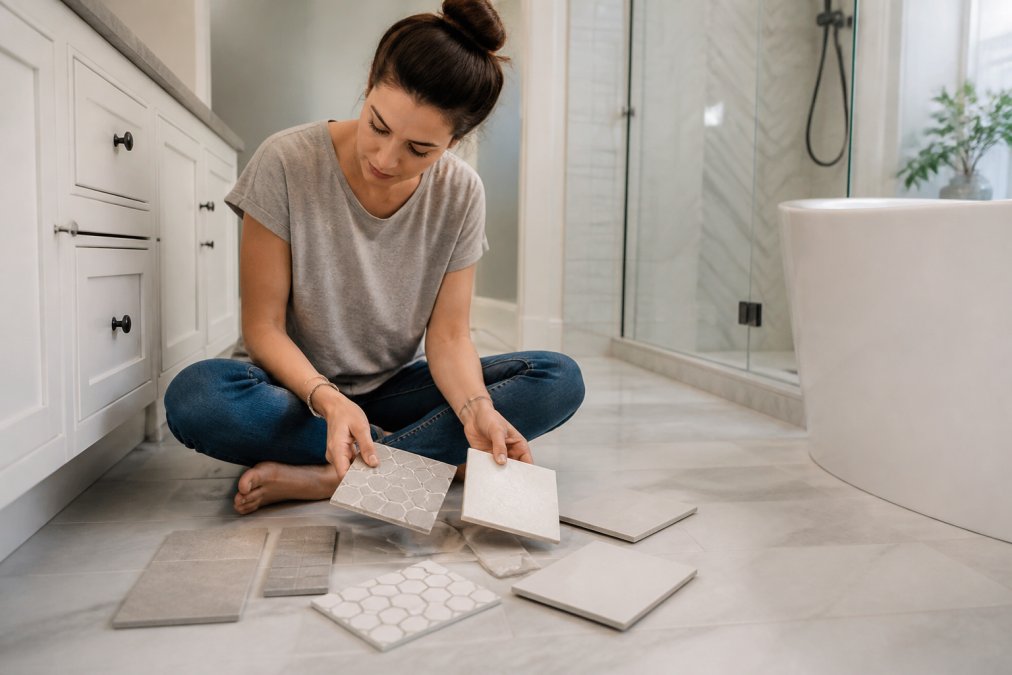
Light-colored tiles remain dominant in small bathrooms for a reason: they reflect light, which expands perceived space. But "light" doesn't mean white or beige. Soft grays, warm creams, pale greens, and muted blues all reflect light while adding sophistication.
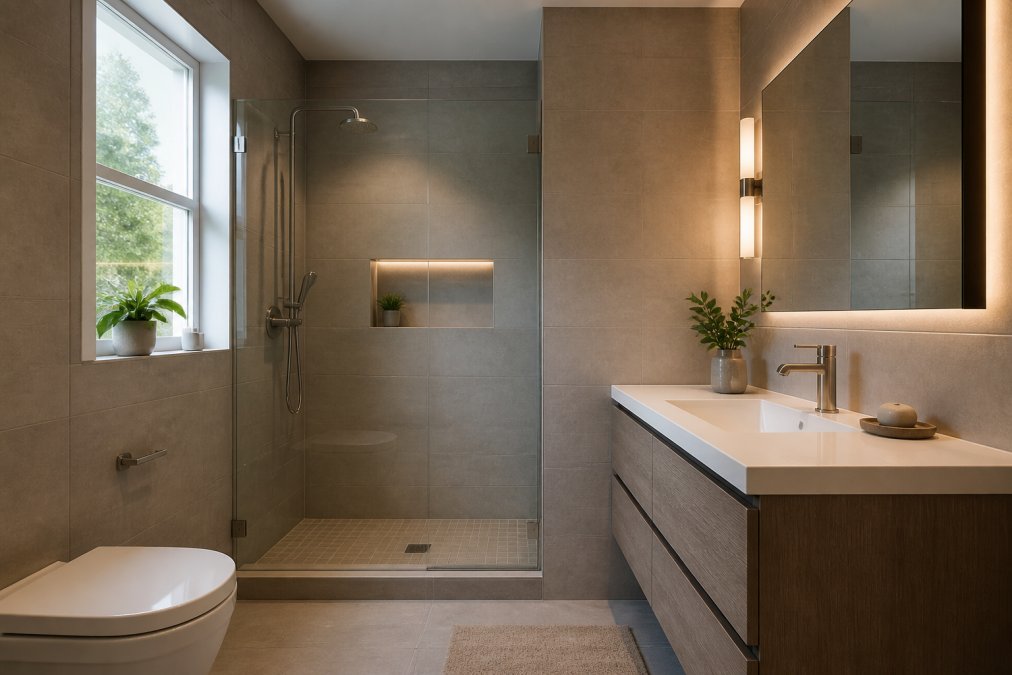
The real principle is understanding how tile finish interacts with both natural and artificial light. A matte light tile reflects light diffusely, creating a calm, spacious feel. A glossy light tile bounces light sharply, which can feel clinical and expose every water spot. For small bathrooms, matte and satin finishes outperform glossy across the board, they're easier to maintain, safer underfoot, and more forgiving of imperfect substrate.
Light Reflection and Finish: The Technical Reality
Glossy tiles reflect 60-80% of incident light; matte tiles reflect 20-40%. This matters less than how that light is distributed. Glossy finishes create specular reflection (mirror-like, directional), which can make a small bathroom feel harsh if artificial lighting is the primary source. Matte finishes create diffuse reflection, scattering light evenly throughout the space, which is why they feel more spacious and comfortable in compact bathrooms with limited windows.
If your bathroom has one small window, prioritize light-colored, matte-finish tiles to maximize what natural light you have. But equally important: evaluate your artificial lighting. Bathrooms lit by a single overhead fixture benefit from matte tiles paired with warm-toned LED lighting (2700K color temperature). Bathrooms with vanity lighting on both sides of a mirror can handle slightly more reflective finishes because light is distributed from multiple angles.
Accent Colors and Perceived Depth
Accent colors work in small bathrooms if they're strategic. A single wall in a deeper tone (charcoal, navy, forest green) creates visual depth without overwhelming. Keep accents to one surface and balance them with light tiles elsewhere. Avoid dark tiles on floors, they show dust and water spots constantly, requiring obsessive cleaning.
The psychology here is measurable: a darker accent wall recedes visually, making the room feel deeper. This works best on the wall opposite the entry or behind a focal point (the vanity or toilet). Pair it with light tiles on the remaining three walls and ceiling to prevent the space from feeling enclosed.
Color Temperature and Material Interaction
Natural stone and porcelain tiles with warm undertones (creams, warm grays, soft terracottas) pair better with warm artificial lighting and make small spaces feel more intimate. Cool-toned tiles (pale blues, cool grays, whites) pair better with neutral or cool-toned LED lighting and can feel more spacious but also more clinical if lighting isn't balanced.
In practice: if your bathroom has limited natural light and you're relying on artificial lighting, choose warm-toned matte tiles and pair them with 2700K LED vanity lighting. If your bathroom has a window and you want to maximize that natural light, cool-toned matte tiles with 3000K or 4000K LED lighting will feel brighter and more open. This integration, tile color, finish, and lighting type working together, is what separates a small bathroom that feels cramped from one that feels intentional and luxurious.
Grout, Waterproofing, and Maintenance in Compact Spaces
Grout color is a maintenance decision disguised as a design choice. Light grout shows every water mark and soap residue. Dark grout hides dirt but reads as heavy in small spaces. Mid-tone grout (soft gray, taupe) balances visibility and visual weight.
Installation Techniques and Geometric Patterns for Visual Flow
Installation patterns influence how the eye moves through a space. Running bond (offset rectangular tiles) guides the eye horizontally and elongates the space visually. Herringbone patterns create dynamic movement but use more material and require more cuts, they're expensive in small bathrooms and can feel fussy in tight spaces.
Conclusion
Choosing tiles for a small bathroom isn't about following trends, it's about understanding how size, material, color, and finish work together to create a space that's both beautiful and functional. Light-colored, matte-finish porcelain tiles in 12x24 sizes with minimal grout lines remain the most reliable choice for small bathroom floors. Pair them with a moisture barrier and professional installation, and you've built a foundation that lasts.
Frequently Asked Questions
What size tiles make a small bathroom look bigger?
Larger tiles with fewer grout lines create visual continuity and reduce visual clutter, making the space feel more open. Tiles in the 12x24-inch to 24x48-inch range work well for floors and walls in small bathrooms. Conversely, tiny mosaic tiles or small subway tiles can overwhelm a compact space. The key is balancing tile size with your bathroom's dimensions, oversized slabs may require more waste and complex installation in very tight layouts.
What color tile is best for a small bathroom?
Light colors like soft whites, pale grays, and warm beiges reflect light and expand spatial perception. Glossy finishes amplify this effect better than matte finishes. However, small bathroom tile color trends for 2026 also embrace soft earth tones and subtle sage greens paired with light backgrounds. Avoid dark colors on all surfaces; instead, use them as accents on a single wall. Grout color matters too, light grout lines minimize visual interruption.
Should I use large or small tiles in a tiny bathroom?
Large format tiles are generally superior in small bathrooms because they reduce grout lines and create a cleaner visual flow. However, installation complexity increases with larger tiles in oddly shaped spaces, and tile waste can be significant. For bathrooms under 40 square feet, 12x24-inch tiles offer the best balance of visual impact and practical installation. Combine this with a herringbone or linear pattern to guide the eye and enhance perceived length.
What tile material is most durable for small bathroom walls and floors?
Porcelain is the most durable option for both walls and floors, it's water-resistant, dense, and resists staining better than ceramic. Natural stone like marble or slate offers luxury aesthetics but requires regular sealing and more maintenance. Ceramic works for walls but is softer for floors. For small bathrooms where moisture concentration is high, prioritize porcelain with a DCOF (Dynamic Coefficient of Friction) rating of 0.60 or higher for slip resistance, especially on shower floors.