 ultimate-guide
Custom Outdoor Kitchen Design Ideas for Luxury Homes
Table of Contents
- Creating a Custom Outdoor Kitchen Design That Fits Your Vision
- Outdoor Kitchen Layout Plans: Zoning Your Backyard Living Space
- Best Materials for Outdoor Kitchen Cabinets and Countertops
- Choosing Built-In Appliances and Grill Islands for Your Design
- Cost of Building an Outdoor Kitchen: Budget Planning Guide
- Smart Home Integration and Outdoor Lighting Design
- Sustainable Design and Climate-Specific Considerations
- DIY vs. Professional Installation: What's Right for Your Project
- Frequently Asked Questions
Creating a Custom Outdoor Kitchen Design That Fits Your Vision
A well-designed outdoor kitchen transforms your backyard into an extension of your home. Custom outdoor kitchen design goes far beyond placing a grill on a patio, it integrates thoughtful layout, durable materials, strategic appliance placement, and cohesive aesthetics that reflect your lifestyle.
At Dimensions Luxury Builders, we've created outdoor kitchens that function beautifully and withstand year-round weather. The difference between a mediocre outdoor kitchen and an exceptional one comes down to planning. Too many homeowners skip the design phase, only to discover their layout doesn't work, materials don't hold up, or the space feels cramped.
This guide covers essential elements of custom outdoor kitchen design, from layout principles and material selection to appliance choices and smart integration.
Outdoor Kitchen Layout Plans: Zoning Your Backyard Living Space
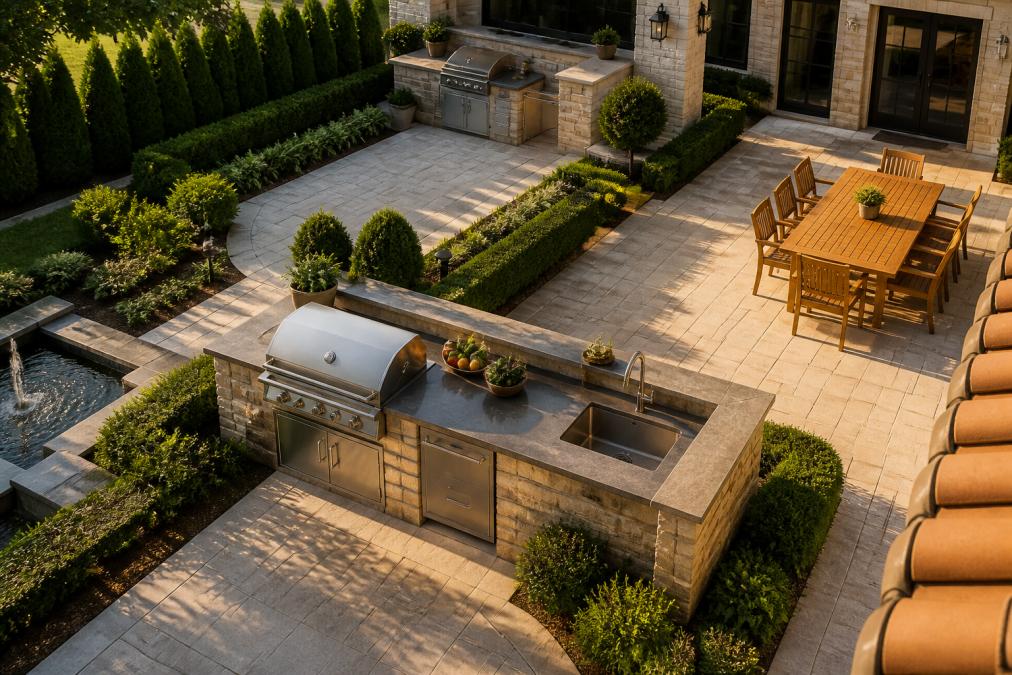
The foundation of any successful outdoor kitchen design is a thoughtful layout that separates distinct zones: food preparation, cooking, serving, and entertaining. Without this zoning, your backyard feels chaotic.
Start by measuring your available space and identifying natural boundaries created by existing structures, trees, or hardscaping. The best layouts work WITH your terrain, not against it. If you have a sloped yard, terracing creates visual interest and allows you to place appliances at comfortable heights.
Work Triangle and Food Preparation Zones
The work triangle, connecting your grill, sink, and refrigeration, should be the heart of your outdoor kitchen. This concept minimizes unnecessary movement and keeps cooking efficient. Ideally, the distance between each point should be 4 to 6 feet (peer-reviewed research).
Your food preparation zone needs adequate counter space, at least 24 inches of continuous surface on either side of your cooking appliance (peer-reviewed research). Many homeowners underestimate how much counter space they actually need. Outdoors, guests mingle around dining tables, so dedicated prep space becomes essential.
Consider the flow from your indoor kitchen to the outdoor space. A direct path from your back door to the outdoor kitchen reduces trips carrying food and supplies.
Entertaining and Dining Areas
Position your dining and entertaining zones at least 8 to 10 feet from the cooking area (peer-reviewed research). This distance keeps guests comfortable and smoke away from where people are eating. Use vertical elements like pergolas, planters, or low walls to create separation even when physical distance is limited.
The entertaining zone should have clear sightlines to the cooking area. Ambient lighting, string lights, recessed lighting, or uplighting on landscaping, transforms the space once the sun sets.
Consider traffic flow carefully. Guests shouldn't navigate through the cooking zone to reach the bar or seating area. Wide pathways (at least 3 feet) prevent bottlenecks and make the space feel open.
Best Materials for Outdoor Kitchen Cabinets and Countertops
Material selection determines whether your outdoor kitchen will look beautiful for years or deteriorate quickly. Constant sun exposure, temperature swings, moisture, and seasonal weather all take their toll. Choosing weather-resistant materials is essential.
Weather-Resistant Cabinetry Options
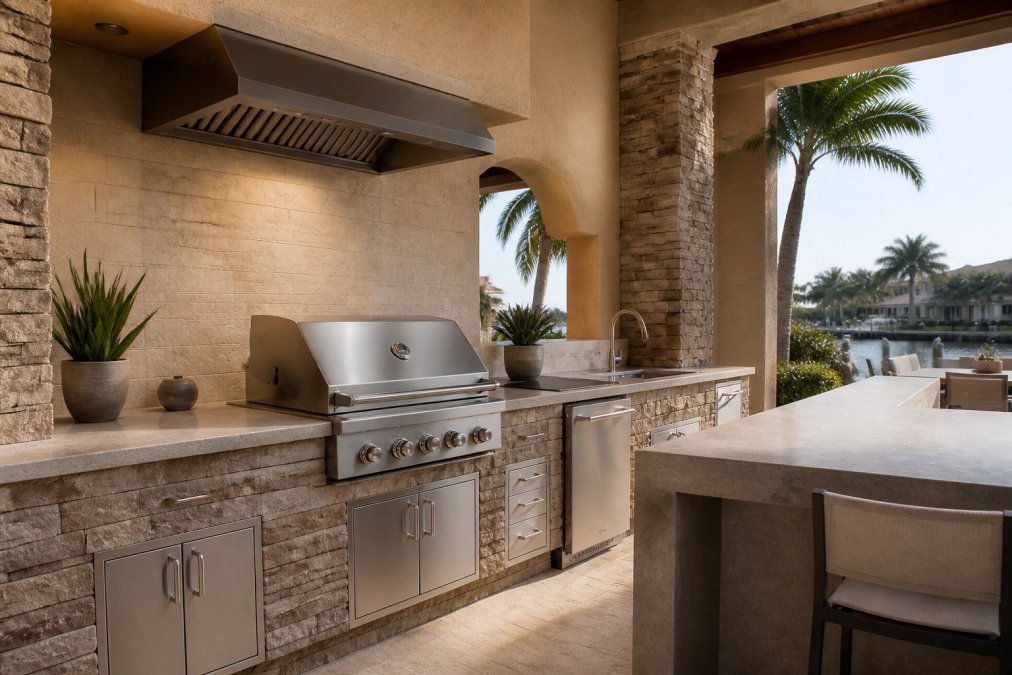
Stainless steel cabinetry is the industry standard for outdoor kitchens. It resists rust, withstands temperature extremes, and requires minimal maintenance. Look for 304-grade or higher stainless steel; marine-grade stainless steel (316) offers even better protection near saltwater.
Teak and tropical hardwoods are beautiful alternatives if you prefer warmth. These woods naturally resist rot and insects but require annual sealing. If you're willing to maintain it, teak ages gracefully and develops character.
Composite materials designed for outdoor use combine wood fibers with polymer resins, creating something that looks like wood but resists moisture and insects. Quality varies significantly, so research durability ratings before committing.
Avoid standard plywood or MDF for outdoor cabinetry. These materials absorb moisture and deteriorate quickly, regardless of paint or sealant.
Durable Countertop Materials
Concrete countertops are customizable but porous. They require regular sealing every 1-2 years and can crack as they age, particularly in freeze-thaw climates.
Stone countertops, granite, limestone, or slate, offer durability and elegance. Granite is harder and more stain-resistant than limestone. Stone requires professional installation and annual sealing. It also conducts heat and can become uncomfortably hot in direct sun.
Tile countertops are budget-friendly with endless design options, but grout lines are porous and difficult to keep clean. Use epoxy grout instead of traditional grout for better moisture and stain resistance.
Engineered quartz countertops designed for outdoor use combine durability with low maintenance. Unlike natural stone, they don't require sealing and resist staining better. They're more expensive than concrete but less costly than high-end stone.
Choosing Built-In Appliances and Grill Islands for Your Design
Your appliance selection should reflect how you actually cook and entertain. Start by honestly assessing your cooking style rather than buying impressive features you won't use.
A grill island becomes the focal point of your outdoor kitchen. A 36-inch grill is adequate for most residential uses. Larger 48-inch or 60-inch grills work well if you frequently cook for crowds.
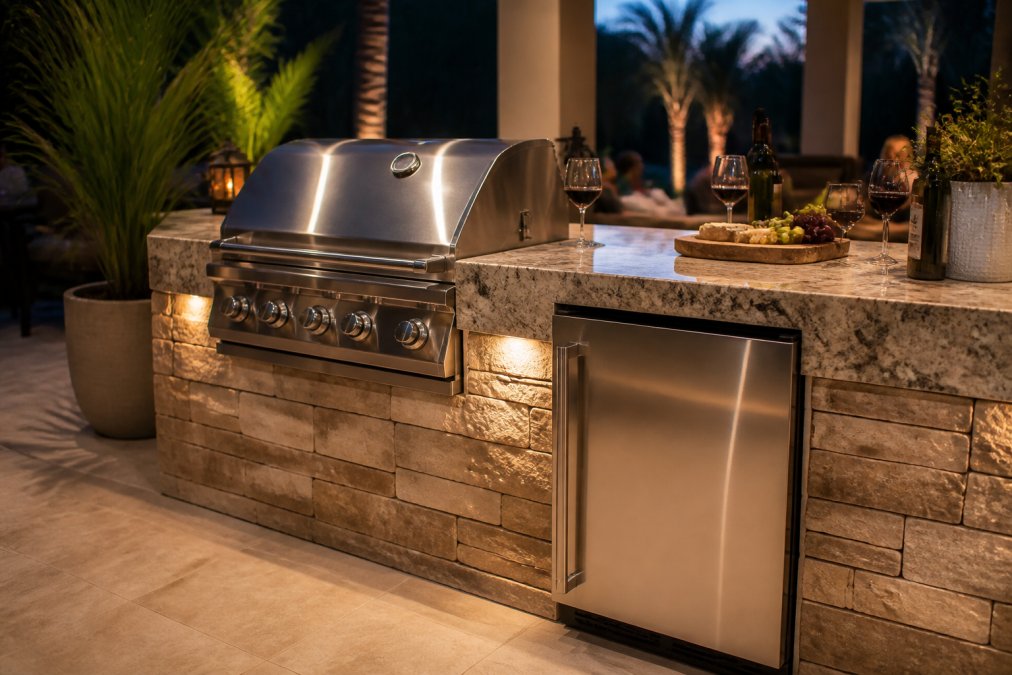
Built-in refrigeration becomes invaluable once you have it. A compact outdoor refrigerator keeps beverages cold and allows you to stage ingredients without running inside. Outdoor-rated refrigerators handle temperature extremes and humidity; standard indoor refrigerators fail prematurely outdoors.
A sink and plumbing add genuine convenience. Washing vegetables, rinsing plates, and cleaning up become infinitely easier. This requires proper drainage and ideally a hot water line, necessitating professional plumbing installation.
Consider a pizza oven if entertaining is central to your lifestyle. A quality wood-fired or gas pizza oven becomes a gathering point. However, it requires dedicated space, proper ventilation, and professional installation.
Avoid cramming every possible appliance into your outdoor kitchen. A grill, refrigerator, and sink handle 95% of entertaining needs.
Cost of Building an Outdoor Kitchen: Budget Planning Guide
Building a custom outdoor kitchen is a significant investment. Pricing depends on location, space size, material selections, appliance choices, and whether utilities need extending.
When budgeting, account for costs beyond visible elements. Utility work, extending gas lines, running electrical service, and installing plumbing, often represents a significant portion of total project cost. Hardscaping is another significant line item. Many homeowners underestimate these foundational costs.
Get quotes from multiple contractors with detailed breakdowns showing labor, materials, permits, and contingency. Avoid the lowest bid if it seems unrealistic; quality craftsmanship protects your investment long-term.
Building permits are required for most outdoor kitchen installations, particularly if utilities are involved. Permitting ensures the work meets code requirements.
Smart Home Integration and Outdoor Lighting Design
Smart home technology has expanded into outdoor kitchens. Smart grills with WiFi connectivity allow you to monitor temperature and cooking progress from your phone.
Outdoor lighting design transforms your space from functional-only during daylight to genuinely usable after sunset. Layered lighting, combining ambient, task, and accent lighting, creates depth and allows you to adjust mood.
Ambient lighting, typically string lights or recessed fixtures in a pergola, sets the overall tone. Task lighting over the grill and prep areas ensures visibility. Accent lighting highlights architectural features.
LED technology is ideal for all outdoor lighting. LEDs use less energy, generate less heat, and last significantly longer than traditional bulbs. Smart lighting systems allow you to adjust brightness and color temperature from your phone, shifting mood with a tap.
Sustainable Design and Climate-Specific Considerations
Building sustainably means making intentional choices about materials and systems that reduce environmental impact while delivering functionality.
Reclaimed or sustainably harvested wood reduces demand for new timber. Local stone and materials reduce transportation emissions and often cost less. Choosing durable materials means less frequent replacement and lower lifetime environmental impact.
Climate-specific design is essential. In hot, dry climates, shade structures protect materials from UV damage. In humid, wet climates, ventilation and drainage prevent moisture accumulation and mold. In freeze-thaw climates, material selection must account for expansion and contraction cycles.
Hardscape design should include proper drainage to prevent water pooling. Native plantings reduce maintenance needs and water consumption while creating intentional landscape design.
DIY vs. Professional Installation: What's Right for Your Project
The decision between DIY and professional installation depends on your skill level, available time, and project complexity. Simple elements like a freestanding grill can be handled by homeowners with moderate experience. Complex projects involving utilities, structural work, or extensive hardscaping should be left to professionals.
Professional installation offers significant advantages. Contractors understand local building codes and permitting requirements, ensuring legal and safe installation. They have supplier relationships and access to better pricing. Professional installation includes warranty coverage.
Gas line installation and electrical work must be done by licensed professionals. Improper gas line installation creates serious safety hazards. Electrical work in outdoor environments requires proper grounding and weatherproofing.
Dimensions Luxury Builders manages the entire process from design through installation, handling permits, coordinating trades, and ensuring every detail meets our standards. Our team understands the specific challenges of outdoor kitchen projects in this region, from permitting timelines to material performance in local climate conditions. We provide one point of contact throughout the project, eliminating the stress of coordinating multiple contractors.
The real cost of DIY often exceeds apparent savings once you account for mistakes, rework, and time investment. A professional team completes the project efficiently and correctly, allowing you to enjoy your outdoor kitchen sooner.
Building a custom outdoor kitchen is an investment in your home and lifestyle. The best designs balance aesthetics with function, choosing materials that perform in your climate and layouts that work for how you entertain. At Dimensions Luxury Builders, we've guided homeowners through this process countless times, transforming outdoor spaces into the heart of their homes. Ready to bring your vision to life? Get a free design consultation and let our team show you what's possible for your backyard.
Frequently Asked Questions
Q: What is the ideal outdoor kitchen layout plan for entertaining?
A: The ideal outdoor kitchen layout plan follows a work triangle similar to indoor kitchens, positioning the grill, sink, and food prep area within easy reach of each other. Position your grill island as the focal point, with the dining and entertaining space nearby but separate from the active cooking zone. This arrangement keeps guests comfortable while you prepare food, and allows traffic to flow naturally around the backyard living space without disrupting meal prep.
Q: How much does it cost to build an outdoor kitchen?
A: The cost of building an outdoor kitchen varies significantly based on size, materials, appliances, and whether you choose professional installation. Basic setups with a grill and countertop start lower, while luxury custom designs with built-in refrigeration, pizza ovens, and high-end materials cost substantially more. For accurate pricing tailored to your specific design and needs, contact Dimensions Luxury Builders for a free quote and detailed cost breakdown.
Q: What are the best materials for outdoor kitchen cabinets?
A: The best materials for outdoor kitchen cabinets are weather-resistant and built to withstand humidity and temperature swings. Stainless steel is the industry standard for durability and modern aesthetics. Teak and other marine-grade woods offer warmth but require regular maintenance. Powder-coated aluminum and composite materials provide excellent weather resistance. Stone veneer and concrete can create custom fabrication designs that complement your home's architecture while resisting the elements.
Q: Can you design a custom outdoor kitchen in a small backyard space?
A: Yes. Small space outdoor kitchen solutions focus on vertical storage, modular kitchen units, and multi-functional elements. A compact grill island with integrated sink and storage, combined with a pergola for shade and ambiance, maximizes utility without overwhelming the space. Strategic placement of outdoor lighting design and retaining walls can make a small backyard feel larger while maintaining functionality for entertaining.
This article was written using GrandRanker