 ultimate-guide
Avoiding Hidden Costs in Home Renovation (2026 Guide)
Table of Contents
- The Real Price of a Renovation Goes Beyond the Quote
- Common Remodeling Change Order Examples and How to Prevent Them
- What Is the Right Home Renovation Contingency Fund Percentage?
- Unexpected Structural Issues, Permits, and Other Hidden Costs to Plan For
- Questions to Ask a Contractor Before Signing a Contract
- Use a Renovation Budget Spreadsheet Template to Track Every Dollar
- Financing, Maintenance, and Other Costs That Follow the Build
- Conclusion: Build a Buffer to Avoid Hidden Costs Home Renovation Surprises
- Frequently Asked Questions
Last Updated: September 5, 2026
The Real Price of a Renovation Goes Beyond the Quote
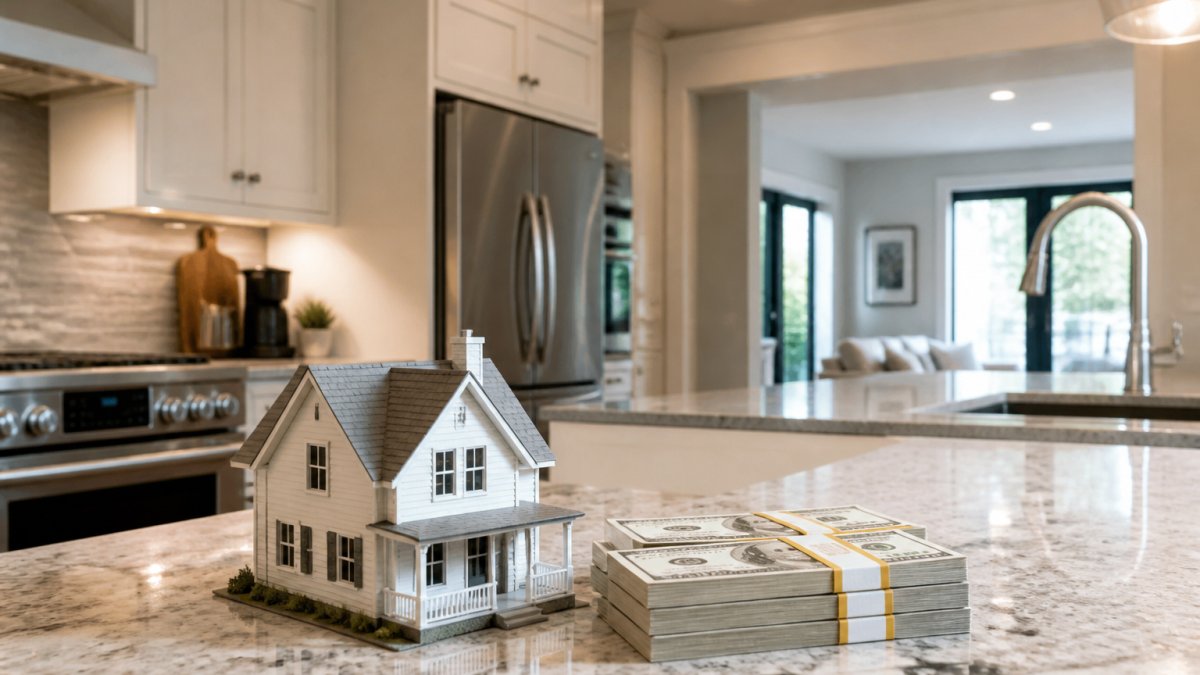
The initial estimate rarely captures the full financial picture, and the gap between the paper price and the final invoice is where budgets go to die.
Below, we'll show you how to anticipate the cost categories that derail most projects.
Common Remodeling Change Order Examples and How to Prevent Them
A change order is a formal amendment to your original contract and the single most common source of budget overruns, occurring when the homeowner requests a modification after work begins.
Prevent change orders by locking down decisions before signing, finalize tile, hardware, and paint early, and group any necessary changes into one request. Treat the design phase as the time for changes, not construction.
What Is the Right Home Renovation Contingency Fund Percentage?
A 10% to 20% contingency fund is the industry-standard buffer for unexpected costs; lean toward the higher end for older homes or structural work (nahb.org).
Think of it as insurance for your timeline, the authority to say "fix it" without financial panic. Track how much you draw and why.
Unexpected Structural Issues, Permits, and Other Hidden Costs to Plan For
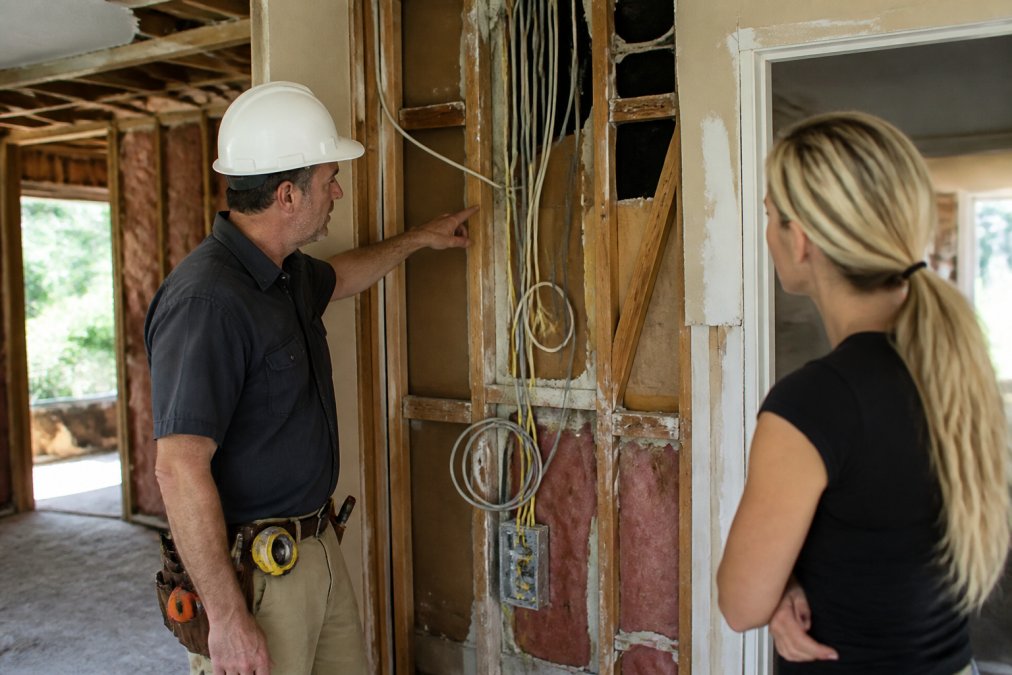
The most expensive surprises hide behind the drywall, structural problems, outdated electrical, and plumbing retrofits only reveal themselves during demolition.
Structural Issues: What Actually Happens When Walls Open
When walls open, contractors look for three specific failure points that drive most structural overruns:
-
Load-bearing wall miscalculations. A wall you assumed was non-structural may actually carry the floor above. Removing it requires a temporary support system, a steel beam or engineered lumber, and often new footings. A single beam installation runs $1,200 to $4,500 depending on span and access, plus engineering fees of $500 to $1,500 for the stamped drawings your local building department will require.
-
Rot and termite damage. Hidden water intrusion behind tile or siding often means the framing members are compromised. Replacing a section of rotted sill plate or studs costs $800 to $3,000 per affected area, but the real expense is the remediation work: finding the source of the moisture, fixing it, and addressing any mold. A mold inspection runs $300 to $700, and professional remediation adds $1,500 to $6,000 depending on the square footage affected.
-
Outdated electrical panels. A 100-amp panel that was adequate in 1985 will not handle a modern kitchen with two ovens, a induction cooktop, and a dedicated refrigerator circuit. Upgrading to 200-amp service costs $1,800 to $3,500 and requires coordination with your utility provider, which can add two to four weeks to your timeline (angi.com). Your contractor cannot predict this cost from a visual inspection alone; only opening the panel and reviewing the load calculation reveals the gap.
Contractors are legally required to stop work and notify the building department upon finding a code violation. Mitigate this with a pre-demolition walkthrough and an agreed decision tree: if we find X, we spend up to Y; if it exceeds Y, we stop and re-quote.
Permit and Zoning Fees: The Real Cost of Compliance
Permits and zoning regulations protect your safety and property value; failing to pull one can result in fines or complications when you sell.
The permit process creates hidden costs beyond the fee itself:
- Plan review fees are charged separately from the building permit in most jurisdictions. A structural modification requires stamped engineering drawings, and the plan review can take 2 to 6 weeks depending on the municipality's workload. During that time, your contractor's crew may be idle, and you are paying for that idle time if your contract is time-and-materials rather than fixed-price.
- Inspection failures cost you money twice: once for the re-inspection fee ($50 to $150 per trip in most jurisdictions) and again for the contractor's time to correct the issue. A rough-in inspection that fails because a wire is stapled too close to the edge of a stud is a $200 mistake that could have been avoided with a quality control checklist.
- Zoning setbacks and height restrictions can force design changes after you have already paid for architectural drawings. Before you sign a contract, verify that your planned addition or second-story project conforms to the current zoning code. A variance application costs $500 to $2,000 in filing fees alone, plus attorney time, and there is no guarantee of approval.
Before signing, get a written permit strategy: which permits are required, who pulls them, the review timeline, and what happens if an inspection fails. A contractor who cannot answer these questions transfers risk to you.
Demolition, Debris Removal, and Storage
Demolition waste is heavier and costlier to haul than expected, and temporary housing and storage are real line items if you live elsewhere during the build.
The specific numbers matter here. A 10-yard dumpster rental runs $350 to $600 for a week in most markets, but renovation debris fills it faster than you expect. A typical kitchen demolition produces 2 to 3 tons of debris, and disposal fees at the transfer station run $40 to $80 per ton. If your project involves removing plaster and lath walls, expect double the volume of drywall demolition because the material is denser.
Temporary housing is the line item most homeowners underestimate. If your renovation makes your kitchen unusable for 8 weeks, eating every meal out costs $400 to $800 per month per person. If you rent an apartment for the duration, budget $1,500 to $3,000 per month in most metro areas, plus the cost of moving your belongings twice. Storage units run $100 to $300 per month for a 10x10 unit, and you will need to insure the contents separately.
Before demolition, get itemized quotes for dumpster rental, hauling, and storage; ask how many loads the contractor expects, then add 20%. These logistics are the most predictable and controllable hidden cost.
Questions to Ask a Contractor Before Signing a Contract
Questions before signing should focus on accountability and worst-case scenarios: How do you handle change orders and pricing? Who is my single point of contact? What is your process for inspections and updates?
A firm that documents everything and communicates proactively produces fewer surprises. Ask for references and verify their license and insurance directly.
Use a Renovation Budget Spreadsheet Template to Track Every Dollar
A renovation budget spreadsheet transforms vague anxiety into clear visibility. Track estimated cost, actual cost, and variance for every line item, updating weekly.
It catches small overruns early and serves as your record for insurance, resale, and future planning.
| Cost Category | How to Control It | Impact on Budget |
|---|---|---|
| Change Orders | Finalize decisions before signing | Prevents scope creep |
| Contingency Fund | Set aside 10-20% of total | Covers structural surprises |
| Permits & Fees | Confirm contractor handles them | Avoids fines and delays |
| Demolition & Disposal | Request itemized hauling quotes | Prevents logistics overruns |
| Finishing Materials | Lock selections early | Stops material escalation |
Financing, Maintenance, and Other Costs That Follow the Build
The financial commitment does not end at the final walkthrough. How you pay matters, as any loan carries interest that adds to the total cost.
The Real Cost of Borrowing: What Your Loan Actually Adds
Most budgets stop at the contractor's invoice, but the true cost includes borrowing. A $50,000 renovation financed with a HELOC at 8% APR over 10 years costs about $22,000 in interest alone, a 44% premium rarely included in the spreadsheet (federalreserve.gov).
The choice of financing vehicle changes your total cost significantly:
- Home equity loan (fixed rate): Current rates for a 10-year term typically range from 7% to 9% APR. Fixed payments make budgeting predictable, but you are borrowing against your home's equity, which means default puts your house at risk.
- Home equity line of credit (HELOC): Variable rates currently start around 8% to 10% APR. The draw period (usually 10 years) allows you to borrow as needed, which means you only pay interest on what you actually use. However, variable rates mean your payment can rise mid-project.
- Cash-out refinance: If you are also lowering your primary mortgage rate, this can be efficient. But closing costs run 2% to 5% of the loan amount, and you are spreading renovation costs over 30 years, which means paying interest on those costs for three decades.
- Personal loan: Rates run 11% to 18% APR for renovation-sized amounts. These are unsecured, so no home equity is at risk, but the interest cost is substantially higher.
Loan marketing never mentions interest during construction, drawing from a HELOC to pay contractors means paying interest on money that has not yet delivered value.
Post-Renovation Maintenance: The Cost of Material Choices
Material choices determine your maintenance budget for the next 20 years; the cheapest option at the counter is often the most expensive over your home's life:
- Flooring: Luxury vinyl plank (LVP) costs $3 to $7 per square foot installed and lasts 15 to 20 years with minimal maintenance. Hardwood costs $8 to $15 per square foot installed, but requires refinishing every 7 to 10 years at $3 to $5 per square foot. Over 20 years, hardwood costs 30% to 50% more than LVP when you include refinishing. If you choose hardwood, budget for that recurring expense.
- Countertops: Quartz at $60 to $120 per square foot installed requires no sealing and resists staining. Marble at $50 to $100 per square foot requires annual sealing ($200 to $400 per year) and etches when exposed to acidic foods. A marble countertop that costs $2,000 less upfront will cost $3,000 more over 10 years in maintenance and repairs.
- Paint: Builder-grade flat paint costs $20 to $30 per gallon and shows every scuff. A premium washable paint at $50 to $70 per gallon costs $200 more for a typical room but lasts 3 to 5 years longer before repainting is needed. The premium product is the cheaper choice over a 15-year horizon.
- HVAC systems: A high-efficiency system (SEER 18+) costs 20% to 30% more upfront than a standard unit (SEER 14) but saves $300 to $600 per year in utility costs in most climates. The payback period is 4 to 7 years, after which the savings are pure profit. Warranty coverage also differs: premium systems often include 10-year parts and labor coverage, while standard units cover parts only.
Energy Efficiency Tax Credits and Rebates: Offsetting the Hidden Costs
Federal and utility-level incentives for energy efficiency upgrades can reduce your net project cost by thousands of dollars, yet they remain underutilized.
The Inflation Reduction Act of 2022 created the Energy Efficient Home Improvement Credit (25C), which provides a tax credit of up to $3,200 per year for qualifying improvements. The specific provisions that matter for renovations:
- Heat pumps and heat pump water heaters: Up to $2,000 credit for qualifying models that meet specific efficiency standards.
- Windows and doors: Up to $600 total for windows and skylights that meet ENERGY STAR requirements, and up to $500 for exterior doors.
- Insulation and air sealing: Up to $1,200 for qualifying insulation materials and air sealing products.
- Electrical panel upgrades: Up to $600 for load service center upgrades that enable the installation of qualifying efficiency equipment.
These credits are non-refundable and require equipment to meet specific standards, so verify eligibility before purchase.
Utility rebates are separate from federal credits and vary by provider. Many offer $300 to $1,000 for heat pumps, $50 to $200 for smart thermostats, and free energy audits. Your contractor may not mention these because they do not benefit. A $1,500 rebate plus a $2,000 tax credit reduces the effective cost of an $8,000 installation by 44%.
Create a separate budget line for "incentives" and research what applies before purchasing. IRA credits are available through 2032 but require documentation, model numbers, receipts, and manufacturer certifications, so ask your contractor for ENERGY STAR sheets before installation, not after.
Conclusion: Build a Buffer to Avoid Hidden Costs Home Renovation Surprises
Successful renovations are built on preparation, not luck, a healthy contingency fund, a clear contract, and honest conversations about scope are your best defenses.
At Dimensions Luxury Builders, our end-to-end project management with a single point of contact is designed to keep you informed and in control. As a licensed and insured Florida contractor with local expertise in Broward County, we handle the permitting, the subcontractor coordination, and the daily decisions, so you can focus on the excitement of your new space. Get a free quote today and let us show you how a fully managed renovation experience protects your investment from the first estimate to the final reveal.
Frequently Asked Questions
What is the smartest way to pay for a home renovation?
The smartest way usually combines liquid savings with a dedicated renovation loan or home equity line of credit. Paying cash avoids interest charges, but depleting your emergency savings to fund a project creates risk. A home equity loan or HELOC often offers lower rates than personal loans or credit cards. Discuss your full financial picture with a lender before choosing. This strategy keeps your contingency fund intact for the hidden costs home renovation projects often reveal.
What is the most expensive part of a house to renovate?
Kitchens and bathrooms consistently rank as the most expensive rooms to renovate per square foot. The cost comes from the combination of plumbing retrofits, electrical upgrades, custom cabinetry, and high-end finish materials. Structural changes, like removing a load-bearing wall, add further expense. For a luxury remodel, these spaces can consume a large portion of your total budget. Getting a detailed contractor estimate before you start is essential to avoid budget overruns in these high-cost areas.
How do you account for unforeseen costs in a remodeling project?
The most effective way to account for unforeseen costs is to set aside a dedicated home renovation contingency fund. A common guideline is to reserve 10 to 20 percent of your total project budget for this purpose. This fund should be separate from your main budget and only used for true surprises, like discovering outdated electrical systems or mold remediation needs behind walls. Having this buffer prevents you from halting the project or going into debt when the unexpected happens.
What should a renovation budget spreadsheet template include?
A solid renovation budget spreadsheet template should list every line item, including the contractor estimate, materials like fixtures and hardware, permit fees, and a separate contingency fund percentage. It needs columns for estimated cost, actual cost, and the difference to track variances. Add a section for change orders to see how scope changes impact the total. Reviewing this document weekly with your project manager helps you catch budget overruns early and keeps the project on track financially.
What are the most common hidden costs in a home renovation?
The most common hidden costs home renovation projects face include permit and zoning fees, demolition waste disposal, and unexpected structural issues found after walls are opened. Outdated electrical and plumbing systems often need upgrades to meet code compliance. Material price fluctuations and subcontractor labor overruns also contribute. Temporary housing or storage costs for furniture and belongings add up quickly. A detailed contract and a thorough site inspection before work begins can help minimize these surprises.
This article was written using GrandRanker